Bank of Korea's Report on 'Computer-Related Leisure and Labor Supply'
Computer-Related Leisure Time Greatly Increased Due to IT Technology Advancement
Computer-Related Leisure Reduces Labor Supply Among Youth
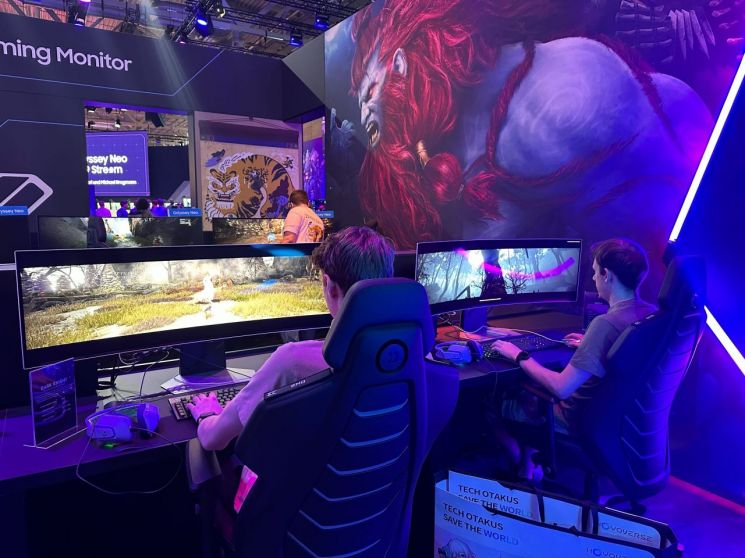
With the advancement of IT technology, leisure time related to computers, such as gaming and SNS, has significantly increased among the 2030 generation, leading to a reduction in labor supply among young people.
According to the “Computer-Related Leisure and Labor Supply” report released by the Bank of Korea on the 28th, the improvement in computer and mobile phone performance and other IT technological advancements have caused young people to spend more time on computer-related leisure activities, which in turn has decreased their labor supply.
Recently, the working hours of South Korean citizens have decreased while leisure time has increased. This is due to the introduction of the five-day workweek, the 52-hour workweek system, and the growing preference for work-life balance (WLB). Leisure time for young men increased from 54.6 hours per week in 1999 to 58.7 hours in 2019, and for middle-aged men, it rose from 57.5 hours to 59.1 hours during the same period. Leisure time for young women also increased from 52.2 hours to 58.9 hours, and for middle-aged women, from 51 hours to 58.6 hours.
The increase in leisure time is analyzed to be due to more time spent on essential leisure activities such as sleeping and eating, as well as computer-related leisure. Essential leisure time for young men increased from 22.6 hours in 1999 to 30.1 hours in 2019, and for middle-aged men, from 22.2 hours to 29.1 hours. Essential leisure time for young women (22.8 hours -> 32.3 hours) and middle-aged women (19.9 hours -> 29 hours) also increased.
IT technological advancements have significantly increased computer-related leisure time across all age groups. Computer-related leisure time for young men rose from 1.5 hours per week in 1999 to 7.3 hours in 2019, for middle-aged men from 0.3 hours to 2.7 hours, for young women from 0.4 hours to 14.3 hours, and for middle-aged women from 0.1 hours to 2 hours. The Bank of Korea analyzed that the increase in computer-related leisure time is due to the rapid improvement in IT device performance and the surge in related content.
Increase in Computer-Related Leisure Time Leads to Decrease in Labor Supply Among Young People
The increase in computer-related leisure time has significantly reduced labor supply across all age groups, especially among young people. Between 1999 and 2019, working hours decreased by 6.7 hours for young men, 4.6 hours for middle-aged men, 1.5 hours for young women, and 3.3 hours for middle-aged women, with the largest decrease observed among the young generation. The reduction in labor supply due to advancements in computer-related leisure technology was 10.7% for young men and 6.3% for young women, which is a larger decline compared to 4.9% for middle-aged men and 3.7% for middle-aged women. During the same period, 68.7% (-4.6 hours) of the decrease in working hours for young men and 99.2% (-1.4 hours) for young women were attributed to advancements in computer-related leisure technology.
Jangcheol Cho, Deputy Head of the Employment Analysis Team at the Bank of Korea’s Research Department and author of the report, stated, “IT technological innovation is likely to continue having a negative impact on the labor supply of young people in the future. If young people maintain similar leisure usage patterns as they age, IT technological advancements will have an even greater impact on the labor supply of middle-aged groups.”
He added, “However, the increase in leisure time also has effects that partially offset the reduction in labor supply caused by IT technological advancements by improving workers’ health and establishing efficient work cultures, thereby enhancing labor productivity. Considering that our economy is expected to face a sharp decline in labor supply due to rapid aging, steadily increasing labor productivity is becoming more important than in the past.”
© The Asia Business Daily(www.asiae.co.kr). All rights reserved.
![Clutching a Stolen Dior Bag, Saying "I Hate Being Poor but Real"... The Grotesque Con of a "Human Knockoff" [Slate]](https://cwcontent.asiae.co.kr/asiaresize/183/2026021902243444107_1771435474.jpg)
















