Government: "Allowances and housing provided for long-term service over 5 years at local hospitals"
Doctors: "Even now, avoid well-paid regional medical centers; fundamental causes must be addressed"
The government is considering additional support measures for specialists who work long-term in local areas, but the medical community is raising concerns that the effectiveness of such measures may be limited.
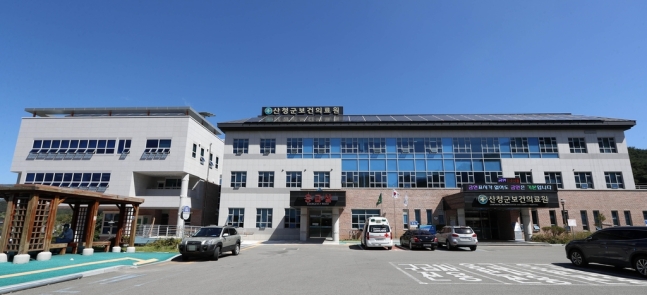 Sancheong Health Medical Center, Sancheong-gun, Gyeongnam. This place offered an annual salary of 360 million KRW last year and, after announcing the position five times, was able to find an internal medicine specialist only after one year.
 [Image source=Yonhap News]
According to the Ministry of Health and Welfare on the 28th, a budget is being prepared to recruit up to 500 essential local doctors next year. This system supports specialists who sign a 5 to 10-year contract to work at regional medical institutions at the secondary hospital level or higher by providing allowances and settlement expenses. The ministry is reviewing a fixed allowance system and plans to set the support amount around 5 million KRW per month. Kim Guk-il, the Ministry’s Health Policy Officer, stated at the briefing of the 'Central Disaster and Safety Countermeasures Headquarters for Doctors' Collective Action' the day before, "This is a system to support doctors, increased by the expansion of medical school quotas, to work in local and essential fields," adding, "It will be promoted in a way that respects individual autonomy and guarantees income and living conditions so that doctors can reside in local areas long-term with pride."
However, some are concerned that the policy’s effectiveness will be limited. Even when local medical institutions offer annual salaries of around 300 to 400 million KRW, recruitment is difficult due to working conditions and living environments. It is analyzed that realistically, few doctors will commit to long-term work in local areas with an additional allowance of about 5 million KRW.

A specialist A, who has experience working at a regional medical center in Gyeongbuk, said, "Specialists will not go to local areas just because they are offered extra money," adding, "Doctors currently working in local areas are not there for the money. They went there out of a sense of mission or affection for the area." He continued, "Even if some doctors go to provincial areas due to the government’s plan, they will eventually return to the city within a few months," and emphasized, "We need to consider the fundamental reasons why doctors still avoid local hospitals that offer much higher salaries."
A 30-something specialist B working in the metropolitan area also said, "Not only doctors but people in general increasingly want to live in big cities. Unless they are retired senior doctors, I don’t think doctors in their 30s or 40s will move to local areas," adding, "5 million KRW is not a small amount, but considering children’s education and living infrastructure, it won’t be easy to relocate." He added, "If short-term work of 1 to 2 years is possible instead of long-term work over 5 years, there might be some who want to go and come back depending on their personal situation."
In fact, local hospitals are facing great difficulties in recruiting doctors. Last year, the Sancheong County Health Medical Center in Gyeongnam offered an annual salary of 360 million KRW and after five rounds of announcements, was only able to recruit an internal medicine specialist after one year.
The Danyang County Public Health Medical Center faced difficulties recruiting an emergency medicine specialist before its opening due to a lack of applicants. Initially, it announced a salary of 384 million KRW in November last year, and raised it to 403.2 million KRW in the second and third recruitment rounds, but hiring repeatedly failed. Eventually, it succeeded in recruitment only after the fourth announcement offered a staggering salary of 422.4 million KRW along with an apartment and a villa.
The reason recruitment is difficult despite high salaries is attributed to poor working conditions and children’s education environments. A private practitioner C, who worked at a regional medical center, said, "There were only two doctors in charge, so I was practically tied to the hospital 24 hours a day. I couldn’t easily go out to buy things in town or have a beer after work because I never knew when an urgent call might come." He added, "Living alone in the area in a company-provided house for the sake of children’s education was also one of the hardships."
© The Asia Business Daily(www.asiae.co.kr). All rights reserved.


















