Regulation on 'Enhanced Suspicion-Based Checks' to Take Effect from the 1st of Next Month
Intelligence authorities have warned that individuals staying in China or traveling there for business or tourism should be cautious of 'random inspections' by Chinese public security.
The National Intelligence Service (NIS) announced on the 27th that attention should be paid to such inspections following the Chinese Ministry of State Security's announcement at the end of April of the 'Regulations on the Procedures for the Enforcement of Safety Administration by National Security Agencies' and the 'Regulations on the Procedures for Handling Criminal Cases by National Security Agencies,' which formalize the authority to conduct random inspections of electronic devices such as mobile phones and laptops.
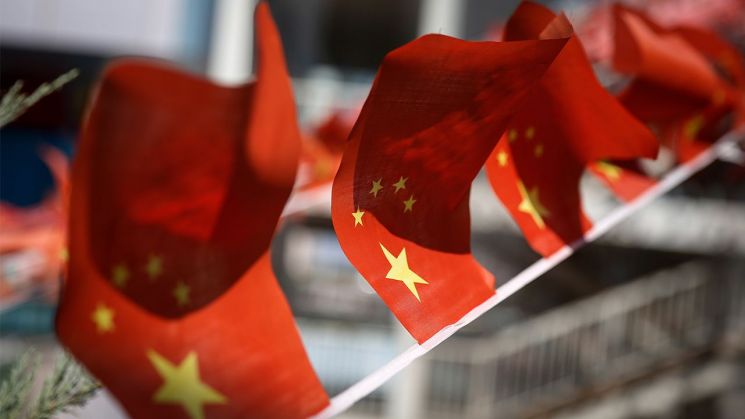
According to the regulations, which will take effect on the 1st of next month, Chinese public security agencies may conduct ▲body, item, and location inspections ▲investigation and collection of evidence such as audiovisual materials and electronic data ▲immediate administrative actions at the inspection site against individuals deemed to pose a threat to national security. These measures apply to both domestic and foreign nationals, and 'immediate administrative actions' may include administrative detention or fines.
An NIS official explained, "In other words, if Chinese authorities determine that our nationals staying in China pose a threat to national security, there is an increased possibility that sensitive personal information such as chat records, email sending and receiving logs, photos, and login records will be unilaterally collected, and that physical or economic penalties such as detention or fines may be imposed."
Additionally, using Facebook, Instagram, KakaoTalk, and other services banned in China via VPN (Virtual Private Network) may subject individuals to random inspections. Caution is also advised regarding messages or photos stored on personal devices. The Chinese Ministry of State Security announced in December last year that it would crack down on and punish those who claim or spread information about 'China's economic decline,' 'foreign capital exclusion,' or 'oppression of private enterprises.'
The NIS presented the following precautions: ▲refrain from mentioning sensitive topics such as Chinese leaders, minority human rights, and Taiwan issues ▲prohibit photographing military, port, and other security facilities ▲exercise caution regarding missionary and religious activities within China ▲avoid visiting or photographing protest sites ▲limit use of KakaoTalk, Facebook, and other services via VPN ▲verify whether Chinese law enforcement officials present identification or verification notices, and urged special caution.
An NIS official stated, "If subjected to a random inspection, it is important to avoid arguments with Chinese law enforcement and immediately notify the Ministry of Foreign Affairs' consular call center, the Korean Embassy in China, or the consulate general in the area of stay to receive consular assistance." He added, "We will do our best to promptly identify and inform about related trends to prevent our nationals from suffering damage or disadvantages due to policy changes in foreign countries."
© The Asia Business Daily(www.asiae.co.kr). All rights reserved.


















