Assuming Economic Recession Scenario, Capital Adequacy Stress Test
Expected Losses Increased from Previous Year but Capital Requirements Met
Bank Finances 'Solid' with Expectations for Expanded Shareholder Returns
All 31 major U.S. banks survived the Federal Reserve's (Fed) stress test, which assumes a severe economic recession. Given the banks' solid financial condition and capacity for shareholder returns, there is optimism that these stocks may see dividend increases in the future.
According to the annual stress test results announced by the Fed on the 26th (local time), the 31 major U.S. banks collectively incurred losses totaling $685 billion under a hypothetical recession scenario. The Fed explained, "Although the scale of losses among large banks increased compared to last year's test, they still demonstrated the ability to withstand a severe recession and maintain capital levels above the minimum requirements."
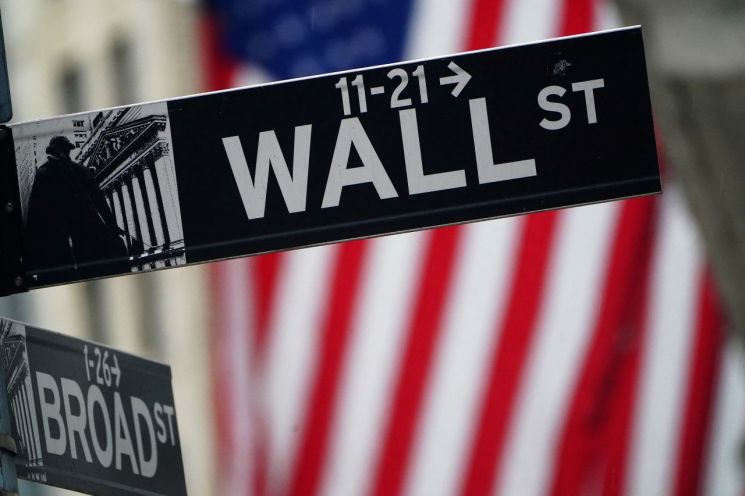
The banks' Common Equity Tier 1 (CET1) ratio stood at 9.9%, down 2.8 percentage points from 12.7% last year. This is the largest decline since 2018, but still significantly exceeds the CET1 minimum requirement of 4.5%. CET1 represents the proportion of a bank's total capital that is raised through common equity; a higher figure indicates stronger loss-absorbing capacity in times of crisis.
After experiencing the 2008 financial crisis, the Fed has conducted annual stress tests to assess banks' financial soundness in preparation for similar future crises. This year's test included 31 large U.S. banks with assets of at least $100 billion, such as JP Morgan, Goldman Sachs, and Bank of America (BoA). The scenario assumed a U.S. unemployment rate of 10%, a 55% drop in stock prices, a 40% decline in commercial real estate prices, a 36% fall in housing prices, and a significant increase in office vacancy rates.
Fed Vice Chair Michael Barr stated, "This year's stress test shows that large banks can withstand an extreme recession scenario and hold sufficient capital to meet minimum capital ratios. This is good news and demonstrates the usefulness of the additional capital banks have accumulated over recent years." However, he also noted, "There are some areas to watch," pointing to increased losses due to rising credit card balances and delinquency rates.
The Fed's stress test also serves as an annual event influencing banks' decisions on share buybacks and dividend payouts. Bloomberg reported, "With the largest U.S. banks passing the Fed's test, the path is open for higher shareholder dividends," and noted that banks are expected to begin announcing their latest share repurchase plans starting on the 28th.
Meanwhile, there are also critical views on the stress test. According to The Wall Street Journal (WSJ), Matthew Visanz, a financial services partner at the law firm Mayer Brown, criticized, "Because the stress test relies excessively on banks' capital buffers, people focus on the wrong things. Considering that three banks failed in just one month last year, it shows how unrealistic the stress test is." Former Fed director Daniel Tarullo also questioned its effectiveness, saying, "The test has become more routine and predictable."
© The Asia Business Daily(www.asiae.co.kr). All rights reserved.
![Clutching a Stolen Dior Bag, Saying "I Hate Being Poor but Real"... The Grotesque Con of a "Human Knockoff" [Slate]](https://cwcontent.asiae.co.kr/asiaresize/183/2026021902243444107_1771435474.jpg)
















