Yoon "A Nation Where Citizens Are Happy"... Expansion of Emergency Personnel
Increase Counseling Support to 500,000 by 2027
Provide Psychological Counseling Services to 1 Million People During Term
Up to 30% Copayment on 80,000 KRW per Session
Nationwide Campaign to Eliminate Prejudice
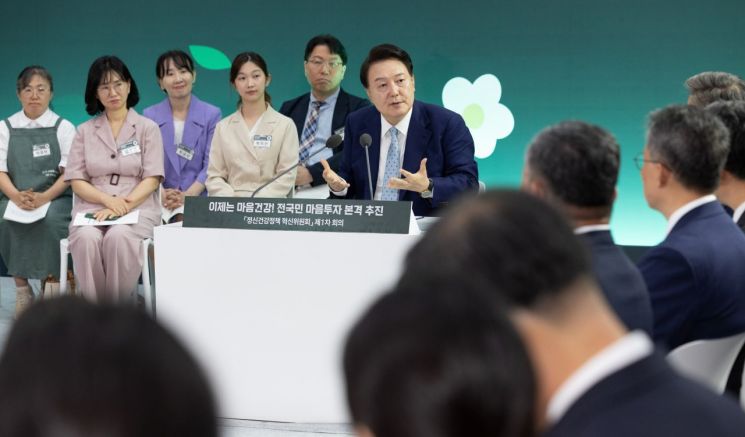 President Yoon Suk-yeol is making closing remarks at the '1st Meeting of the Mental Health Policy Innovation Committee' held on the 26th at the National Center for Mental Health, Ministry of Health and Welfare, Gwangjin-gu, Seoul. [Image source=Yonhap News]
The government will launch the 'National Mind Investment Project' next month to promote the mental health of its citizens. The Yoon Suk-yeol administration plans to provide psychological counseling service packages to a total of 1 million people during its term. The support target will gradually expand from 80,000 people this year to 500,000 people by 2027, when the term ends.
Additionally, the government will carry out a nationwide campaign with private organizations to reduce social stigma surrounding mental illness.
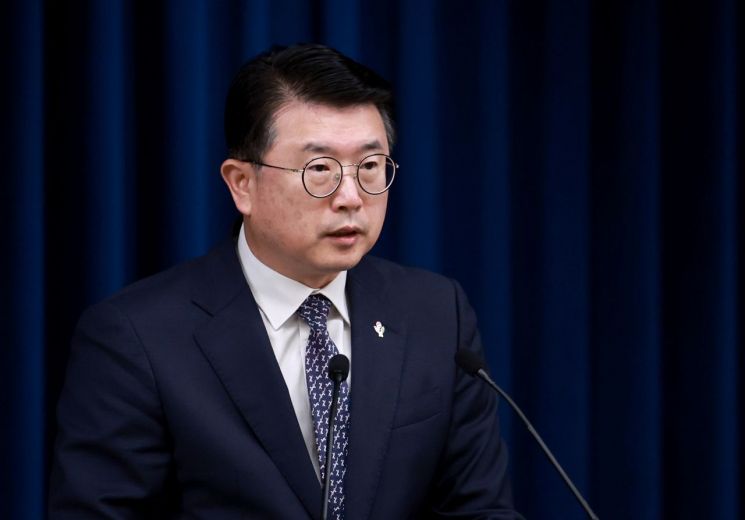
Jang Sang-yoon, Senior Secretary for Social Affairs at the Presidential Office, held a briefing on the afternoon of the 26th at the Yongsan Presidential Office and explained the results of the first meeting of the Presidential Mental Health Innovation Committee held that morning.
At the meeting, innovation committee members appointed from various sectors?including people with mental illness and their families, psychiatrists, nurses, psychologists, counseling experts, social welfare scholars, police officers, and firefighters?gathered to discuss detailed implementation plans for a major shift in mental health policy.
Senior Secretary Jang explained, "The detailed implementation plan for mental health policy innovation announced by the government is the first ever by any administration to conduct a demand survey targeting those affected and their families, and based on this, an implementation roadmap was created incorporating opinions from experts and related academic societies across medical, psychological, counseling, and welfare fields."
He added, "What I especially want to emphasize is that the 'National Mind Investment Project' will be fully launched next month as a core project in the prevention sector. It will support citizens who feel depressed or anxious to receive psychological counseling from professionals comfortably without worrying about others' eyes."
Currently, individuals must pay out of pocket to receive psychological counseling at private counseling centers, but starting next month, if someone feels there is a mental health issue in daily life or is judged to need in-depth counseling through health checkups, schools, or workplaces, they can receive support from the state.
Counseling services will be provided based on 8 sessions. The cost per session is about 80,000 KRW, with co-payments varying up to 30% depending on income level. Vulnerable groups can receive services free of charge. From October, an online application window for counseling will also be opened.
The support target will gradually increase from 80,000 people this year to 160,000 next year, 260,000 in 2026, and 500,000 in 2027, providing services to a total of 1 million people during the current administration's term. In the first and second years of the project, priority support will be given to patients showing crisis signs, expanding to the general public from the third year.
Senior Secretary Jang said, "In cases of early depression, combining counseling and medication reduces the likelihood of extreme choices such as suicide attempts. This introduces another social safety net that prevents progression to severe conditions through early intervention and helps people return to daily life promptly."
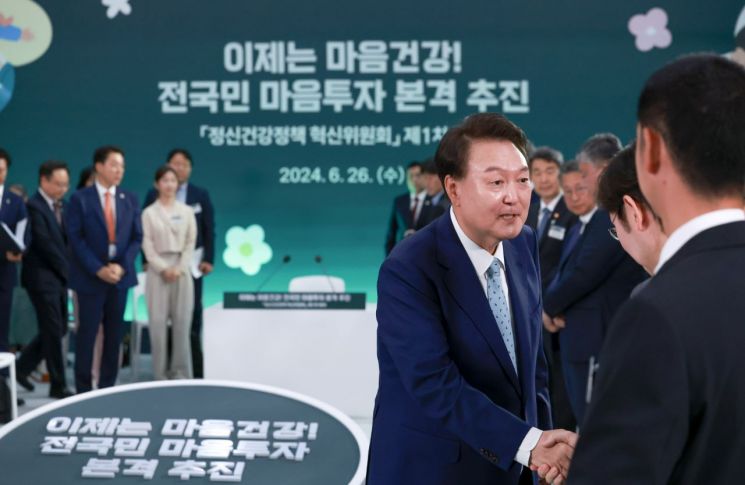 President Yoon Suk-yeol is greeting attendees at the '1st Meeting of the Mental Health Policy Innovation Committee' held on the 26th at the National Center for Mental Health, Ministry of Health and Welfare, Gwangjin-gu, Seoul. [Image source=Yonhap News]
The government will also improve the mental emergency response system, where mental health professionals and police jointly respond to emergencies involving patients with high suicide or violence risk.
Currently, 34 crisis intervention teams (204 members) operate across 17 cities and provinces nationwide, but low compensation and staff shortages make rapid response difficult. There is also a shortage of mental emergency centers to treat emergency patients.
The government plans to actively expand the workforce and improve treatment conditions for crisis intervention teams, increase regional mental emergency centers about threefold, and gradually expand hospital beds.
A Presidential Office official explained, "We plan to increase personnel by about 102 to reach around 306 this year and consider further expansion based on demand. We are also working on budget support measures such as weekend work allowances."
In particular, the government will promote a nationwide campaign to establish the understanding that mental illness is treatable and not dangerous once treated.
The Presidential Office official said, "A separate expert committee under the Innovation Committee will establish mid- to long-term publicity strategies and create new slogans. Since government efforts alone are insufficient, we will actively carry out campaigns through cooperation with the private sector."
The project announced today is expected to involve a budget of about 300 billion KRW.
Senior Secretary Jang said, "We will make mental health a core national policy task to create a happy country for the people. Investment in mental health is not only about citizens' happiness but is directly linked to national productivity, making it a highly cost-effective task."
Meanwhile, regarding the collective action by the medical community opposing the increase in medical school admissions, the government has announced a policy to decide on the resignation status of residents by the end of June.
A senior Presidential Office official said, "Because there was no specific deadline for resignation processing, hospitals requested clearer deadlines on when residents must decide whether to resign. From the government's perspective, the ultimate goal is for as many residents as possible to return and continue training, so we are currently at a stage of reviewing the situation at hospitals and considering additional measures regarding resignation status."
© The Asia Business Daily(www.asiae.co.kr). All rights reserved.
![Clutching a Stolen Dior Bag, Saying "I Hate Being Poor but Real"... The Grotesque Con of a "Human Knockoff" [Slate]](https://cwcontent.asiae.co.kr/asiaresize/183/2026021902243444107_1771435474.jpg)


















