Bowman "Not the time to cut rates... possibility of increase"
Cook "Rate cut appropriate at some point"... Inflation expected to ease
Focus on May PCE inflation data released on 28th
Views among Federal Reserve (Fed) officials in the United States diverge regarding inflation outlook and the timing of interest rate cuts. As evaluations within the Fed clash between the appropriateness of rate cuts at some point and forecasts of no cuts this year, the future path of interest rates is seen as uncertain. With the market anticipating one to two rate cuts within the year, the May Personal Consumption Expenditures (PCE) price index, to be released on the 28th (local time), is analyzed as a key variable in gauging the Fed's timing for rate cuts.
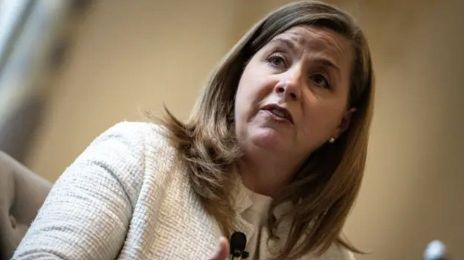
Fed Governor Michelle Bowman, attending an event in London, UK, on the 25th, stated, "We have not yet reached the appropriate time to lower the policy rate," adding, "We do not expect rate cuts this year and have pushed back the timing of cuts to the future."
Regarding the inflation outlook, she diagnosed "many upside risks" and even mentioned the possibility of further rate hikes. She said, "If inflation progress stalls or reverses, there is a willingness to raise the federal funds rate target range at future meetings," and added, "We will maintain a cautious approach in considering policy changes, taking into account risks and uncertainties in the economic outlook."
Governor Bowman also viewed that "the path of U.S. monetary policy over the coming months is likely to differ from that of other advanced economies." This implies that the Fed will not be influenced by the monetary policy shifts of the European Central Bank (ECB) and the Bank of Canada, which recently implemented rate cuts.
Mary Daly, President of the Federal Reserve Bank of San Francisco, also dismissed the possibility of preemptive rate cuts.
President Daly told CNBC on the same day, "Preemptive cuts happen when there is risk," and said, "We will remain resolute until the job is done." She emphasized, "It is very important not to take preemptive action when it is not necessary."
On the other hand, some within the Fed have expressed views that rate cuts will occur at some point, anticipating a continued slowdown in inflation.
Fed Governor Lisa Cook, attending a New York Economic Club event that day, stated, "If inflation makes significant progress and the labor market gradually eases, it will be appropriate at some point to reduce the policy constraint level to maintain a healthy balance in the economy." She did not specify the timing of rate cuts.
She forecast that inflation will continue to decline along a "bumpy path" over the next three to six months and will slow more sharply next year. Housing service inflation is expected to fall, reflecting a slowdown in new rents, core goods prices are expected to remain negative, and non-housing core services prices are expected to ease over time.

Osthan Goolsby, President of the Federal Reserve Bank of Chicago, also told CNBC the previous day, "If we confirm good inflation data for several months, questions will arise about the need to maintain restrictive policy," adding, "The groundwork for cuts will be laid."
While emphasizing the importance of data-driven monetary policy, which aligns with the Fed's basic stance, his remarks are interpreted as much more dovish (favoring monetary easing) compared to Governor Bowman's mention of the possibility of further hikes, as he places more weight on inflation easing and rate cut prospects within the year. With the May Consumer Price Index (CPI) and Producer Price Index (PPI) slowing, there are temperature differences within the Fed regarding current inflation diagnosis, outlook, and future monetary policy direction. Previously, the Fed reduced its forecast for the number of rate cuts this year from three to one in the dot plot released at this month's Federal Open Market Committee (FOMC) meeting, but there was significant divergence among FOMC members. Of the 19 members, eight forecast two cuts this year, seven forecast one cut, and four forecast zero cuts.
The market is betting on rate cuts within the year but sees both one and two cuts as possible. According to the Chicago Mercantile Exchange (CME) FedWatch, the federal funds futures market on that day reflected a 65.9% probability that the Fed will cut rates by at least 0.25 percentage points at the September FOMC. The probability of a cut of at least 0.25 percentage points in November is 78.6%.
Accordingly, the May PCE price index to be announced on the 28th is expected to be quite important for the Fed's future rate decision path. The May core PCE price index is expected to rise 0.1% month-over-month and 2.6% year-over-year, both below the previous month's figures (0.2% and 2.8%, respectively). If the slowdown in the core PCE price index, the inflation indicator most closely watched by the Fed, is confirmed, the forecast for two rate cuts within the year is likely to gain more weight.
Lee Hardman, strategist at MUFG Bank, said, "We expect to confirm a slowdown in inflation, which is progress the Fed should welcome," and predicted, "If inflation indicators ease further, they could signal a rate cut in September during the summer."
© The Asia Business Daily(www.asiae.co.kr). All rights reserved.

![Clutching a Stolen Dior Bag, Saying "I Hate Being Poor but Real"... The Grotesque Con of a "Human Knockoff" [Slate]](https://cwcontent.asiae.co.kr/asiaresize/183/2026021902243444107_1771435474.jpg)
















