Seongnam City Announces Detailed Scoring Criteria for Bundang Pilot District
Household Count Scores Higher Than Number of Integrated Complexes... "Advantage for Large Complexes"
Commercial Building Approval Rate Practically Excluded... "Beneficiary Complexes Clear"
Seongnam City in Gyeonggi Province is abuzz as it announced detailed scoring criteria for the selection of the first-generation new town pilot districts, benefiting apartment complexes in Bundang. Compared to the previous criteria set by the Ministry of Land, Infrastructure and Transport, the new standards are seen as favoring large complexes. In particular, the exclusion of commercial building consent rates from the resident consent rate has sparked complaints that this might be a case of 'favoring specific complexes.'
According to the maintenance industry on the 26th, Seongnam City announced the selection guidelines for the Bundang New Town pilot district the day before. The detailed scoring criteria were finalized by reflecting local conditions on the selection standards announced last month by the Ministry of Land, Infrastructure and Transport.
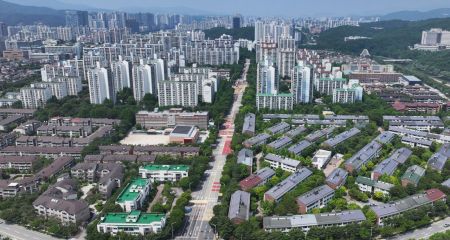
Commercial Building Consent Rate Excluded from Scoring... Increased Points for Total Number of Households
Seongnam City clearly defined the eligibility for applying as a pilot district. Applicants must obtain consent from more than 50% of all landowners within the area, more than 50% of landowners per complex, and more than 20% of commercial property owners within the area. However, the highest score (60 points) assigned to the resident consent rate did not include the commercial building consent rate. This effectively means that only 20% consent from commercial property owners is required.
Complexes with a high proportion of commercial properties, where securing consent was difficult, have relatively benefited. Yangji Village in Sunae-dong, Bundang (comprising Kumho, Cheonggu, and Hanyang complexes) is a representative example. Yangji Village, where five complexes are pursuing integrated reconstruction, has a total of 4,392 households, making it the largest in Bundang. It also has about 450 commercial units, the most in Bundang, leading to a strong perception that raising the consent rate would be challenging. However, with Seongnam City's recent announcement reducing the burden of securing commercial consent, Yangji Village has quickly emerged as a dark horse for the pilot district. It is known that Yangji Village secured about a 40% commercial consent rate in a preliminary survey.
Looking at the scoring criteria by category, large apartment complexes are considered to have gained an advantage compared to the Ministry of Land's previous announcement. For example, in the 'Impact of Maintenance Project Promotion' category, the number of housing complexes participating in integrated maintenance was reduced from 10 points to a maximum of 4 points. Instead, the number of households participating in integrated maintenance increased from 10 points to 15 points. This shift places more importance on the 'number of households in the complex' rather than 'how many apartment complexes merge.' In the urgency of residential environment improvement category, while the Ministry of Land's criteria only included parking spaces per household, Seongnam City's guidelines added factors such as average building age, corridor-type buildings, and PC construction methods.
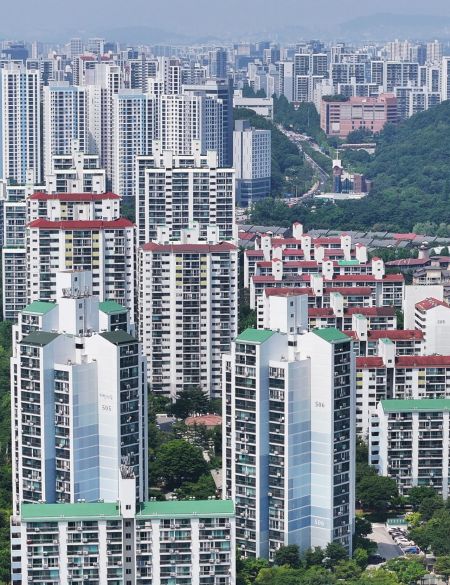
"Only Large Complexes Benefit... Exclusion of Commercial Consent Rate Clearly Benefits Certain Complexes"
Complexes with fewer households or those expecting the inclusion of commercial consent rates are voicing dissatisfaction. One integrated reconstruction promotion committee chairman said, "Seongnam City's detailed guidelines effectively reflect the demands of large apartment complexes like Yangji Village and the pilot complexes," adding, "Especially regarding the exclusion of the commercial consent rate, even committee chairmen who had not previously voiced concerns are now expressing frustration about how this happened." Another committee chairman also said, "In the case of commercial consent rates, other complexes have commercial property owners forming committees to negotiate with us," and added, "Setting the 20% standard and excluding it from the resident consent rate is essentially the city removing Yangji Village's Achilles' heel."
Some also point out that there may be political calculations involved. One committee chairman said, "According to Seongnam City's standards, it is highly likely that a landmark-level pilot district will be designated in each National Assembly member's constituency," and added, "Excluding the commercial consent rate could become a source of instability in the reconstruction process even if designated as a pilot district."
© The Asia Business Daily(www.asiae.co.kr). All rights reserved.


















