Gyeonggi's Anyang City and Gunpo City have started a public contest to select pilot districts for the redevelopment projects of the first-generation new towns within their jurisdictions, including Pyeongchon and Sanbon.
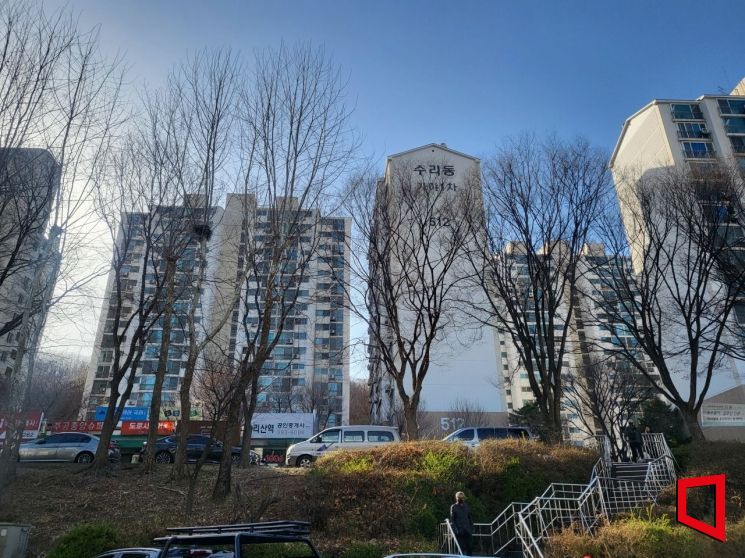
On the 25th, Anyang City and Gunpo City announced the 'Pilot District Contest Guidelines' on their websites. The cities explained, "In accordance with the 'Special Act on the Redevelopment and Support of Aging Planned Cities' enacted on April 27 and the 'Plan for Selecting Pilot Districts for Redevelopment of First-Generation New Towns' announced on the 22nd of last month, we have launched a contest to select pilot districts for the redevelopment of aging planned urban areas."
The pilot district is the area within the first-generation new towns that will begin construction first (in 2027), aiming for occupancy by 2030. According to the guidelines, areas included within the special redevelopment zones are eligible for the contest. Candidate complexes for the pilot district will secure consent rates and prepare for three months after the announcement, then submit their applications between September 23 and 27. Each local government will evaluate the applications in October and make the final selection of pilot districts in November.
According to the pilot district selection plan announced earlier by the Ministry of Land, Infrastructure and Transport, the selection scale is 8,000 households in Bundang, 6,000 households in Ilsan, and 4,000 households each in Pyeongchon, Jungdong, and Sanbon. Depending on conditions, each local government may designate 1 to 2 additional zones (within 50% of the standard volume). In this case, up to approximately 39,000 households could be selected as pilot districts.
The selection criteria are based on the 'Standard Evaluation Criteria' presented by the Ministry of Land, Infrastructure and Transport, with local governments able to adjust detailed scoring standards. The most important evaluation criterion is 'resident consent,' which accounts for 60 points. Additionally, the urgency of improving residential environments such as the number of parking spaces per household within the integrated zone (10 points), the necessity of revitalizing urban functions (10 points, qualitative evaluation possible), and the ripple effects of promoting redevelopment projects (20 points) are evaluated to narrow down the pilot districts.
© The Asia Business Daily(www.asiae.co.kr). All rights reserved.

![Clutching a Stolen Dior Bag, Saying "I Hate Being Poor but Real"... The Grotesque Con of a "Human Knockoff" [Slate]](https://cwcontent.asiae.co.kr/asiaresize/183/2026021902243444107_1771435474.jpg)















