Professor Jung Kyungmin's Team at UNIST Presents Commercialization Potential of Dry Electrode Process Through Detailed Analysis
Performance Enhanced via Semi-Finished Product Evaluation, Published in Chemical Engineering Journal
An eco-friendly dry electrode process has been developed that increases the energy density of lithium-ion batteries without using harmful solvents.
This advancement is expected to make energy use in electric vehicles and various electronic devices even more sustainable.
The research team led by Professor Jung Kyungmin from the Department of Energy and Chemical Engineering at UNIST (Ulsan National Institute of Science and Technology) has newly developed a dry electrode unit process and a method for evaluating intermediate products for lithium-ion batteries. This dry process, which does not use harmful solvents, enhances battery performance while also contributing to environmental protection.
 Professor Kyungmin Jung
By defining the detailed steps of the dry process and meticulously analyzing the impact of each step on battery performance, the team has taken a step closer to commercialization. This goes beyond the limitations of previous studies, which focused only on performance evaluation.
Lithium-ion battery electrodes have traditionally been manufactured using a wet process. However, when thick electrodes are used, the uneven distribution of binders and conductive agents can lead to performance degradation. In contrast, the dry electrode process, which does not use organic solvents, can produce uniform electrodes, but has remained at the laboratory research level, making commercialization difficult.
The research team increased the potential for commercialization by introducing a solvent-free dry process based on polytetrafluoroethylene (PTFE) binder. The process is divided into granulation, film formation, and rolling-lamination stages. The team evaluated the physical, electrical, and electrochemical properties of the intermediate products produced at each stage to determine the optimal process conditions.
In particular, it was revealed for the first time that using a binder with a high extrusion ratio of PTFE allows for the production of high-strength electrode films with low energy input, and that the improved microstructure of the electrode enhances output characteristics.
In lithium-ion batteries, the binder plays a crucial role in connecting active materials and electrons. In the commercialized wet electrode process, the type and content of the binder significantly affect both the process and the performance of the electrode. The study has now identified how the type and content of PTFE binder in the dry electrode process change the output characteristics of each process and the final electrode.
Professor Jung Kyungmin emphasized, "The manual process of making electrodes one by one makes mass production difficult and maintaining consistent quality challenging. This research, which subdivides the process into unit steps beyond the laboratory scale, will contribute to commercialization."
First author Oh Hyesung stated, "Through evaluation of the type and content of PTFE in this study, we found clues to improve the output characteristics of electrodes. In follow-up research, I hope to further enhance the output characteristics of thick electrodes by applying various materials."
This research was published in the internationally renowned journal Chemical Engineering Journal and was carried out through the Creative Convergence Research Project, "Development of Innovative Convergent Solutions for Materials/Processes for Carbon-Neutral High-Energy-Density Batteries," supported by the National Research Council of Science and Technology (NST).
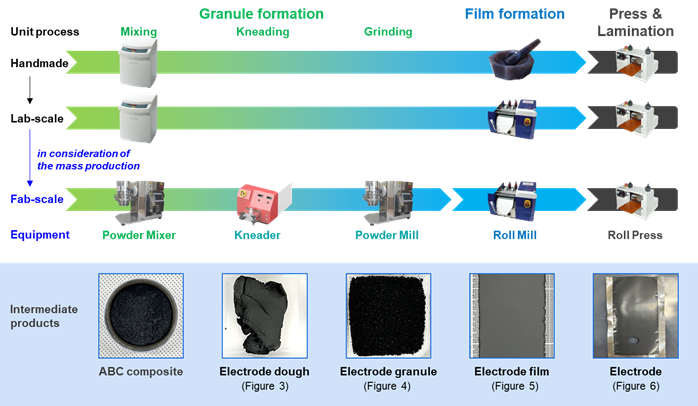
Korea Institute of Energy Research and Hanwha, who are conducting joint research, plan to manufacture specialized dry electrode production equipment and begin demonstration in the second half of this year.
© The Asia Business Daily(www.asiae.co.kr). All rights reserved.
![Clutching a Stolen Dior Bag, Saying "I Hate Being Poor but Real"... The Grotesque Con of a "Human Knockoff" [Slate]](https://cwcontent.asiae.co.kr/asiaresize/183/2026021902243444107_1771435474.jpg)
















