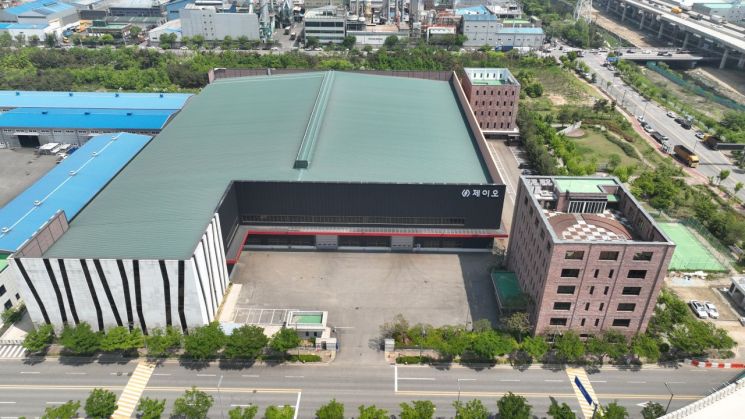
As electric vehicles (EVs) gain attention as a new turning point in transportation due to environmental pollution issues caused by internal combustion engine vehicles, the importance of carbon nanotube (CNT) technology, an essential material for next-generation EV batteries, is increasing. Among domestic companies, Jeio, which possesses the world's only full lineup of CNT products, is drawing attention.
Recently, as the EV market has experienced a temporary demand stagnation known as the EV chasm, market stakeholders including EV manufacturers are focusing on addressing drawbacks such as less attractive prices compared to internal combustion engines, battery capacity and performance, charging speed, and lifespan. In particular, the importance of developing new materials to create batteries that are competitive in terms of price and performance is growing.
According to the industry, to develop next-generation batteries with excellent performance such as the recently spotlighted LFP (lithium-ion battery) for expanding affordable EVs, as well as 4680 batteries and solid-state batteries, CNT, a conductive material superior to the existing carbon black, is essential.
This is because the proportion of conductive materials inside the battery decreases with CNT, thereby maximizing the cathode active material and improving battery performance. Additionally, CNT’s excellent conductivity accelerates charge movement, supporting fast charging of batteries and significantly enhancing battery lifespan and safety.
Companies supplying CNT powder, the raw material for CNT, include domestic Jeio, LG Chem, and China’s C-NANO. The technology is so challenging that only a limited number of companies can supply CNT powder, requiring not only material technology but also production process technology, creating a high technological entry barrier.
There are three types of CNT: multi-walled carbon nanotubes (MWCNT), double-walled carbon nanotubes (TWCNT), and single-walled carbon nanotubes (SWCNT). While most CNT powder companies can only supply MWCNT, the domestic company Jeio is the only one supplying all three: MWCNT, TWCNT, and SWCNT.
Jeio has been engaged in the CNT business for 20 years and was the first in the industry to succeed in mass production of MWCNT. It then achieved the world’s first development and mass production of non-ferrous CNT, the world’s only development and mass production of TWCNT for secondary batteries, and developed high-quality SWCNT last year. In particular, Jeio is recognized as the world’s only company with a full lineup of carbon nanotube products based on its unique material technology and differentiated process technology from other companies.
Jeio expects accelerated quantitative growth based on its capability to supply SWCNT and TWCNT in line with the growth of the silicon anode material market, which is anticipated to take off in 2025. As the LFP camp, which has shown remarkable results in the affordable market, expands the adoption of CNT as an innovative conductive material, Jeio’s market scope is expected to broaden.
Moreover, the increasing importance of high-spec conductive materials due to the development of premium technologies such as dry processes and solid-state batteries is also a positive factor. Jeio is proactively preparing to increase production capacity (CAPA) to meet global demand. In May, it completed the construction of its second Ansan plant, securing a total production capacity of 2,000 tons along with the existing first Ansan plant.
The second plant is scheduled to begin full-scale operation in the second half of this year after customer certification procedures, and an additional 1,000-ton expansion is being prepared around the same time, which is expected to increase total CAPA to 3,000 tons by 2025.
A Jeio official stated, “Jeio’s MWCNT and TWCNT are highly evaluated by secondary battery customers worldwide, including Korea, the United States, Europe, China, and Japan,” adding, “As Jeio is leading the emerging SWCNT market, significant growth is expected going forward.”
He continued, “We will strengthen global partnerships to expand CNT supply and proactively respond to the anticipated increase in global demand through the increased CAPA.”
© The Asia Business Daily(www.asiae.co.kr). All rights reserved.

















