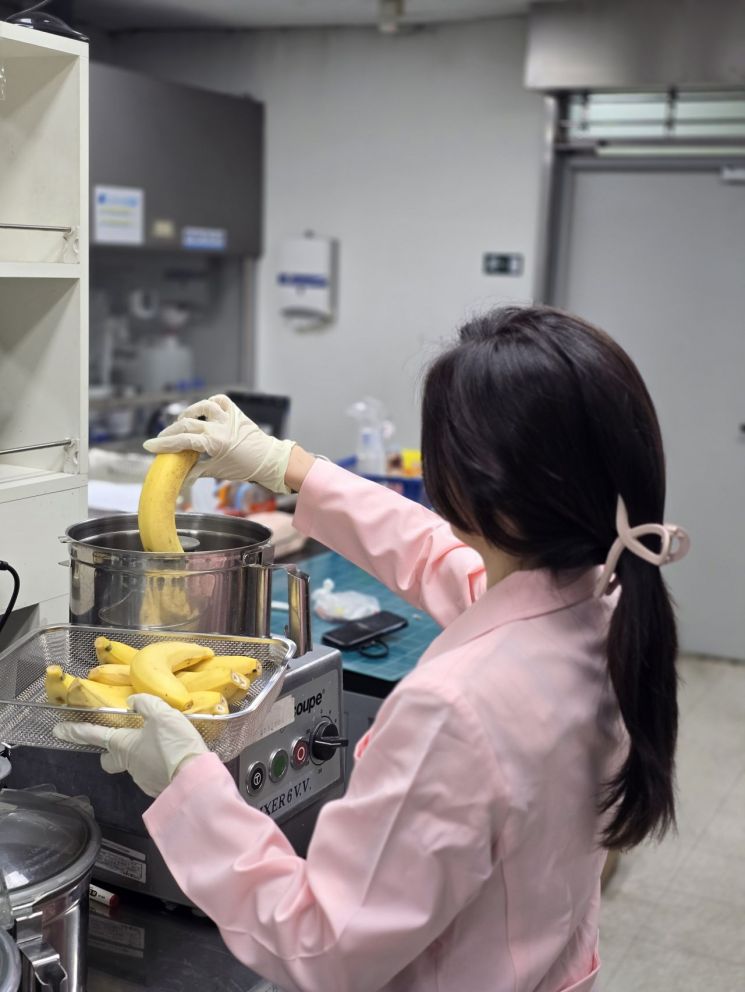
 A researcher from the Gyeonggi-do Institute of Health and Environment is collecting tropical fruits to test for pesticide residues.
All tropical fruits distributed in Gyeonggi-do were analyzed to be compliant with the residual pesticide standards.
The Gyeonggi-do Institute of Health and Environment announced on the 24th that it conducted inspections on 101 samples of 10 imported fruit items, including mangoes, bananas, and kiwis, from March to June, and all were found to meet the residual pesticide standards.
The institute added that although residual pesticides were detected in 23 samples of some fruits such as mangoes, all were within the acceptable limits.
Cases where residual pesticides were detected included 15 mango samples, 7 banana samples, and 1 avocado sample.
By country of import, for mangoes, pesticides were detected in 9 samples from Thailand, 3 from Brazil, 2 from Peru, and 1 from the Philippines. For bananas, 2 samples from Guatemala, 2 from Ecuador, 2 from Costa Rica, and 1 from the Philippines showed pesticide residues. For avocados, 1 sample from Mexico was detected.
A representative from the Gyeonggi-do Institute of Health and Environment stated, "The import volume of tropical fruits has been increasing up to twice as much per item compared to a year ago," and added, "We will strengthen safety inspections, including for residual pesticides, to ensure the safety of residents."
© The Asia Business Daily(www.asiae.co.kr). All rights reserved.

















