Interest is growing as a ‘ritual site’ has been discovered at the summit of Jamisan Mountain, located in Bannam-myeon, Naju City, known as a sacred site of ancient Mahan (馬韓).
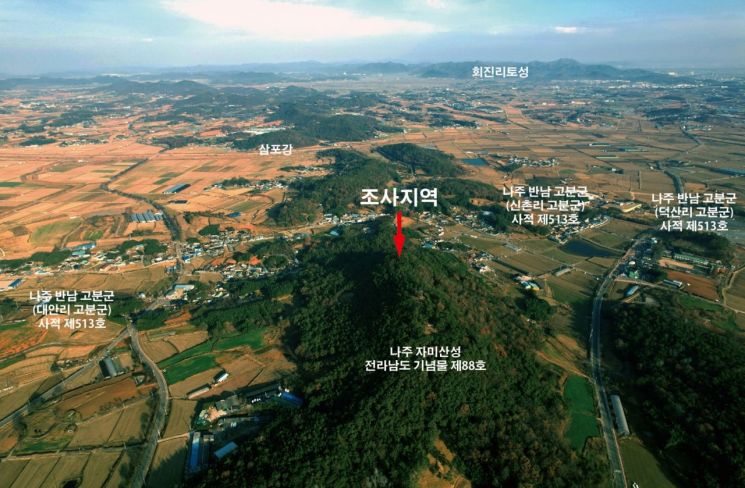
Naju City, Jeollanam-do (Mayor Yoon Byung-tae) announced on the 23rd that a field briefing was held on the 20th regarding the excavation of a ritual site at the northern summit of Jamisan, also called Haneulbong, located at San 36, Da-an-ri, Bannam-myeon.
The briefing was attended by Mayor Yoon Byung-tae, related officials, Park Cheol-won, director of the Dongseo Comprehensive Cultural Heritage Research Institute who led the trial and excavation, Kim Sang-tae, director of the National Naju Museum, Professor Lee Jeong-ho of Dongshin University, other academic experts, and about 50 local residents including Jeong Hong-chae, president of the Bannam Mahan Heritage Preservation Association.
Director Park Cheol-won revealed an overview of the detailed excavation investigation, achievements, and current status of the ritual site at the summit of Bannam Jamisan.
The excavation of the ritual site was carried out as part of the Jeollanam-do Mahan Investigation Support Project, following a trial excavation conducted in December of last year.
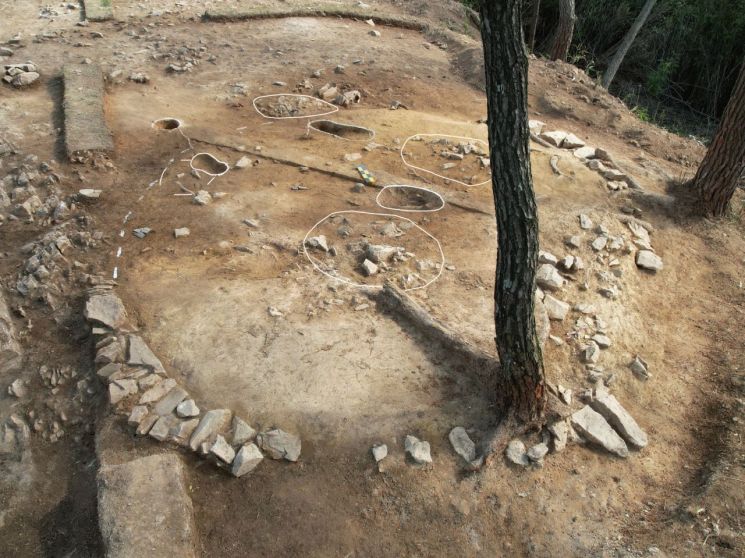
Through the excavation, an altar (祭壇), building remains, and pottery used in rituals, presumed to have been used from ancient times through the Goryeo Dynasty, were confirmed.
The altar takes the form of an oval-shaped earthen mound (土壇) surrounded by stones, and traces of wooden pillars related to the ritual were also found on top of the mound.
Inside and outside the mound, fragments of Three Kingdoms period Onggwan pottery, Saebalmuneut pottery fragments (footprint-patterned pottery) from the Yeongsan River basin, Unified Silla period pottery fragments, and Goryeo Dynasty bronze bells, all believed to have been used in rituals, were excavated.
Based on the excavated artifacts, it is estimated that the Jamisan ritual site was continuously used as a place of worship from the time the Bannam burial mound cluster was constructed, through the Unified Silla period, and into the Goryeo Dynasty.
Previously, at Jamisan where the ritual site is located, several building remains including Jamisan Fortress, a Jeollanam-do monument, and earthen brick-floored building remains were excavated.
During that excavation, roof tiles inscribed with Bannam’s old place name, Bannabu-ri (半乃夫○), were also recovered.
Accordingly, the residents of Bannam-myeon, led by the Bannam Mahan Heritage Preservation Association, have annually held the ‘Cheonje’ ritual at Jamisan and the ancestral rites at Sinchon-ri Tomb No. 9, continuing the historical culture as descendants of the Mahan people.
Kim Sang-tae, director of the National Naju Museum, said, “The ritual site excavated this time has great historical value as a comprehensive site used from the Three Kingdoms period through the Goryeo Dynasty, considering its location at the mountain summit and surrounding sites such as the Bannam burial mound cluster and Jamisan Fortress.”
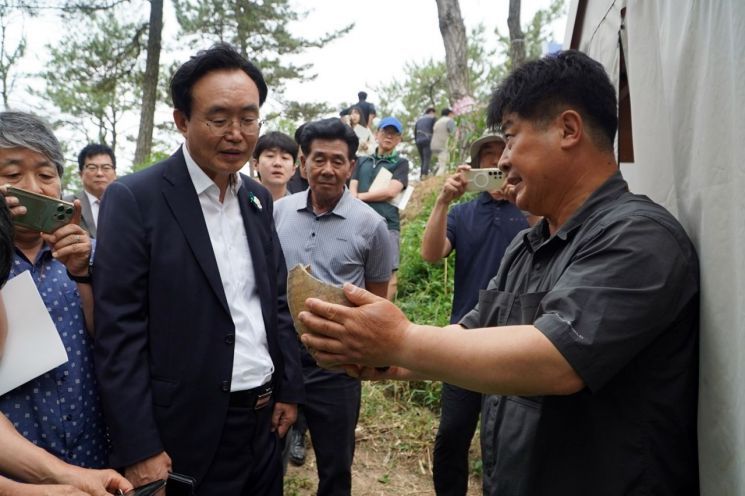
Mayor Yoon Byung-tae of Naju said, “The ritual site, which had long been passed down only through oral tradition, has now been revealed in its actual form. Securing the basis for the Jamisan Cheonje is expected to be an important opportunity to clarify the history and culture of ancient Mahan.”
He added, “We will do our best to have the comprehensive Jamisan site in Naju designated as a national historic site through expanded investigations to identify other ritual-related remains and artifacts, as well as by holding academic conferences involving experts from academia.”
Naju = Kim Yuk-bong, Honam Reporting Headquarters, Asia Economy bless4ya@asiae.co.kr
© The Asia Business Daily(www.asiae.co.kr). All rights reserved.



















