Government and Ruling Party Pressure Bank of Korea to Cut Base Interest Rate
Bank of Korea Draws Line, Saying Decision Should Be Independent
Calls for August Rate Cut Grow in Market
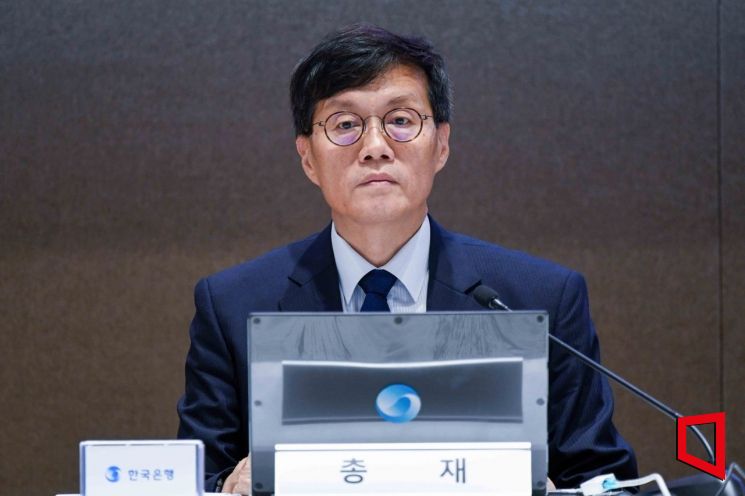 Lee Chang-yong, Governor of the Bank of Korea, is delivering opening remarks at the Price Stability Target Operation Status Review briefing held on the 18th at the Bank of Korea Annex in Jung-gu, Seoul. Photo by Joint Press Corps
The government and the ruling party have been pressuring the Bank of Korea (BOK) daily to lower the base interest rate, putting the BOK in a difficult position. While the government and ruling party hope that the BOK will quickly cut the base rate to reduce the public burden caused by high interest rates and stimulate domestic demand, the BOK is drawing a line, stating that monetary policy decisions should be made independently.
According to political circles on the 21st, the People Power Party's Special Committee on Livelihood and Economic Stability is expected to invite senior officials from the BOK and the Financial Services Commission (FSC) to the National Assembly meeting scheduled for the 27th to discuss agenda items related to the base interest rate cut. From the BOK, Deputy Governor Yoo Sang-dae is expected to attend, and from the FSC, Vice Chairman Kim So-young is anticipated to participate.
From the BOK's perspective, which emphasizes the independence of monetary policy, attending a meeting hosted by the ruling party's special committee focused on interest rate cuts is itself a burdensome situation. The BOK explained that it is attending only in response to requests to discuss the economic situation and that it is difficult to talk about the direction of the base interest rate.
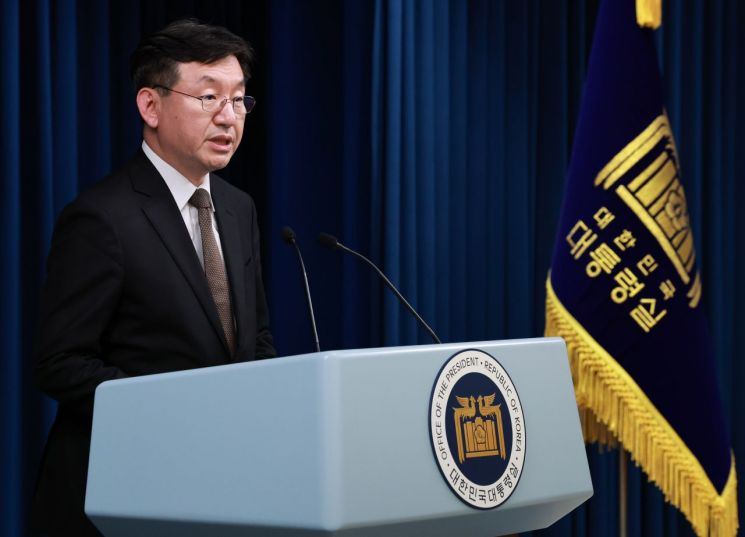
However, the ruling party and government continue to demand that the BOK lower the base interest rate. Sung Tae-yoon, the Presidential Office's Policy Chief, appeared on a broadcast on the 16th and said, "The inflation rate is stabilizing," and "The environment is becoming suitable for our country to lower the base interest rate." People Power Party lawmaker Song Eon-seok also argued, "Considering the hardships faced by the public due to high interest rates, it is necessary to consider lowering the base interest rate preemptively ahead of the U.S." People Power Party Emergency Committee Chairman Hwang Woo-yeo and lawmaker Yoon Sang-hyun also urged the BOK to cut the base interest rate.
Regarding the government and ruling party's demands for a rate cut, BOK Governor Lee Chang-yong drew a line, stating that the base interest rate cut is a matter to be decided independently by the Monetary Policy Committee. At a price explanation meeting on the 18th, Governor Lee said, "We are listening to various opinions related to monetary policy," but added, "The Monetary Policy Committee members will listen to various opinions and make an independent decision."
Despite Emphasizing BOK Independence, Market Bets on Base Rate Cut
Despite the BOK emphasizing the independence of monetary policy, the market increasingly views the possibility that Korea will cut its base interest rate ahead of the U.S. The market sees a high likelihood that the U.S. will lower its base rate in September. Kim Jin-wook, Chief Economist at Citibank, said, "Governor Lee did not resist political pressure regarding a policy rate cut," and raised the probability of a rate cut in August from 60% to 100%.
Researcher Kang Seung-won of NH Investment & Securities argued, "Korea's core inflation rate is much lower than that of Europe or Canada, and the first-quarter domestic demand rebound was likely temporary," adding, "There is a possibility that the BOK will preemptively cut the base interest rate in August." The bond market is also betting on a rapid base rate cut. On the 19th, the 3-year government bond yield fell to 3.162%, marking the lowest point of the year.
Although conditions are changing, many still believe it will be difficult for the BOK to lower the base interest rate faster than the U.S. The interest rate differential with the U.S. has reached 2 percentage points, and if this gap widens further, concerns about won-dollar exchange rate increases and capital outflows may grow. The recent upward trend in Seoul housing prices is also a factor making a preemptive rate cut difficult. If Korea cuts rates first in August but the U.S. does not follow in September, issues related to monetary policy missteps could arise.
Joo Won, Head of Economic Research at Hyundai Research Institute, said, "While some countries are moving to cut base interest rates ahead of the U.S., from Korea's perspective, cutting rates before the U.S. could raise exchange rate concerns," adding, "We do not see a high possibility of a preemptive base rate cut."
© The Asia Business Daily(www.asiae.co.kr). All rights reserved.
!["The Woman Who Threw Herself into the Water Clutching a Stolen Dior Bag"...A Grotesque Success Story That Shakes the Korean Psyche [Slate]](https://cwcontent.asiae.co.kr/asiaresize/183/2026021902243444107_1771435474.jpg)

















