Japanese Encephalitis Virus Carriage Survey Until November
Urging Compliance with Mosquito Bite Prevention Rules During Outdoor Activities
Jeonbuk Province announced that the first small red house mosquito, a vector of Japanese encephalitis, was found on the 18th, 10 days earlier than last year.
According to the Provincial Health and Environment Research Institute on the 21st, the small red house mosquito (Culex tritaeniorhynchus) causes Japanese encephalitis, a third-class legally designated infectious disease, as part of the climate change vector surveillance project. It was first collected in the province this year on the 18th. Previously, it was also confirmed on the 12th in Ulsan City and on the 17th in Cheongju City.
The province explained, "With global warming and the recent heatwave, mosquito activity periods have advanced, so it is estimated that the small red house mosquito appeared earlier." The survey for Japanese encephalitis virus carriers will continue until November.
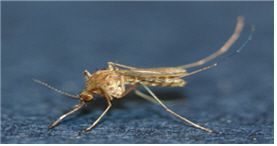
The small red house mosquito is distributed throughout the country and transmits Japanese encephalitis. It is a small, dark brown mosquito that inhabits rice paddies, livestock farms, and puddles around houses, and mainly feeds at night.
Japanese encephalitis is an acute central nervous system infectious disease caused by a virus. When bitten by a mosquito carrying the Japanese encephalitis virus, about one in 250 infected people develop encephalitis, showing symptoms such as high fever and headache. However, among those who progress to fatal acute encephalitis, 20-30% die due to consciousness disorders, seizures, or coma, so special caution is required.
Cases of Japanese encephalitis occur from August to November, with a concentration in September and October. The majority of patients are aged 60 and above. About 20 cases occur nationwide every year. Since two cases were reported in the province in 2013, there have been no cases of Japanese encephalitis patients to date.
To prevent mosquito bites, wear bright long clothing to reduce skin exposure during outdoor activities and use repellents. At home, use screens and mosquito nets to avoid mosquito bites.
Meanwhile, the climate change vector surveillance project was conducted under the Disease Control Agency due to the expansion of vector occurrence and distribution caused by global warming and the increased possibility of new overseas infectious diseases entering the country.
Jeon Gyeong-sik, director of the Health and Environment Research Institute, said, "Japanese encephalitis can be prevented by vaccination, so high-risk groups such as infants and young children should be vaccinated," and urged, "Since mosquito-borne infectious diseases are best prevented by avoiding mosquito bites, please follow mosquito bite prevention guidelines during outdoor activities."
© The Asia Business Daily(www.asiae.co.kr). All rights reserved.
![Clutching a Stolen Dior Bag, Saying "I Hate Being Poor but Real"... The Grotesque Con of a "Human Knockoff" [Slate]](https://cwcontent.asiae.co.kr/asiaresize/183/2026021902243444107_1771435474.jpg)















