The National Pension Service (NPS) has been ruled by the Supreme Court's en banc decision that when it pays pension benefits to victims of illegal acts and subrogates the victim's right to claim damages, the scope of such subrogation is limited to the amount corresponding to the perpetrator's liability ratio within the pension benefits paid by the NPS.
For example, if a victim suffers damages of 1 million KRW due to an illegal act and the NPS first pays 400,000 KRW to the victim, then when subrogating the right to claim damages against the perpetrator, if the fault ratio between the perpetrator and the victim is 70:30, the amount the NPS can claim from the perpetrator is not the full 400,000 KRW paid to the victim, but the amount corresponding to the perpetrator's fault ratio (70%), i.e., 280,000 KRW.
In 2021, the Supreme Court en banc adopted the 'deduction first, then fault adjustment' method in a case involving the National Health Insurance Service (NHIS) where the subrogation of the right to claim damages after paying insurance benefits to the victim was at issue. The court held that the amount the NHIS can claim from the perpetrator should be determined by first deducting the insurance benefits paid by the NHIS and then applying the fault adjustment between the perpetrator and the victim. The current ruling holds that the same legal principle applies to the National Pension Service in determining the claim amount.
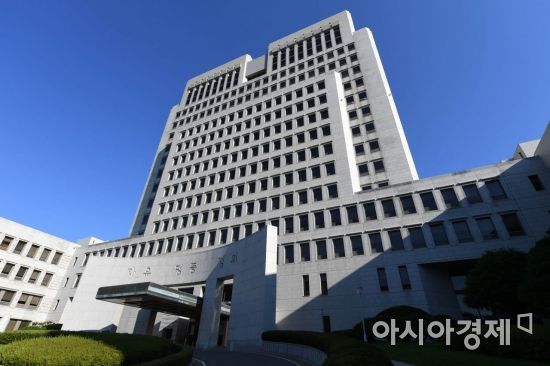
On the 20th, the Supreme Court en banc (Presiding Justice Cho Hee-dae, Chief Justice, and Justice Eom Sang-pil as the reporting judge) unanimously dismissed the appeal filed by the NPS, which participated in the lawsuit as a successor participant, in the final appeal concerning the scope of subrogation after the NPS paid disability pension to a victim of a traffic accident and subrogated the right to claim damages against the perpetrator. The court affirmed the lower court's ruling based on the so-called 'deduction first, then offset' theory.
The court stated, "When the National Pension Service pays pension benefits to a victim of an illegal act and subrogates the victim's right to claim damages against the perpetrator pursuant to Article 114(1) of the National Pension Act, the scope of such subrogation should be limited to the amount corresponding to the perpetrator's liability ratio within the pension benefits, capped by the perpetrator's damage compensation amount."
It further stated, “Contrary to this, the previous Supreme Court precedent that held 'when the National Pension Service subrogates the victim's right to claim damages against the perpetrator, the scope of subrogation is the entire amount of pension benefits within the scope of the right to claim damages' is hereby overturned."
The plaintiff, Mr. A, was involved in an accident on January 14, 2016, at an intersection in Sacheon-si, Gyeongnam Province, where his motorcycle was struck on the front wheel by a taxi driven by Mr. B. Mr. A suffered injuries including paralysis of all limbs.
Mr. A filed a lawsuit against the mutual aid association to which Mr. B belonged, claiming damages of approximately 1.16 billion KRW. This amount included lost future income due to paralysis, incurred and future medical expenses, costs for assistive devices for mobility, and nursing care expenses.
The first trial court assigned fault ratios of 80% to the perpetrator Mr. B and 20% to the victim Mr. A, ordering payment of approximately 690 million KRW plus interest, partially ruling in favor of the plaintiff.
Mr. A appealed, reducing the claim amount to approximately 1.139 billion KRW. During the appeal, the National Pension Service, which had paid Mr. A approximately 26 million KRW in disability pension, participated in the lawsuit as a successor participant.
The appellate court found that Mr. A had failed to take measures such as deceleration or emergency braking until just before the collision, recognizing negligence in failing to maintain forward attention, and adjusted the fault ratio to 60% for Mr. B and 40% for Mr. A.
The appellate court canceled the part of the first trial ruling ordering payment exceeding 510 million KRW plus interest and dismissed Mr. A's claim for that portion. Regarding the NPS as successor participant, the court ordered Mr. B to pay approximately 15.9 million KRW plus interest.
The key issue in the trial was whether the NPS could claim the full amount of approximately 26 million KRW in disability pension paid to Mr. A from Mr. B.
In similar cases involving the National Health Insurance Service, the Supreme Court's position was that the NPS could subrogate the entire amount paid to the victim without first deducting the amount paid by the NPS, within the scope of damages the perpetrator could claim from the victim.
For example, in the above case (damage amount 1 million KRW), the NPS could claim the full 400,000 KRW paid to the victim from the perpetrator, while the victim could only claim 300,000 KRW from the perpetrator after deducting the 400,000 KRW received from the NPS from the total claimable amount of 700,000 KRW based on the fault ratio (30%). This approach, where fault adjustment is applied first and then the pension paid by the NPS is deducted, is called the 'fault adjustment first, then deduction' method or 'offset first, then deduction' theory.
Whether following the 'deduction first, then offset' theory or the 'offset first, then deduction' theory, the total amount the perpetrator must pay (700,000 KRW based on the fault ratio out of total damages of 1 million KRW) remains unchanged. However, the interests of the victim and the NPS differ depending on which method is chosen. Under the previous Supreme Court position of 'offset first, then deduction,' the NPS could claim the full amount (400,000 KRW) paid to the victim from the perpetrator, while the victim could only claim 300,000 KRW from the perpetrator. Conversely, under the 'deduction first, then offset' theory, the NPS cannot claim the full 400,000 KRW from the perpetrator but only 280,000 KRW calculated according to the fault ratio. This issue concerns how to adjust the amounts the victim and the NPS should receive from the perpetrator when the victim has received social security benefits such as the National Pension or National Health Insurance.
However, the second trial court, instead of following the previous Supreme Court position, applied the calculation method from the Supreme Court en banc precedent involving the National Health Insurance Service case mentioned earlier.
Specifically, the court did not first apply fault adjustment to calculate the amount the victim could claim from the perpetrator but first deducted the pension amount received by the victim from the NPS. Then, the victim could only claim from the perpetrator the amount corresponding to the perpetrator's fault ratio within the remaining damages. Accordingly, the NPS could only claim from the perpetrator the remaining amount of damages excluding the amount the victim claimed. This calculation method is called the 'deduction first, then fault adjustment' method or 'deduction first, then offset' theory.
Applying this to the 1 million KRW damage example, after deducting the 400,000 KRW received from the NPS, the remaining damages are 600,000 KRW. Since the victim's fault is 30%, the victim can claim 70% of 600,000 KRW, i.e., 420,000 KRW from the perpetrator. The NPS cannot claim the full 400,000 KRW from the perpetrator but can claim the remaining 280,000 KRW, which is the difference between the 600,000 KRW remaining damages and the 420,000 KRW claimed by the victim.
Invoking the Supreme Court en banc precedent, the court stated, "When a victim who has received insurance benefits under the National Health Insurance Act claims damages against the perpetrator and the victim's fault is concurrent, the victim's damage claim related to past medical expenses should be calculated by first deducting the insurance benefits borne by the NHIS within the limit of the perpetrator's damage compensation amount and then applying fault adjustment, i.e., the 'deduction first, then fault adjustment' method."
It further held, "This legal principle established by the Supreme Court en banc applies equally when a victim who has received disability pension under the National Pension Act claims damages against the perpetrator."
The court concluded, "The plaintiff received approximately 26 million KRW in disability pension from the successor participant from August 2016 to July 2021 for 60 months, which does not exceed the lost income damages for the same period," and "Therefore, the successor participant subrogates the plaintiff's right to claim damages against the defendant for the amount of disability pension paid pursuant to Article 114(1) of the National Pension Act, and the amount subrogated by the NPS should be deducted from the plaintiff's lost income damages."
The NPS, which participated as a successor during the appeal and was recognized for about 60% of the claimed amount, appealed to the Supreme Court.
However, the Supreme Court found no problem with the second trial court's judgment.
The court stated, "When the National Pension Service pays pension benefits to a victim of an illegal act and subrogates the victim's right to claim damages pursuant to Article 114(1) of the National Pension Act, the scope of subrogation should be limited to the amount corresponding to the perpetrator's liability ratio within the pension benefits capped by the perpetrator's damage compensation amount, following the 'deduction first, then fault adjustment' method."
Article 114(1) of the National Pension Act (Subrogation Rights, etc.) states, "When the NPS pays disability pension or survivor's pension due to the act of a third party, it subrogates the recipient's right to claim damages against the third party to the extent of the benefit amount."
The court noted, "The wording of Article 114(1) of the National Pension Act does not necessarily mean that the scope of subrogation must be the entire pension benefit amount borne by the NPS. The legislative purpose of the National Pension Act to stabilize citizens' lives and promote welfare, as well as the social security nature of the National Pension system, should be considered in determining the scope of subrogation."
It added, "The purpose of recognizing the NPS's subrogation right is not to conclude that the NPS subrogates the entire pension benefit amount most disadvantageous to the victim, and such an interpretation disadvantaging the victim for fiscal reasons cannot be justified."
The court concluded, "When damages arise from the concurrent fault of a third party's illegal act and the recipient's negligence, it is reasonable to regard at least the amount corresponding to the victim's fault ratio within the pension benefits as the cost borne by the NPS on behalf of the victim and the benefit the victim is entitled to enjoy. Therefore, limiting the NPS's subrogation scope to the perpetrator's liability ratio within the pension benefits is a fair way to resolve the interests."
Finally, the court added, "The Supreme Court recently changed its precedent on the calculation method for damage claims under the National Health Insurance Act and the Industrial Accident Compensation Insurance Act through an en banc decision. Since these insurances and the National Pension all have social security characteristics as social insurance systems, a unified interpretation within the legal order is necessary."
A Supreme Court official said, "The Supreme Court recently adopted the 'deduction first, then fault adjustment' theory in health insurance and industrial accident insurance cases, and changed its previous view in National Pension cases from 'fault adjustment first, then deduction' to 'deduction first, then fault adjustment,' thereby reasonably limiting the scope of subrogation by the NPS and allowing victims to receive additional compensation."
The official added, "Thus, a unified legal interpretation regarding the scope of subrogation has been established for major social insurances such as health insurance, industrial accident insurance, and the National Pension. The en banc decision is significant in harmoniously considering the property rights and social insurance nature of the National Pension and promoting fairness between the NPS and victims."
© The Asia Business Daily(www.asiae.co.kr). All rights reserved.

















