The World's Largest Tobacco Producer and Consumer
China Implements Numerous Policies to Reduce Smoking Rates
Mr. Chao (60), who lives in China, is seriously considering quitting smoking these days as it has become difficult to find cigarettes priced under 10 yuan (about 1,800 won). The cigarettes he usually bought were priced between 5 yuan and 7 yuan (940 won to 1,300 won) per pack, but at some point, the 'cheap' cigarettes disappeared, causing a financial burden when purchasing cigarettes.
Cigarettes priced under 10 yuan are disappearing in China. This is because the Chinese government, judging that the widespread availability of low-priced cigarettes contributes to the high smoking rate in China, has been continuously pushing for cigarette price increases.
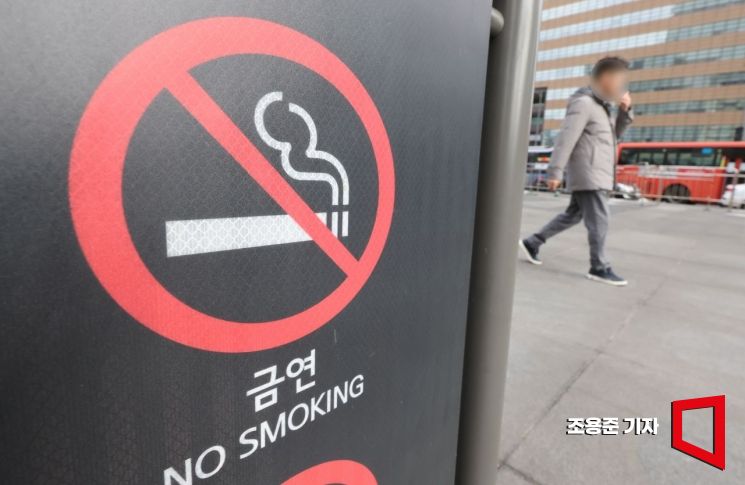
The environment for smoking is also gradually worsening compared to the past. In Beijing, no-smoking signs can be easily seen in public places, indoor workplaces, outdoor queues, and other locations. Since the implementation of the Framework Convention on Tobacco Control, China has expanded tobacco control regulations to regions including Beijing, Shanghai, Hangzhou, Guangzhou, Tianjin, Harbin, Shenzhen, Changchun, Tangshan, Nanning, Qingdao, Fuzhou, Zhangjiakou, and Wuhan, either establishing or revising tobacco control rules. Last year, 44 cities introduced or revised local laws and regulations related to tobacco control.
However, the number of smokers remains high. According to the "2022 China Smoking Health Risk Report" released by the National Health Commission of China in 2023, the number of smokers in China has exceeded 350 million. China remains the world's largest tobacco producer and consumer. There are cigarettes priced at 10 yuan per pack, as well as varieties that cost up to 1,000 yuan (approximately 1,800 won to 180,000 won), showing a wide range of options.
The amount of smoking is also on the rise. According to the Chinese Center for Disease Control and Prevention, the daily average number of cigarettes smoked by Chinese smokers is increasing. In 2018, it was 16 cigarettes per day on average, which rose to 16.8 cigarettes in 2022. Men smoke 17 cigarettes per day, while women smoke 13.8 cigarettes. The 45-64 age group, which has a high smoking rate, was found to smoke an average of 18.4 cigarettes per day.
There are also many adolescent smokers. According to the "2023 China Youth Tobacco Survey Report," there are 9 million adolescent smokers aged 15 to 19. More than 18 million youths have tried smoking at least once. A report published in the global medical journal The Lancet stated that if the current trend continues, the number of deaths caused by smoking in China will reach 2 million by 2030 and 3 million by 2050.
China aims to reduce the smoking rate among those aged 15 and older from the current 26% to 20% by 2030. The China Tobacco Control Association has launched a "No Smoking Promise Campaign" for households. The National Health Commission and the Ministry of Education are conducting education to inform teachers and students about the dangers of smoking. Smoking is prohibited in kindergartens, elementary, and secondary schools, and plans have been made to install no-smoking signs in dormitories, restrooms, offices, and public places. In Chinese society, there are concerns that if cigarette prices feel cheap, smoking rates among youths and low-income groups will increase, leading to calls for further adjustments to cigarette prices.
© The Asia Business Daily(www.asiae.co.kr). All rights reserved.

















