Low Birthrate and Aging Society Committee Announces 'Measures to Reverse Low Birthrate Trend'
Establishment of 'Care Special Zones' Integrating Community Care
Expansion of Kindergarten and Daycare Operation to 12 Hours
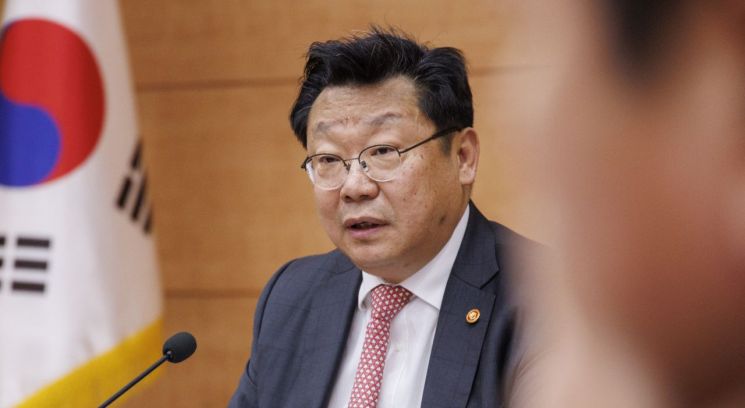
The government announced on the 19th that it plans to establish a ‘One-Stop Care Special Zone’ that integrates public and private care at the local level for comprehensive child care.
On the same day, the Low Birthrate and Aging Society Committee (LoBAS) held a meeting chaired by President Yoon Seok-yeol at HD Hyundai Global Asan Hall in Seongnam, Gyeonggi Province, where it announced measures to reverse the declining birthrate trend. The committee stated that the existing fragmented care services managed separately by the Ministry of Health and Welfare, Ministry of Education, and Ministry of Gender Equality and Family will be reorganized into an integrated management system.
The government plans to establish ‘Converged Care Special Zones’ that link public and private care at the local level. When designated as a converged care special zone within newly developed residential areas, care facilities will be mandated to be included as essential public facilities in the development plans. In old urban areas, the government will promote special care zones in connection with urban regeneration and expansion of living SOC (social overhead capital).
Regulations on multifunctional complex facilities, including facilities and personnel, will be relaxed. Under current law, kindergartens are not allowed to share kitchens, but improvements will be made to allow ‘children’s cafeterias’ to be jointly used by daycare centers and kindergartens. Additionally, fire prevention safety management regulations will be applied to community child care sharing centers and part-time childcare institutions, which currently have no separate regulations. Detailed plans for the converged care special zones will be prepared within this year after conducting joint research with local governments and research institutes.
Kindergarten and Daycare Operating Hours Extended to 12 Hours
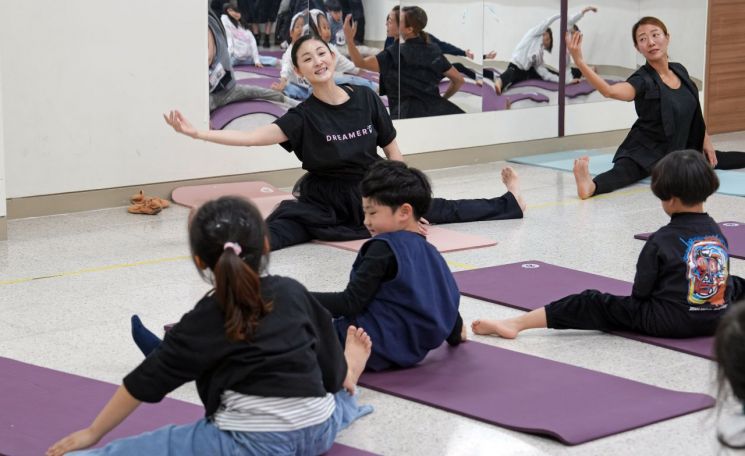
Care for infants, young children, children with disabilities, and elementary school students will also be strengthened. For infant and toddler care, the government will promote the unification of management under the Ministry of Education by integrating kindergartens (currently managed by the Ministry of Education) and daycare centers (currently managed by the Ministry of Health and Welfare). Through this, the operating hours of kindergartens and daycare centers will be extended to a total of 12 hours (8 hours of basic operation + 4 hours of care). They will also operate during school vacations to minimize care gaps, ensuring 100% participation for children who wish to attend. The teacher-to-infant ratio in 0-year-old classes will improve from 1:3 to 1:2, and for 3-5-year-old classes from 1:12 to 1:8.
Support for ‘win-win workplace daycare centers’ operated by large corporations and local governments will also be strengthened. The current operating expenses, which provide 2 million to 5.2 million KRW depending on the number of children, will be further expanded. Additionally, if large corporations contribute to a win-win cooperation fund to expand shared workplace daycare centers and other care facilities for small and medium-sized enterprises, incentives will be given to the contributing companies. Support will also be promoted to reduce acquisition tax and property tax when workplace daycare centers are operated on a consignment basis.
Gap care will also be enhanced. Childcare services will be expanded so that children can receive care near their homes during times needed by parents and children, such as after children return from school until parents finish work. The number of part-time childcare service providers will be expanded to 3,600 classes by 2027, and childcare costs will be supported to expand night and holiday daycare centers.
Daycare centers for children with disabilities will be expanded by 80 locations annually, reaching 1,970 centers by 2027. The childcare fee for children with disabilities will be increased from 70% to 100% of the standard childcare cost, and support for salaries and allowances for special teachers, childcare teachers for children with disabilities, and therapists will be expanded. Additionally, for child care vulnerable areas such as population decline regions, additional institutional childcare fees will be provided to maintain infant classes (0-2 years old), increasing from the current 230,000 to 630,000 KRW per child.
In elementary school care, the ‘Neulbom School’ program will be fully expanded. The current target group of first graders will be expanded to all grades by 2026. The free operation of programs will be gradually expanded. During the Neulbom expansion process in 2025, families with multiple children (two or more) will be given priority for care classrooms. Neulbom School is a comprehensive educational program that integrates existing after-school programs and care classrooms to support students’ growth and development in a safe environment.
Childcare Workforce Supply Targeting Approximately 300,000 Households by 2027
Home-visit care services will also be expanded. The supply of public and private caregivers is planned to be expanded to target approximately 300,000 households by 2027. To increase the supply of childcare workers, training institutions will be continuously expanded, and the scope of those eligible for reduced mandatory education hours will be broadened. Furthermore, a registration system will be introduced for private providers meeting certain standards such as caregiver qualifications to encourage the provision of care services. Support will be provided for new senior citizens among participants in elderly job programs aged 60 and above to engage in childcare activities. For children with mild disabilities, grandparents who meet caregiver qualifications will be supported to act as caregivers for their own grandchildren.
To meet in-home care demand, the expansion of foreign domestic workers will also be promoted. A pilot project for foreign domestic workers targeting 1,200 people is planned for the first half of next year, and a pilot project allowing household care activities by foreign students (D-2 visa) and spouses of foreign workers (F-3 visa) will be conducted. Additionally, the government will consider introducing a system that allows private institutions to reasonably recruit and manage foreign domestic workers (excluded from the application of labor standards law, minimum wage law, etc.) at reasonable costs.
In population-declining areas with weak care infrastructure, ‘Childcare Stations’ (tentative name) will be designated to provide care services outside regular hours and support school buses. From 2025, priority will be given to linking Neulbom Schools with small-scale elementary school-affiliated kindergartens (1-2 classes) in population-declining areas.
© The Asia Business Daily(www.asiae.co.kr). All rights reserved.


















