Time Series Data, First Revealed This Time
Additional Submissions Reviewed Separately from First Round Entries
Final Winners Selected by End of September
Seoul City is holding an additional contest for policy ideas utilizing statistical data from the Housing Survey.
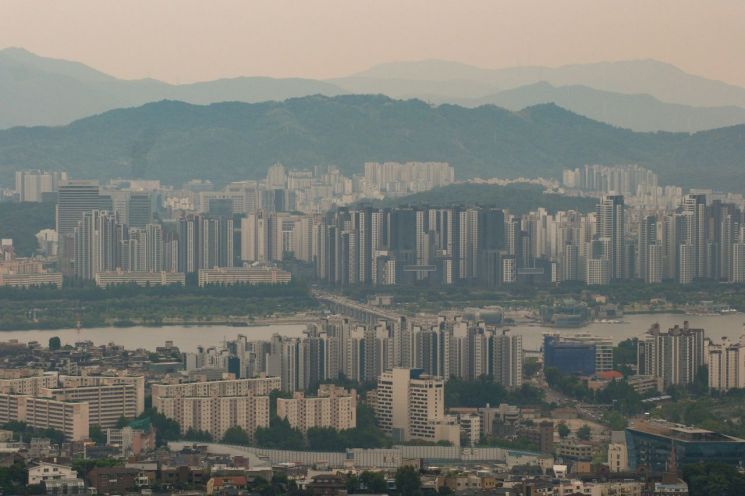
On the 19th, Seoul City announced that it will accept research ideas using housing survey statistical data until July 30. In the first round of the housing survey research idea contest held over about a month from April to May, more than 100 ideas were submitted.
The additional contest will be reviewed separately from the first round submissions. A total of 10 winning entries will be selected through evaluations by internal and external experts based on the submitted works.
The evaluation will focus on topic relevance, creativity and originality, and contribution to Seoul city administration. Detailed evaluation criteria, methods, and scoring will be determined by the judging committee. The final winners will be selected by the end of September, and the results will be announced on the contest website.
The grand prize winner will receive the Seoul Mayor’s Award along with prize money ranging from 1 million to 3 million KRW. The total prize money amounts to 15 million KRW. Copyrights of the submitted works belong to the participants, but the city may widely utilize them for policy purposes.
The Seoul Housing Survey consists of 52 items that capture overall information on citizens’ housing status and housing demand by age, residence characteristics, income, and district. Notably, time-series data has been disclosed for the first time in this round.
Through this contest, it is possible to analyze trends related to recently increasing issues such as the elderly population, single-person households, low birth rates, and housing cost burdens using continuous time-series data from 2020 to 2022.
Looking at the first round submissions, various ideas were received including analysis of special household types such as newlyweds, children, youth, and elderly households; housing satisfaction and housing insecurity; customized housing repairs; and the impact of jeonse loan systems on housing demand.
After evaluating the first round policy idea submissions, Seoul City plans to open microdata from the past three years of the Seoul Housing Survey only to those who pass, and then receive final project proposals. Most applicants for the first round utilization plan were affiliated with universities and graduate schools, showing strong interest from majors in urban studies, architecture, real estate, as well as researchers, companies, and organizations.
Kim Ho-gi, a research fellow at the Seoul Institute, said, "This contest will significantly alleviate the long-standing difficulty of data shortage in housing research," adding, "By combining various ideas with the housing survey data, it is expected to serve as a foundation for producing innovative future housing policy research results."
Jung Jong-dae, director of the Seoul Housing Policy Support Center, said, "This contest was planned to establish accurate, citizen-demand-tailored housing policies based on statistics," and added, "We hope that diverse analyses of Seoul citizens’ housing conditions and demands will be conducted, leading to the discovery of various ideas to solve social issues such as low birth rates and aging."
© The Asia Business Daily(www.asiae.co.kr). All rights reserved.
![Clutching a Stolen Dior Bag, Saying "I Hate Being Poor but Real"... The Grotesque Con of a "Human Knockoff" [Slate]](https://cwcontent.asiae.co.kr/asiaresize/183/2026021902243444107_1771435474.jpg)
















