Bank of Korea Holds Press Briefing on 'Price Stability Target Operation Status'
Inflation Expected to Moderate Gradually
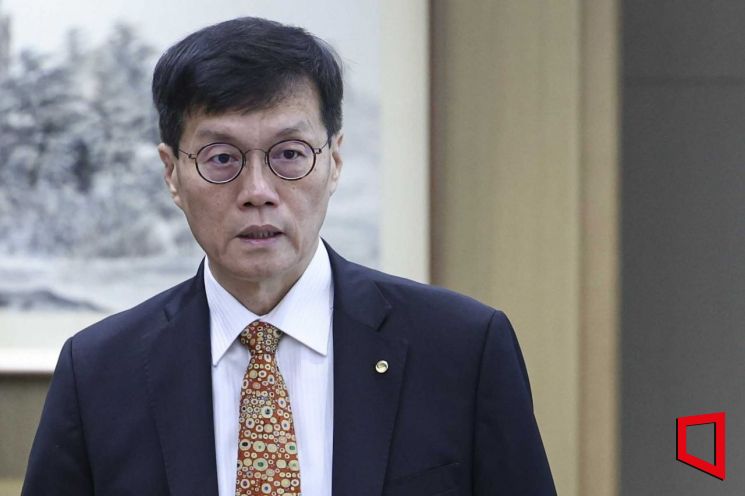
Lee Chang-yong, Governor of the Bank of Korea, predicted that inflation will gradually slow down in the future. However, he pointed out that since the cost of living in South Korea remains high compared to other countries, it places a burden on the public and structural improvements are necessary.
At a press briefing on the 'Price Stability Target Operation Status Check' held at the Bank of Korea headquarters in Jung-gu, Seoul, on the afternoon of the 18th, Governor Lee said, "The overall inflationary trend is assessed to be slowing down at a moderate pace."
According to the Bank of Korea, the consumer price inflation rate, which was 3.2% in December last year, dropped to 2.7% in May. Core inflation also decreased from 2.8% to 2.2% during the same period, indicating a downward stabilization trend in underlying inflation indicators.
He stated, "Considering the recent decline in international oil prices and agricultural product prices, inflation is expected to continue a moderate slowing trend consistent with the forecast made in May."
However, he added, "Since uncertainties related to geopolitical risks and weather conditions remain significant, it is necessary to observe a bit longer whether inflation will converge to the target as expected."
He anticipated that the domestic economy will generally show a growth trend in line with the May forecast. However, due to differences in the recovery between exports and domestic demand, inflationary pressure on the domestic demand side is expected to be limited.
Governor Lee diagnosed, "Although inflation is slowing down, prices of essential consumer goods such as food and clothing in South Korea remain at a higher level compared to major countries, resulting in a significant burden on living expenses."
On the same day, the Bank of Korea's Research Department analyzed in a report titled 'Characteristics and Implications of South Korea's Price Level' that the price level of food, clothing, and housing in South Korea is more than 1.5 times higher than the OECD (Organisation for Economic Co-operation and Development) average. The report argued that the gap in price levels for food, clothing, and housing has widened compared to the past, making it urgent to diversify supply channels and improve distribution structures.
Governor Lee emphasized, "Inflation can be addressed through monetary policy, but the high cost of living compared to other countries is a problem that cannot be solved by monetary policy alone. This is also why, although our inflation rate has fallen from 5.0% at the beginning of last year to 2.7% in May this year, the public does not feel the improvement directly."
He continued, "It is time to consider what structural improvements are necessary to reduce the high cost of living compared to other countries."
© The Asia Business Daily(www.asiae.co.kr). All rights reserved.

















