"No Evidence of Intent to Kill in Arson Case"
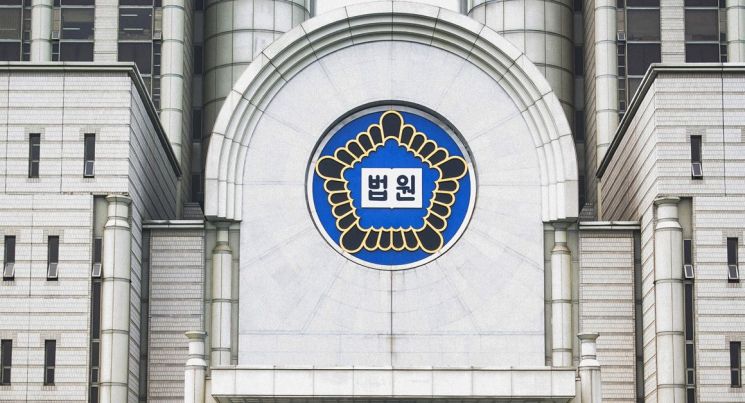
A man in his 40s who conducted an 'exorcism ritual' (a practice to drive away evil spirits from a person or house) by throwing a lit tissue at his mother-in-law hospitalized with lung cancer was acquitted again in the second trial.
On the 18th, Yonhap News reported that the Seoul High Court Criminal Division 6-1 (Presiding Judges Jeong Jae-o, Choi Eun-jung, and Lee Ye-seul) recently ruled, as in the first trial, that Mr. A (45), who was charged with attempted murder of a direct ascendant and arson causing injury to a dwelling, was not guilty of attempted murder of a direct ascendant but guilty of arson causing injury to a dwelling, sentencing him to 2 years and 6 months in prison.
Earlier, in May last year, Mr. A set a tissue on fire with a lighter at a hospital in Seoul and threw it at his hospitalized mother-in-law. After committing the act, he immediately left the hospital room. Fortunately, thanks to the family of another patient nearby who rescued the mother-in-law, she suffered only second-degree burns on her scalp, left hand, face, and neck. Mr. A claimed, "During the exorcism ritual, while I was waving the tissue in the air, the mother-in-law suddenly moved, causing the fire to spread," and added, "I was in a state of diminished mental capacity due to overdosing on medication that causes hallucinations and other side effects."
During the trial, the key issue was whether there was an intent to kill. In the first trial, the court recognized the arson causing injury to a dwelling charge as guilty, stating, "During the exorcism ritual, while waving the tissue in the air, the mother-in-law suddenly moved, causing the fire to spread." However, it acquitted him of attempted murder of a direct ascendant, reasoning, "If he intended to kill the victim, he would have devised a more discreet method or used a stronger flammable substance. It cannot be concluded that he had the intent to kill by setting the fire."
The second trial also explained that it could not conclude there was intent to kill, consistent with the first trial. The second trial stated, "Since the hospital was equipped with firefighting equipment and staff were present, anyone could easily recognize that smoke or smell would lead to early extinguishing of the fire." It judged the defendant not guilty of attempted murder of a direct ascendant, citing that the defendant did not take any measures to accelerate the spread of the fire after arson and that no third party entered the hospital room to prevent extinguishing the fire.
© The Asia Business Daily(www.asiae.co.kr). All rights reserved.
![Clutching a Stolen Dior Bag, Saying "I Hate Being Poor but Real"... The Grotesque Con of a "Human Knockoff" [Slate]](https://cwcontent.asiae.co.kr/asiaresize/183/2026021902243444107_1771435474.jpg)
















