MSD Immuno-Oncology Drug Keytruda
World's No.1 with 35 Trillion KRW Sales Last Year
Patent Expiry from 2029... Fierce Biosimilar Development
MSD Counters with 'Subcutaneous Injection'... Alteogen Joins In
The patent expiration of the immune checkpoint inhibitor Keytruda, which has earned the title of 'the world's top-selling pharmaceutical,' is approaching. As domestic biosimilar developers continuously throw down the gauntlet, a fierce battle is unfolding between MSD, which is defending its position, and Korean biotech companies joining the fray.
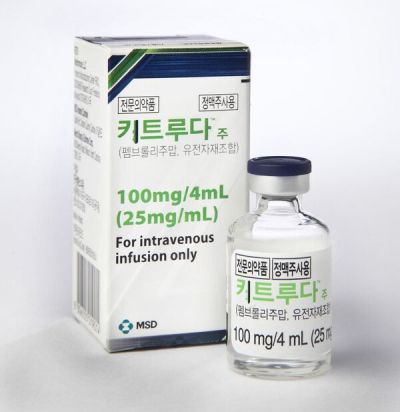
Keytruda, developed by MSD, is a drug that has claimed the throne of the global pharmaceutical market. Last year, it achieved global sales of $25 billion (approximately 35 trillion KRW), growing 19% compared to the previous year and overwhelmingly surpassing Humira, the previous top seller with $14 billion in sales.
Keytruda treats cancer by invalidating the fake pass that cancer cells use to deceive the body's immune system. Cancer cells produce a programmed cell death protein (PD)-L1 that prevents immune cells called T cells from attacking them. PD-L1 binds to the PD-1 protein on T cells, causing the T cells to fail to recognize cancer cells as enemies. PD-1 class immune checkpoint inhibitors like Keytruda bind first to the PD-1 protein, enabling T cells to attack cancer cells normally. Based on this mechanism, Keytruda has rapidly expanded its market by effectively treating dozens of cancer types, starting with lung cancer.
However, with the substance patent expected to expire in the US in 2028 and in Europe in 2031, biosimilar developers are targeting Keytruda's massive market one after another. On the 14th (local time), Celltrion submitted a global Phase 3 clinical trial plan for CT-P51 to the US Food and Drug Administration (FDA). The trial will compare efficacy and safety against Keytruda in 606 patients with metastatic lung cancer. Additionally, Samsung Bioepis is conducting Phase 3 clinical trials under the development name SB27 in 14 countries including Europe and Japan, and Chong Kun Dang is preparing to enter the competition by acquiring the rights to a preclinical candidate from Singaporean pharmaceutical company Favorex. Overseas, Amgen (ABP234) and Sandoz (GME751) are also conducting Phase 3 clinical trials.
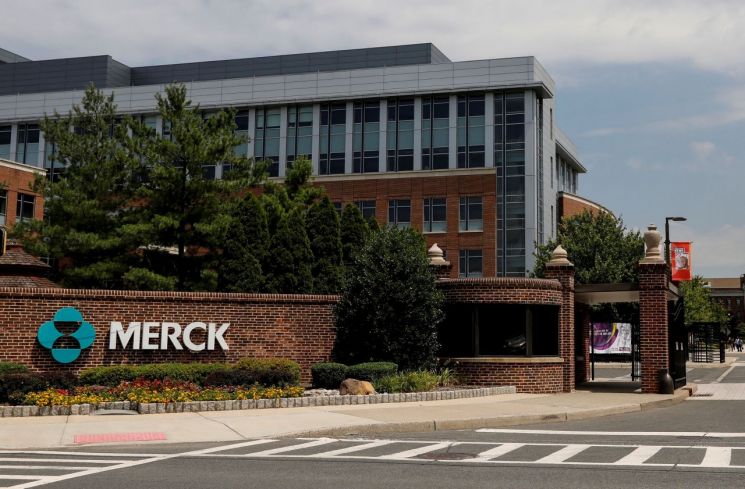
MSD is also mounting a defense. Last year, Keytruda's $25 billion sales accounted for 41.6% of MSD's total revenue of $60.1 billion. Given the difficulty of giving up such sales, MSD is actively defending its patents. In addition to the core substance patent, it has built an impenetrable patent thicket through various patents that will last until 2040.
Moreover, MSD is pursuing comprehensive patent extensions through formulation improvements. Currently, Keytruda is only available as an intravenous injection administered in hospitals. MSD is attempting to develop a subcutaneous injection formulation that can be administered directly in outpatient clinics. If successful, this will be recognized as a new patent, potentially extending patent protection until 2036. If development succeeds, it is expected to be protected by patent until 2036 as it will be recognized as a new patent.
The attention on Keytruda’s formulation improvement efforts in Korea is due to the involvement of domestic biotech company Alteogen’s technology. In 2020, Alteogen licensed its ALT-B4 technology, which converts existing intravenous biologics into subcutaneous injection formulations, to MSD. Especially since MSD’s own attempt to develop a subcutaneous formulation was halted in May after clinical trials showed higher mortality compared to intravenous injections, expectations for a subcutaneous formulation using Alteogen’s technology have grown even stronger.
MSD plans to complete clinical trials using Alteogen’s technology for the subcutaneous formulation within this year and launch the product in the market next year. If successful in market entry, it is expected that the subcutaneous formulation will capture a 50% market share by 2028.
© The Asia Business Daily(www.asiae.co.kr). All rights reserved.
![Clutching a Stolen Dior Bag, Saying "I Hate Being Poor but Real"... The Grotesque Con of a "Human Knockoff" [Slate]](https://cwcontent.asiae.co.kr/asiaresize/183/2026021902243444107_1771435474.jpg)

















