Government: "Prices are stabilizing... Conditions for interest rate cuts have been created"
Meanwhile, Bank of Korea maintains cautious stance on rate cuts
Experts divided on timing of cuts
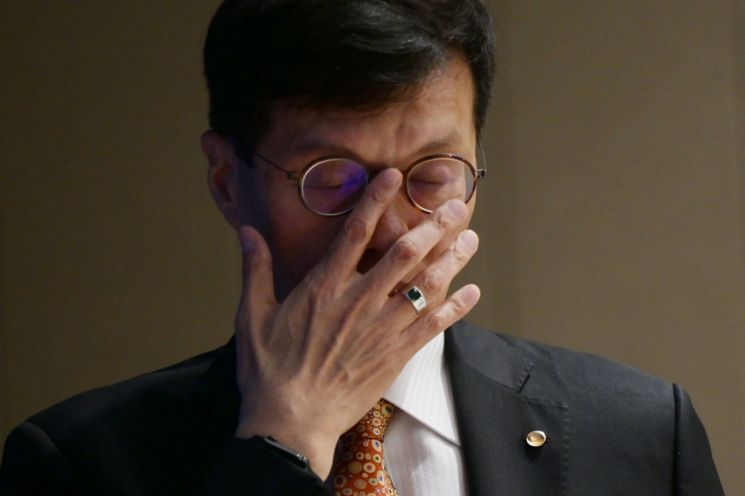
The government and the Bank of Korea are expressing conflicting responses regarding the timing of interest rate cuts. The government assessed that the possibility of an interest rate cut in South Korea has increased, citing rate cuts by the Group of Seven (G7) countries and others, but the Bank of Korea remains cautious about cutting rates due to persistent upward inflationary pressures. Among experts, opinions are divided between those advocating for an early rate cut and those suggesting it may be possible only after the U.S. cuts rates.
On the 16th, Sung Tae-yoon, the Policy Chief of the Presidential Office, appeared on KBS's 'Sunday Diagnosis' and said, "I think South Korea has already shifted to an environment where a considerable portion of rate cuts is possible."
Recently, major countries around the world have been shifting their interest rate policies. In March, the Swiss National Bank cut its benchmark rate from 1.75% to 1.5%, followed by the Swedish central bank lowering its benchmark rate from 4% to 3.75% in May. On the 5th of this month, Canada cut its benchmark rate from 5% to 4.75%, becoming the first among the G7 countries to implement a rate cut. The European Central Bank (ECB) also lowered its benchmark rate from 4.5% to 4.25% on the 6th.
Sung said, "A kind of interest rate policy shift is happening globally," adding, "These countries, which cannot be said to have better inflation stability than South Korea, are now confident enough to cut rates."
He emphasized that South Korea's environment has shifted toward rate cuts, citing that the recent consumer price and core inflation rates are approaching the inflation target of 2%. In fact, South Korea's consumer price inflation rate fell from 3.1% in March to 2.9% in April and 2.7% in May. The core inflation rate, excluding agricultural products, also dropped to 2.2% in May, showing a trend of stabilization in inflation in the second half of the year.
On the other hand, the Bank of Korea maintains a cautious stance on monetary policy due to upward inflationary pressures. On the 12th, Governor Lee stated at the Bank of Korea's 74th anniversary ceremony, "If inflation becomes unstable again after a premature shift to monetary easing, forcing us to raise rates again, the policy costs to bear at that time will be much greater," and added, "Until we are confident that inflation will converge to the target level, we need patience and to maintain the current monetary tightening stance sufficiently." Regarding recent inflation conditions, he assessed, "The upside risks to inflation have increased, and geopolitical risks still exist."
Earlier, at a press conference following the Monetary Policy Meeting on the 23rd of last month, Governor Lee said, "If inflation continues to decline to around 2.3?2.4%, we can consider cutting rates," but also noted, "However, uncertainty about the timing of rate cuts in the second half of the year has increased significantly compared to April."
Accordingly, calls for early rate cuts are emerging among experts. The Korea Development Institute (KDI) mentioned the need for a benchmark rate cut in its 'June Economic Trends' report on the 11th, following its 'First Half Economic Outlook' last month. This is because the high interest rate environment continues to raise delinquency rates on loans for households and individual business owners, acting as a major cause of domestic demand weakness. Kim Jeong-sik, Emeritus Professor of Economics at Yonsei University, said, "Although there are concerns about capital outflows making it difficult to cut rates before the U.S., if the exchange rate stabilizes at the current level, capital outflow concerns are not significant," adding, "South Korea is experiencing more severe domestic demand contraction than the U.S. due to issues like real estate project financing (PF), household debt, and rising delinquency rates on loans to self-employed individuals, so cutting rates earlier than the U.S. would not be a big problem."
However, there are still many assessments that cutting rates before the U.S. would be excessive. A preemptive rate cut could widen the interest rate gap with the U.S. beyond the current 2 percentage points, potentially causing the exchange rate to rise and increasing financial market instability. Ahn Ye-ha, Senior Researcher at Kiwoom Securities, said, "The trend of inflation reaching 2.3?2.4% has not yet been confirmed, and the exchange rate remains burdensome at around 1,300 won," adding, "Since South Korea's economic growth rate is solid, an immediate rate cut is not urgent; it would be appropriate to cut rates after the U.S. does so in September, possibly in October."
Earlier, on the 12th (local time), the Federal Reserve (Fed) indicated through its dot plot that it may cut rates once this year. Accordingly, market expectations for a rate cut by the Bank of Korea in the third quarter have diminished, with forecasts suggesting rate cuts may be possible only in the fourth quarter of this year or the first quarter of next year.
Meanwhile, the Bank of Korea plans to announce its assessment of recent inflation conditions and future inflation trends through the 'Inflation Target Operation Status Review' on the 18th. The Bank of Korea's Monetary Policy Committee (MPC) has four remaining benchmark rate decision meetings this year, scheduled for July, August, October, and November.
© The Asia Business Daily(www.asiae.co.kr). All rights reserved.

















