"Discharge of Cooling Water into Nakdonggang Pushed Forward Without Local Community Consensus"
Lim Mi-ae, a proportional representative of the Democratic Party of Korea from North Gyeongsang Province, has expressed her opposition to the establishment of a small modular reactor (SMR) near the TK New Airport.
In a statement released on the 14th, Lim said, "There are reports that the nation's first inland small nuclear power plant will be built in Daegu. The site for the SMR is being discussed as the Gunwi Advanced Industrial Complex, which is near the Daegu-Gyeongbuk Integrated New Airport. The problem is that the installation of an SMR in Gunwi, which has not yet proven its economic feasibility and safety, is being pushed forward without community consensus."
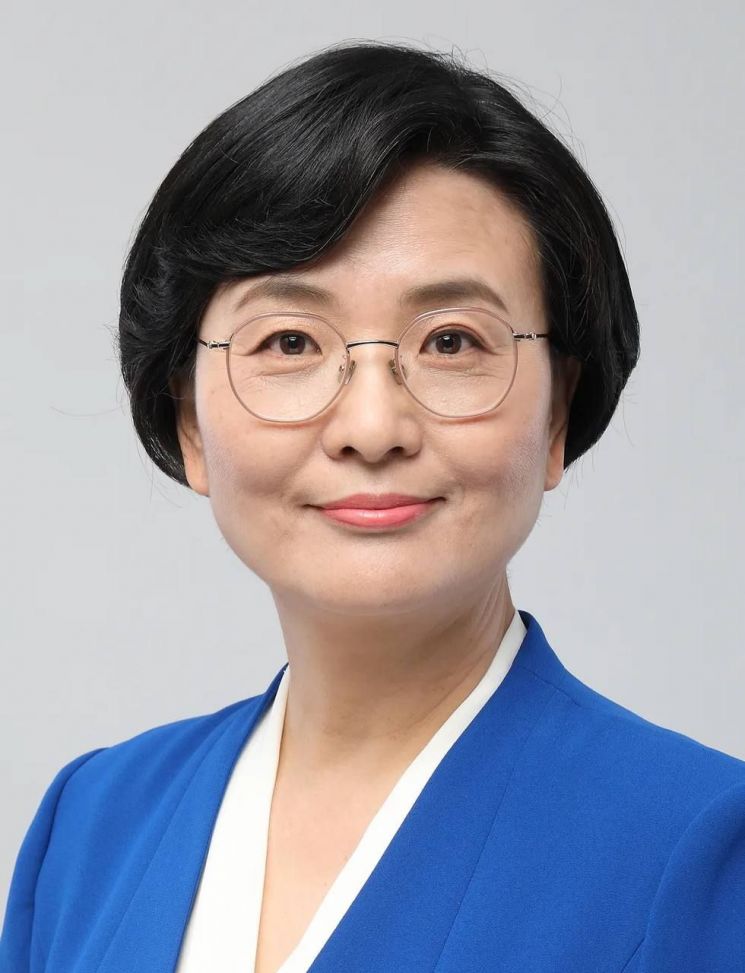
Lim further explained, "The SMR to be constructed this time will have a capacity of 680MW, with four 170MW reactors on one site. It is even larger than Kori Unit 1 (587MW), so it is hard to call it a 'small' reactor."
In her statement, Lim said, "We cannot guarantee the safety of small modular reactors. They are still in the design stage and have not been demonstrated. The government is only now forming an SMR Regulatory Research Task Force to create safety regulations. Because this is a new reactor design, there is insufficient verification and data regarding its safety. The performance of safety devices must be newly proven by developing new technologies and applying various stress levels. The less safety verification there is, the greater the risk of accidents."
The statement also noted, "Like conventional nuclear power plants, SMRs also produce spent nuclear fuel. Research teams from Stanford University in the United States and the University of British Columbia in Canada have announced findings that SMRs generate more radioactive waste than conventional nuclear power plants. Introducing SMRs when no site has been selected for the permanent disposal of high-level radioactive waste is a hasty decision."
Lim emphasized, "An even bigger issue is the supply of cooling water." Currently, the only option is to use water from the Nakdong River as cooling water for the nuclear power plant, which means discharging reactor effluent into the Nakdong River, a major source of drinking water for the public. Lim argued that if heated water used for cooling, radioactive materials released during normal operation, and potential radioactive releases from accidents are all discharged into the Nakdong River, the safety of the public's drinking water and the vitality of the river cannot be restored.
Lim also stated, "Along with the risks of nuclear power, I cannot help but question the true intentions behind Daegu Mayor Hong Joon-pyo's push to attract SMRs as part of the Daegu-Gyeongbuk administrative integration. Gunwi County in Daegu, which is being considered as a site for the SMR, originally belonged to North Gyeongsang Province and has been part of Daegu for less than a year. Trying to locate such a hazardous facility in Gunwi, which has only recently been incorporated, shows that residents' concerns about the integration being led by Mayor Hong Joon-pyo are not unfounded."
Lim continued, "Residents in regions facing the crisis of local extinction are forced to accept undesirable facilities in the hope of bringing about change. Politics that exploit the tears of these residents for personal political gain cannot be tolerated. The Daegu Metropolitan Government must listen carefully to the concerns of residents regarding the attraction of SMRs. Furthermore, to ensure that the Daegu-Gyeongbuk administrative integration does not become a means for Daegu to survive at the expense of North Gyeongsang Province, residents' opinions must be fully gathered and a balanced development plan must be established."
Finally, Lim urged, "For regional development, rather than bringing in dangerous facilities such as nuclear waste reprocessing, which requires indefinite management at nuclear research sites, we should aim to develop a more long-term and sustainable radiation industrial complex for the utilization and development of radiation technologies such as nuclear medicine, magnetic resonance, and accelerators."
© The Asia Business Daily(www.asiae.co.kr). All rights reserved.
![Clutching a Stolen Dior Bag, Saying "I Hate Being Poor but Real"... The Grotesque Con of a "Human Knockoff" [Slate]](https://cwcontent.asiae.co.kr/asiaresize/183/2026021902243444107_1771435474.jpg)
















