Origin of Chinese 'Milsabing' Around 3000 BC
Popularized After Introduction of Ice-Making Technology During Japanese Colonial Period
Recently, 'Price Polarization of Bingsu' Becomes Prominent
It is the season of bingsu, summer. In the past, when refrigerators did not exist, ice was a luxurious item that only kings could bestow. Where did bingsu originally come from? Its origins date back to around 3000 BCE. At that time in China, people ate 'milsabing,' a mixture of snow or ice with honey and fruit juice. According to Marco Polo's "The Travels of Marco Polo," there is a record that he brought the method of making bingsu, which was popular in Beijing, to Venice.
In the West, it is said that around 300 BCE, Alexander the Great of Macedonia ate bingsu when he conquered the Persian Empire. When his soldiers collapsed from the heat, he gave them snow gathered from mountain peaks mixed with honey and fruit juice in bowls. It is also known that Roman Emperor Nero ate snow from the Alps sprinkled with honey or wine.
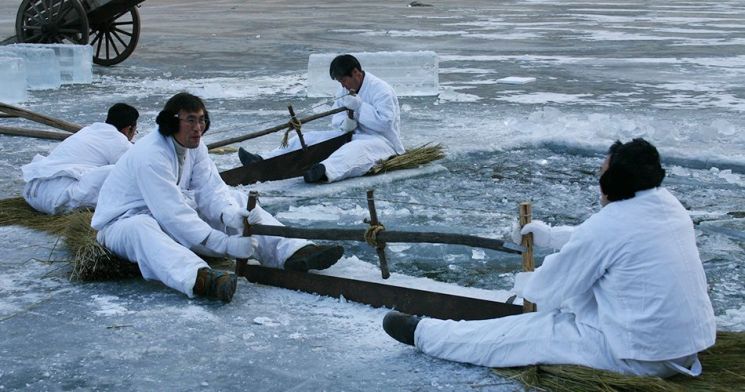 Cutting ice from the river, Beolbing (Andong Seokbinggo Jangbingje) / Andong Festival Tourism Foundation website
So when did Korean bingsu begin? Until now, it has been known to date back to the Joseon Dynasty. At that time, ice stored in ice houses during winter was taken out in summer, shaved, and made into hwachae (fruit punch). Because ice was scarce, only the royal family and noble households could enjoy it. When ice-making technology was introduced during the Japanese colonial period, bingsu became a popular food. A 1921 newspaper recorded that "there were 187 bingsu shops run by Japanese and 230 run by Koreans in Gyeongseong, totaling 417 shops."
Modern-style bingsu appeared after the Korean War. With the addition of condensed milk and chocolate syrup introduced by the U.S. military, the flavor became richer. The red bean bingsu we enjoy most today began to take shape in the 1980s. After various adaptations, it was reborn as Korean-style red bean bingsu topped with sweet red beans, rice cakes, and jelly on shaved ice.
Bingsu entered its heyday in the 2000s. Canmoa, Miltap, Sulbing... Over more than 20 years, a polarized bingsu trend has recently emerged. Among young people who enjoy small luxuries, high-end hotel bingsu priced around 100,000 won is popular, while at the same time, the 6,000-won red bean bingsu from Seongsimdang in Daejeon is also gaining attention amid high inflation. However, you can enjoy delicious apple mango bingsu without going to a luxury hotel, and you can taste 6,000-won bingsu even if you don't live in Daejeon. This year, we have gathered notable bingsu offerings from cafe franchises to hotels by price.
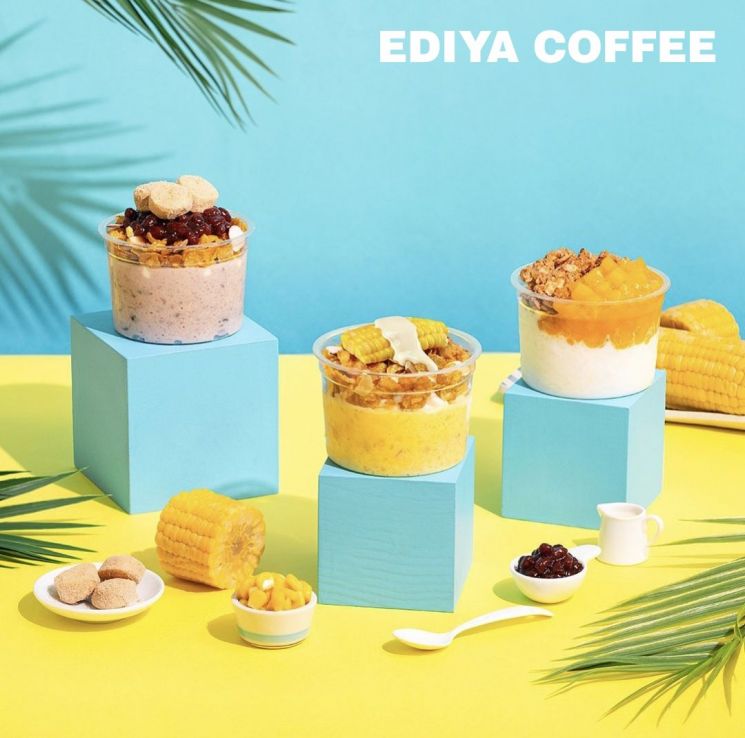
There are places where you can enjoy bingsu for under 10,000 won. One such place is Ediya Coffee. Ediya Coffee sells three types of “single-serving bingsu” emphasizing cost-effectiveness. These include Red Bean Injeolmi Bingsu, Mango Yogurt Granola Bingsu, and Chodang Corn Bingsu. They are reasonably priced and sized appropriately so that individuals can enjoy them without burden, accounting for about 80% of Ediya Coffee’s total bingsu sales. In particular, the Chodang Corn Bingsu is gaining attention for its unique sweet and savory flavor and the crispy texture of corn flakes, showing high sales. The price of the single-serving bingsu is 6,300 won.
Paris Baguette has launched a premium tropical fruit apple mango bingsu. It features layers of finely shaved mango ice with added milk and condensed milk for creaminess, topped generously with sweet and tangy apple mango. It is finished with crispy coconut chips. Apple mango is a tropical fruit with red skin like an apple, known for its rich juice and sweet flavor. The price is 11,900 won.
Tour Les Jours introduced “Matcha Chestnut Jelly Bingsu,” combining matcha with the recently popular chestnut jelly. It is made with milk ice topped with a rich matcha base and ice cream, fully capturing the flavor of matcha. Sweet domestic red beans, chewy and savory injeolmi rice cakes, and chestnut jelly toppings add both texture and a rich taste experience. The price is 12,500 won.
Sulbing released “Pure Yogurt Blueberry Sulbing,” visually overflowing with blueberries. It features soft milk ice like snowflakes topped with crispy cereal and plenty of plump blueberries, allowing you to enjoy the full taste of blueberries in every bite. It is topped with tangy yogurt ice cream that pairs well with the sweet blueberries, offering rich flavor and texture. The price is 13,900 won.
Hollys Coffee presented “Bonjour Strawberry Cheese Bingsu,” utilizing cheese, a representative French delicacy, in various ways. It maximizes the cheese flavor with a sweet and rich cheese base, cheesecake topping with a dense texture, and pieces of cheesecake shaped like Emmental cheese. Additionally, it is topped with plenty of crispy and savory brown butter cookie crumble, fresh strawberry flesh, and ripple jam. The price is 15,800 won.
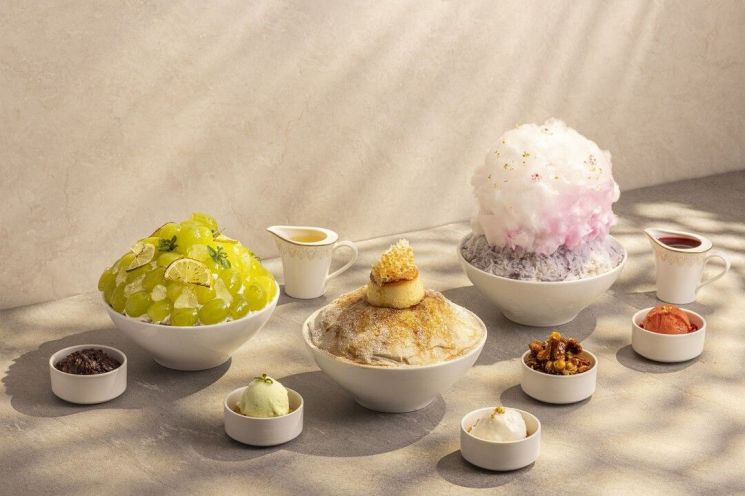
At Le Meridien Seoul Myeongdong’s Lounge & Bar Le Mier, three types of “Osoleil Bingsu,” meaning “under the warm sunshine,” were launched. Among them, the “Berry Cotton Candy Bingsu,” topped generously with cotton candy on blueberry snow ice, is attracting attention with its sweet and fluffy cloud-like appearance. It is topped with tangy berry ice cream and strawberry crisps, and the cotton candy is decorated with flowers and gold leaf, adding an elegant touch. The price is 59,000 won.
The most expensive bingsu released in Korea to date is the Apple Mango Bingsu at Signiel Seoul, priced at 130,000 won. This is a 2.4% increase from 127,000 won last year.
© The Asia Business Daily(www.asiae.co.kr). All rights reserved.
![Clutching a Stolen Dior Bag, Saying "I Hate Being Poor but Real"... The Grotesque Con of a "Human Knockoff" [Slate]](https://cwcontent.asiae.co.kr/asiaresize/183/2026021902243444107_1771435474.jpg)


















