National Heritage Administration Announces Recognition of 'Manggeonjang' Holder
On the 14th, the Cultural Heritage Administration announced its intention to recognize Jeon Yeong-in as the holder of the national intangible heritage 'Manggeonjang (網巾匠)'. Opinions from various sectors will be collected and reviewed for one month, and the final decision on recognition will be made after deliberation by the Intangible Heritage Committee.
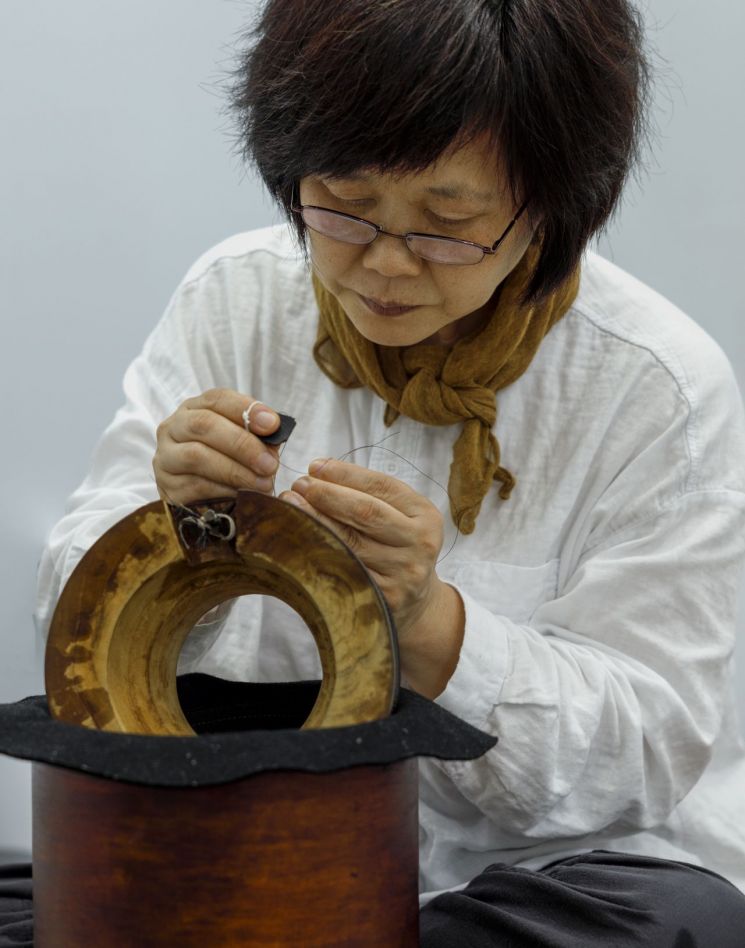
Manggeonjang refers to a craftsman who makes manggeon. Manggeon is a headband worn on the forehead by men during the Joseon Dynasty to keep their hair from falling out before wearing a gat (traditional Korean hat). The production technique includes all processes of weaving the manggeon using materials such as horsehair and human hair.
Mr. Jeon is a successor of the Manggeonjang craft. From a young age, he grew up watching the production of manggeon as a daily routine by his grandmother, the late honorary holder Lee Su-yeo, and his mother Kang Jeon-hyang, a recognized Manggeonjang holder. In 1987, when his grandmother was officially recognized as a Manggeonjang holder, he began formally inheriting the skills, and he also received instruction from his mother, who was recognized as a holder in 2009. He has devoted a total of 37 years to honing his craft.
The manggeon consists of several parts: the dang (tightening band) that tightens the upper part, the pyeonja (tip band) that tightens the lower part, the front part that wraps the forehead like a net, and the back part that covers the back of the head. To indicate rank or for decoration, it may also have gwanja (button-shaped loop ornaments attached to the left and right sides of the manggeon to hang the dang strings) and pungjam (crescent-shaped ornament attached to the center front of the manggeon to secure the gat).
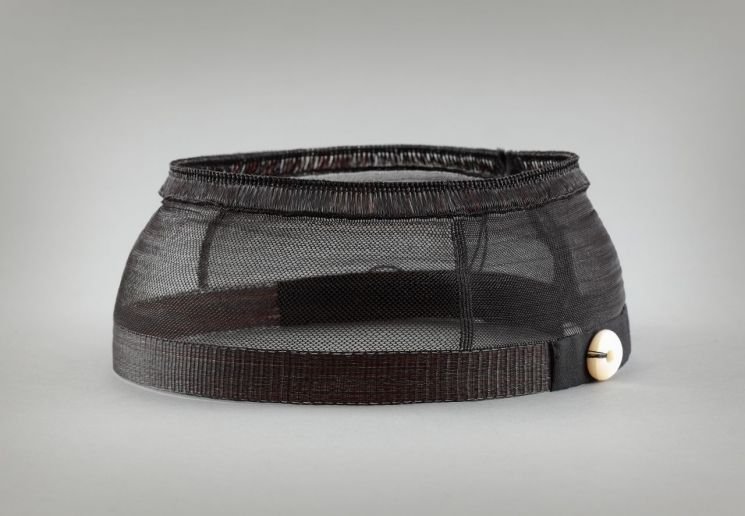
The production process proceeds in the order of 'pyeonja weaving,' which weaves the pyeonja, a narrow and thick band used to tighten the manggeon; 'base knitting,' which knits the front and back parts; and 'dang hanging,' which creates the nose part with thick horsehair and attaches the strings. After boiling to soften, the piece is wrapped with silk cloth to shape it, and the gwanja is attached to complete the manggeon. A Cultural Heritage Administration official stated, "Through document review and on-site investigation, we confirmed Jeon Yeong-in’s skills in pyeonja weaving, dang hanging, and other techniques."
© The Asia Business Daily(www.asiae.co.kr). All rights reserved.


















