Korea Capital Market Institute Report on 'Long-Term Relationship Between Stock Market Development and Economic Growth'
Stock Market Development Supports Corporate Capital Activities and Contributes to Economic Growth
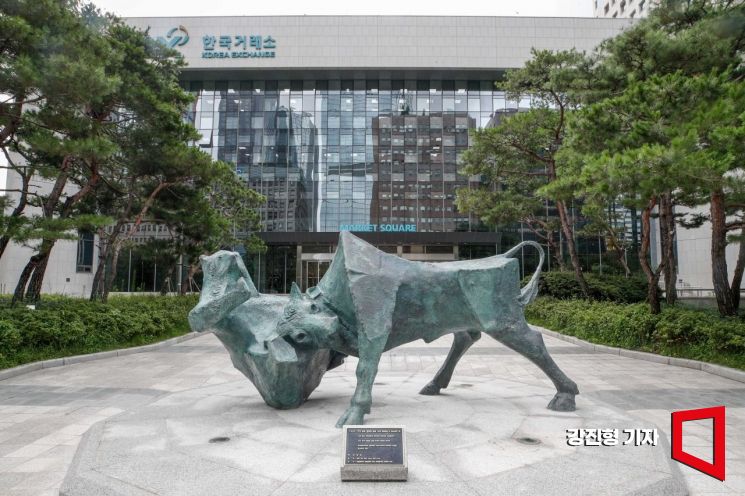
A study has found that the development of the domestic stock market has the effect of increasing the economic growth rate. Since the stock market can also play a role in driving the growth of the real economy, it is argued that both the private sector and the government should seek qualitative development together.
According to the report "Long-term Relationship between Stock Market Development and Economic Growth" released on the 14th by Jang Boseong, a research fellow at the Korea Capital Market Institute, the expansion of the size and liquidity of the domestic stock market was found to have a positive impact on GDP (Gross Domestic Product) growth rate.
The study was conducted by estimating the long-term causality between three major stock market indicators?real market capitalization, market capitalization to GDP ratio, and turnover rate?and GDP growth rate for 16 major OECD (Organisation for Economic Co-operation and Development) countries with meaningful data availability. The survey period was analyzed based on cumulative data from 1980 to 2019.
According to the empirical analysis results, one or more indicators showed positive (+) long-term causality with GDP in South Korea, Australia, Belgium, Spain, and Mexico.
The positive (+) long-term causality of stock market indicators on GDP tended to be observed mainly in countries where financial openness had significantly expanded. The financial markets of countries showing long-term causality were initially somewhat closed but have recently approached the highest levels of openness. Researcher Jang explained, "In countries where long-term causality was found, a significant expansion of financial openness was commonly observed."
In the case of South Korea, it was also notable that the number of listed companies per capita increased significantly compared to other countries. Korea, along with Spain, showed the largest increase in listed companies relative to population among the surveyed countries during the period.
As the stock market size grew, it helped corporate capital formation and contributed to GDP growth
The report argued that as the size and liquidity of the stock market increased, it helped companies' listing activities, which naturally contributed to corporate capital formation and ultimately aided GDP growth.
He explained, "While it is evident that the expansion of economic scale played an important role in the growth of the domestic stock market, there could be differing opinions on the impact of the stock market on economic growth. This study confirmed cases where stock market indicators showed positive (+) long-term causality with GDP through country-specific empirical analysis."
He continued, "Since the stock market can also play a role in driving the growth of the real economy, its development direction must be continuously sought," emphasizing, "There are structural issues to be addressed in the domestic stock market, such as enhancing shareholder value, improving corporate governance, and establishing a long-term investment culture."
He also said, "Although the market size has continued to expand so far, these unresolved issues seem to act as obstacles to the domestic stock market taking a further step forward," adding, "To solve the problems accumulated in the domestic stock market, efforts from companies and investors, along with institutional improvements and support measures from policy authorities, are necessary."
© The Asia Business Daily(www.asiae.co.kr). All rights reserved.
![Clutching a Stolen Dior Bag, Saying "I Hate Being Poor but Real"... The Grotesque Con of a "Human Knockoff" [Slate]](https://cwcontent.asiae.co.kr/asiaresize/183/2026021902243444107_1771435474.jpg)
















