Operation in 11 Areas Including Dosan Park, Known for Frequent Illegal Parking and Valet Parking (200 Spaces) -
Immediate Enforcement with Multi-Angle License Plate Recognition Considering Parallel Parking in Resident Priority Zones -
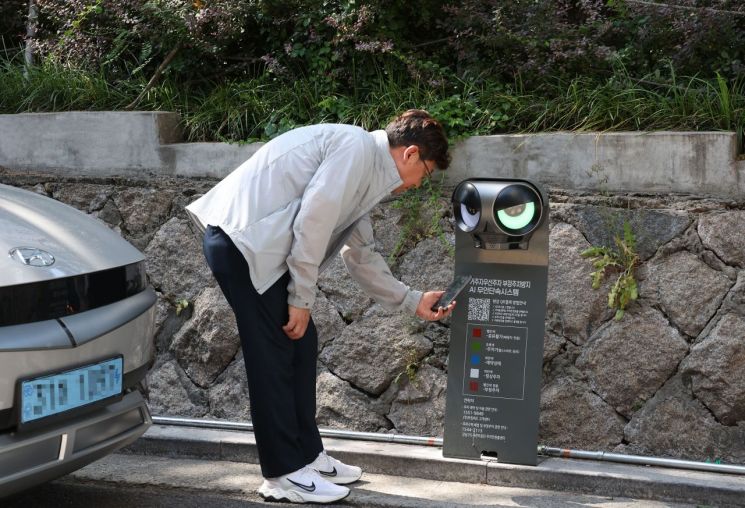
Gangnam-gu (District Mayor Jo Seong-myeong) will operate the nation's first AI illegal parking enforcement system in resident-priority parking zones. Starting July 1, the system will be implemented at Dosan Park covering 200 spaces across 11 locations, with the remaining 10 locations beginning in September.
Resident-priority parking is a system designed to alleviate parking difficulties in residential areas by marking parking spaces on roads with low traffic volume, allowing nearby residents to park by paying a quarterly usage fee. However, issues arose as actual users were unable to park due to valet parking and brief illegal parking by others. This created a vicious cycle where users had to illegally park in other areas until on-site enforcement and tow trucks arrived.
To address the need for continuous enforcement and overcome manpower limitations, the district partnered with a private company last year to develop an enforcement system. As a result, they developed an AI illegal parking enforcement system and completed a patent application. The system will be installed in 11 locations with 200 spaces, including Dosan Park, which is known for frequent repeated complaints.
The enforcement equipment installed at parking spaces automatically recognizes vehicles using cameras. The AI technology applied accurately identifies vehicle license plates. Since resident parking spaces are often arranged in parallel parking configurations, the ability to read license plates from various angles is crucial. Since last year, the district has focused on improving license plate recognition rates through repeated AI learning. Compared to the traditional enforcement method where officers respond to reports, inspect, and call tow trucks, this system immediately enforces illegal parking and automatically sends vehicle numbers to administrators, enabling faster fee charging and towing actions.
The district expects this system to further activate the shared parking program. The resident parking space sharing program allows users to find and reserve empty parking spaces via a mobile app during times when spaces are vacant. However, even when spaces were reserved, illegal parking on-site prevented use. The AI system’s immediate enforcement prevents such issues, and through QR codes attached to the enforcement equipment, users can make reservations and payments on-site, making it convenient. The usage fee is 900 won per 30 minutes, with a maximum usage time of 10 hours.
The equipment features cameras modeled after owl eyes and lights that indicate parking status. A green light signals normal parking, while a red light activates during illegal parking, accompanied by three announcements via speaker to inform about enforcement. If a shared parking vehicle has a prior reservation, a yellow light turns on, and when payment is made on-site, a white light illuminates to intuitively convey information.
The district plans to expand the installation of the AI parking enforcement system to areas with frequent illegal parking and prevalent valet parking based on operational results, aiming to reduce enforcement personnel and budget.
Jo Seong-myeong, Mayor of Gangnam-gu, stated, “We will normalize the resident-priority parking system, which operates to prevent serious parking problems in residential areas, through this AI enforcement system. Additionally, we will further activate the shared parking program to ease parking concerns for residents and create a better living environment in Gangnam.”
© The Asia Business Daily(www.asiae.co.kr). All rights reserved.

















