Tentative 'Lee Seon-gyun Prevention Act'... Complete Nullification of Rules on Exceptions to Disclosure of Accused's Facts
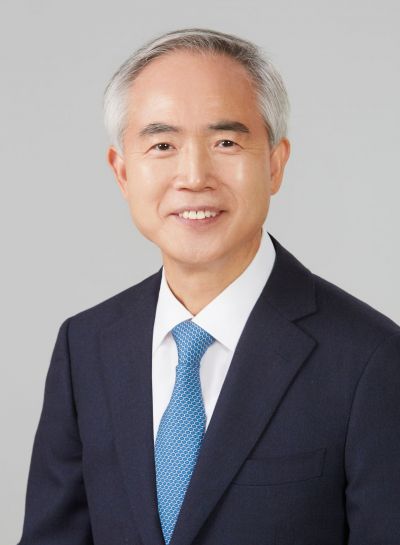
Representative Yang Bu-nam (Democratic Party of Korea·Gwangju Seo-gu Eul) has taken the lead in proposing the so-called “Late Lee Seon-gyun Prevention Act,” which aims to curb the disclosure of investigation information by investigative agencies.
If the “Prohibition of Disclosure of Suspect Facts Act” becomes a reality, it will fundamentally block investigative authorities from interpreting and applying existing public relations guidelines. In other words, a systemic measure will be established to prevent tragic deaths like that of the late actor Lee Seon-gyun.
Once the bill is enacted, it is expected that no second or third victims will arise due to serious human rights violations.
The core of this law is to legally declare invalid the administrative rules (Police Agency directives, Ministry of Justice directives, High-ranking Officials’ Crime Investigation Office directives) that investigative agencies have established as exceptions without a basis in criminal law, thereby correcting their illegality and preventing their use as political tools.
Currently, the procedural delegation allowing investigative agencies to establish exceptions to the prohibition of disclosure of suspect facts under criminal law through administrative rules is all invalid as it violates the law.
According to Representative Yang, investigative agencies have been recklessly disclosing suspect facts by violating the prohibition under criminal law and enacting rules for publicizing criminal cases that include substantive matters beyond the delegated scope, such as exceptions to the disclosure of suspect facts, which exceed the authority granted under Article 195, Paragraph 2 of the Criminal Procedure Act concerning investigation procedures.
He also emphasized that every year, indiscriminate “witch-hunt” social killings occur as investigation details and individuals’ private lives are leaked to the media beyond the scope of disclosure, even in violation of the rules.
According to Article 9, Paragraph 1, Item 6 of the Ministry of Justice directive “Regulations on Public Relations of Criminal Cases,” exceptions to the disclosure of suspect facts include ▲ cases that may significantly affect government policies ▲ particularly serious cases that attract public attention ▲ cases that serve as references for maintaining criminal investigations, prosecutions, or establishing and operating prosecution policies, leaving room for arbitrary interpretation.
Once this law passes, the scope of exceptions for disclosure of suspect facts by the police, prosecution, and the High-ranking Officials’ Crime Investigation Office will be drastically reduced. Representative Yang stipulated that this law should take precedence over criminal law regarding the disclosure of suspect facts and that investigative agencies should be prohibited from disclosing any investigation details or suspect facts to parties involved in the case.
However, exceptions and the scope of disclosure are defined by law to allow disclosure only when necessary to protect the public’s right to know and to safeguard life and property.
This law nullifies subordinate legislation such as administrative rules established by investigative agencies like the prosecution, police, and the High-ranking Officials’ Crime Investigation Office that violate criminal law by setting exceptions to the disclosure of suspect facts. Therefore, the current practice of disclosing suspect facts based on exceptions set by each investigative agency will be completely prohibited once this law passes the National Assembly.
Except in cases where disclosure is permitted under this law, the principle is that suspect facts and related information in criminal cases should not be disclosed, disseminated, or leaked. Furthermore, this law requires each investigative agency to designate at least one professional public relations officer to handle the disclosure of criminal cases. If suspect facts are disclosed, disseminated, or leaked, internal investigations of personnel involved in the investigation will be conducted, and if violations are confirmed, criminal investigations will be requested, imposing strong penalties.
The scope of penalties has also been increased; those who disclose suspect facts beyond the permitted scope face imprisonment of up to five years or disqualification for up to five years.
Representative Yang Bu-nam said, “More than the criminal facts themselves, all private lives are disclosed, making it unbearably painful, and parties involved in cases receive no protection under the presumption of innocence principle,” adding, “Clear legislative improvements are needed to ensure that principles and exceptions are not reversed between suspect rights and the public’s right to know.”
He continued, “Protecting innocent citizens from unfair or excessive investigations by investigative agencies is a major goal of my legislative activities,” and stated, “I will continue to propose bills to restrict excessive searches and seizures, prohibit filing charges before summoning suspects, and limit investigation periods.”
Meanwhile, the “Prohibition of Disclosure of Suspect Facts Act” led by Representative Yang Bu-nam was co-sponsored by Representatives Kang Yoo-jung, Ko Min-jung, Kim Seung-won, Kim Ju-young, Kim Hyun-jung, Mo Kyung-jong, Park Min-gyu, Park Soo-hyun, Park Jeong-hyun, Park Hee-seung, Bok Ki-wang, Seo Mi-hwa, Seo Young-seok, Song Ok-joo, Lee Geon-tae, Lee Kwang-hee, Lee Byung-jin, Lee Yong-woo, Lee Jae-gwan, Im Mi-ae, Jeong Seong-ho, Jeong Jin-wook, Jo In-cheol, Choi Min-hee, Hwang Jeong-ah, and Heo Jong-sik.
© The Asia Business Daily(www.asiae.co.kr). All rights reserved.
![Clutching a Stolen Dior Bag, Saying "I Hate Being Poor but Real"... The Grotesque Con of a "Human Knockoff" [Slate]](https://cwcontent.asiae.co.kr/asiaresize/183/2026021902243444107_1771435474.jpg)
















