KATS Achieves World's First 2D Room-Temperature Skyrmion Generation and Electronic Control
Quantum Computer Applications Also Anticipated
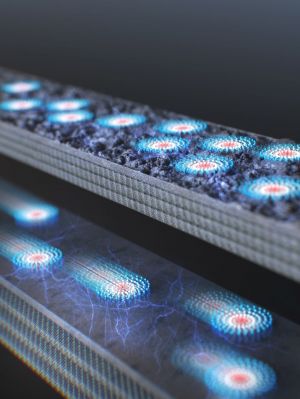
A domestic research team has succeeded for the first time in the world in generating and controlling a new material called skyrmion at 2D room temperature, which can be used as a new ultra-low power, ultra-high performance semiconductor device to process the rapidly increasing information in the era of artificial intelligence (AI). This achievement surpasses those of research teams in the United States and China.
The skyrmion, recently generated and controlled at 2D room temperature by the Quantum Magnetic Sensing Group at the Korea Research Institute of Standards and Science (KRISS), is a spin structure arranged in a vortex shape. Theoretically, it can be reduced to a few nanometers (nm) and can move with very low power consumption. If skyrmions can be freely created and manipulated in reality, next-generation devices with ultra-low power consumption and ultra-high performance can be developed, and related research is actively underway.
Previous skyrmion application research was conducted only in 3D magnets, but since the first report of 2D magnets in 2017, related research has been widely conducted in 2D environments as well. Compared to the surface of 3D magnets, the smoother 2D magnets consume less power and can operate stably.
KRISS implemented skyrmions by supplying very fine voltage and magnetic fields to the surface of 2D magnets at room temperature, then applied current to the generated skyrmions to control them in the desired direction. Experimental results showed that the power consumption for skyrmion control was about one-thousandth of that in existing 3D cases. Power consumption reduction is a critical factor in semiconductor devices. The size was also reduced by more than ten times, making it significantly advantageous in terms of stability and speed. Although the technology for room temperature manifestation of 2D skyrmions was reported around the same time in the United States and China, this is the world's first case to succeed not only in manifestation but also in electrical control.
The research team succeeded in generating and controlling skyrmions in a 2D environment about one year after developing a 3D skyrmion transistor last year, taking a step closer to the development of next-generation spintronics devices.
Senior Researcher Yang Seung-mo of KRISS said, "With the recent development of AI and the surge in power demand, the need for ultra-low power semiconductor devices is increasing," adding, "If the skyrmion control technology developed this time is applied, next-generation AI semiconductor devices can also be designed."
KRISS has been conducting research on skyrmions for over ten years. Although the Korea Institute of Science and Technology (KIST) and the Institute for Basic Science (IBS) have also conducted research on skyrmions, KRISS has persistently pursued research from the conceptual stage, achieving world-class results.
Senior Researcher Yang explained, "After more than ten years of research on skyrmions, progressing every year from the basic stage, we have now reached a stage where we can determine their applications."
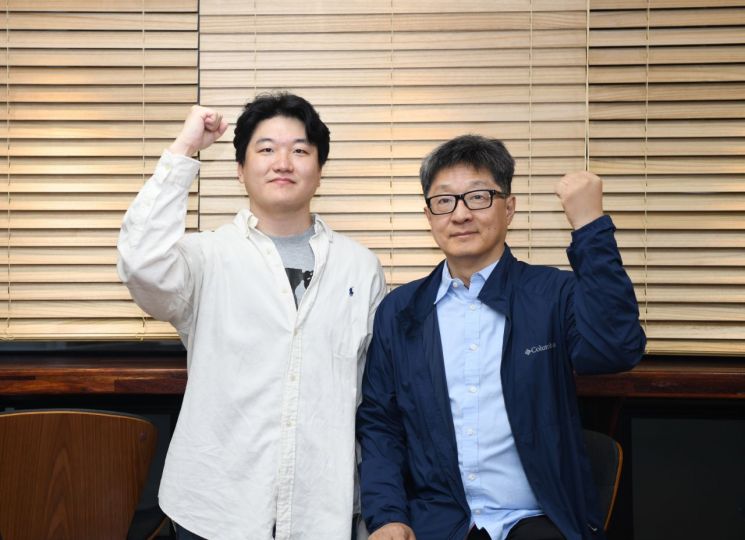 Senior Researcher Seungmo Yang and Principal Researcher Chanyong Hwang of the Quantum Magnetic Sensing Group at KIST (from left)
However, since this development case has been published as a paper, there are concerns that if the Chinese side uses publicly available information to conduct additional research, they may produce more advanced results.
KRISS also expects this research to be applicable in the field of quantum computers, as skyrmions have the potential to be used as qubits, which are the core of room temperature quantum computers. However, since KRISS is also focusing on superconducting quantum computer research and the consideration of skyrmions as qubit candidate materials is still at a very early stage, some in the academic community point out that excessive association with room temperature quantum computers is premature.
© The Asia Business Daily(www.asiae.co.kr). All rights reserved.


















