Chinese Youths Choosing Rehabilitation in Nursing Homes
Volunteering to Help the Elderly Reduces Rent Burden ↓
Young people in China are gathering at nursing homes. There are two types of scenes. One is the 'Youth Nursing Home (靑年養老院)', a space where only young people enter to recharge themselves, and the other is a nursing home (養老院) where young people enter to volunteer alongside the elderly residents.
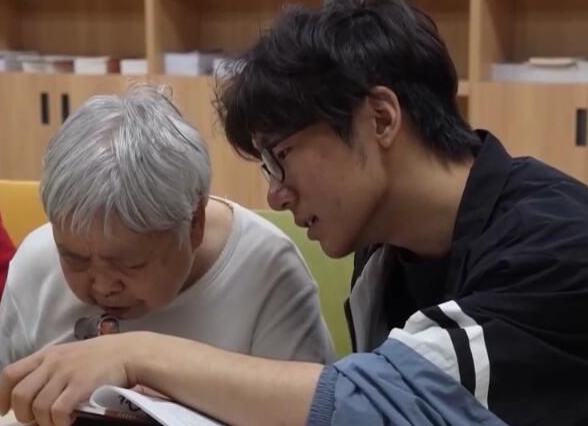
At youth nursing homes, young people stay for a short period to relieve accumulated employment and work stress and spend time recharging themselves. In general nursing homes, they live with the elderly and can reduce their rent burden through volunteering. Although the names and methods of the living spaces differ, they share a commonality: the continuous employment difficulties and financial burdens such as rent cause significant stress among young people in China. Recently, due to economic downturn, youth unemployment in China has risen. In April, the unemployment rate for young people aged 16 to 24 was 14.7%, about three times the overall unemployment rate of 5.0%.
Chinese Youth Heading to Nursing Homes to Avoid Parental Pressure
Recently, 'Youth Nursing Homes' have been springing up rapidly across China. Youth nursing homes offer a place where one can enjoy leisure for 1,500 yuan per month (about 283,000 KRW). Young people can spend time zoning out or lying down doing nothing. Besides accommodation, they can relax through various activities such as farming, livestock raising, and watching movies. Facilities like bars and karaoke rooms are also available.
Wang Yulong, who operates a youth nursing home, described it as "a place that provides lodging, leisure, entertainment, and other services, as well as a physical and mental rest space for young people." An Feng, a sociologist at Luoyang Normal University, said that the stress level young people feel in modern society is high, and youth nursing homes could be opportunities and places for young people to learn. He stated, "Reading, writing, and drawing activities within the nursing home are opportunities for recharging, which will help personal growth."

The Hong Kong South China Morning Post (SCMP) reported, "Youth nursing homes are places where young people in China can rest and relax freely without worrying about their parents' scrutiny." The increase in youth nursing homes reflects "the phenomenon of a lack of new jobs due to China's economic slowdown and the rise of young people who do not want to work."
Saving Rent through 'Intergenerational Co-living'
Many young people also live with the elderly in nursing homes while volunteering. Young people who do not want parental interference at home have chosen 'intergenerational co-living' by living with the elderly in nursing homes. This form also exists in Europe and the United States. In China, a nursing home in Foshan City, Guangdong Province, attracted attention in 2021 by offering young people a 20% discount on rent, and since then, this has expanded to Shanghai, Nanjing, and other cities.
A nursing home in Zhejiang Province offers rent reductions based on the number of volunteer hours young people contribute each month. The monthly rent is about 1,000 yuan (approximately 189,150 KRW). If a resident volunteers 10 hours per month, 200 yuan (about 33,700 KRW) is deducted from the rent; for 20 hours, 500 yuan (about 94,380 KRW) is deducted. If volunteering exceeds 30 hours per month, rent is waived entirely. From late February to mid-March, about 17 people moved in, while only 4 moved out during the same period.
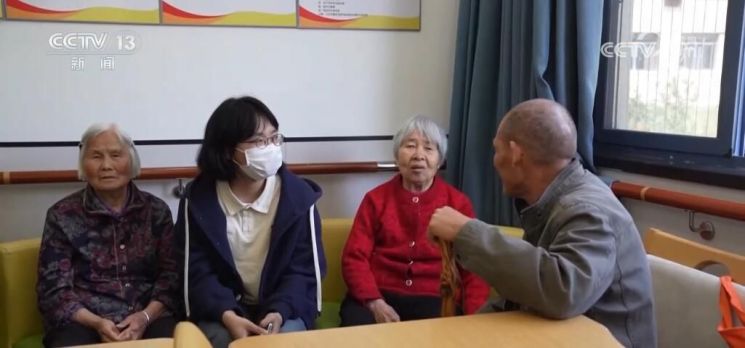
29-year-old Chen Ziwei entered a nursing home to manage a car loan payment exceeding 3,000 yuan per month (about 568,440 KRW). In an interview with Chinese media, Chen said, "After paying rent, car loan installments, and three meals a day, my salary was tight. I started living in a nursing home to reduce rent burden, and I am quite satisfied." He mainly helps social workers or caregivers by cleaning or measuring blood pressure. He also teaches elderly residents how to use smartphones or plays musical instruments with them.
Lan Ting (24), who works as a theme park planner, also started living in a nursing home due to rent burdens. She said, "After finishing work at 5:30 p.m., I chat with the elderly, play chess, or table tennis. Spending one or two hours daily like this helps reduce my rent." Lan expressed satisfaction, saying, "I used to eat a lot of greasy and spicy food, but the meals here are less salty and oily, so I can be healthier."
© The Asia Business Daily(www.asiae.co.kr). All rights reserved.



















