Ecological Survey of Onshore Wind Farm Reveals Endangered Species Like Otters, Martens, and Blakiston's Fish Owls
"Most Wild Animals That Left Habitat Have Returned"
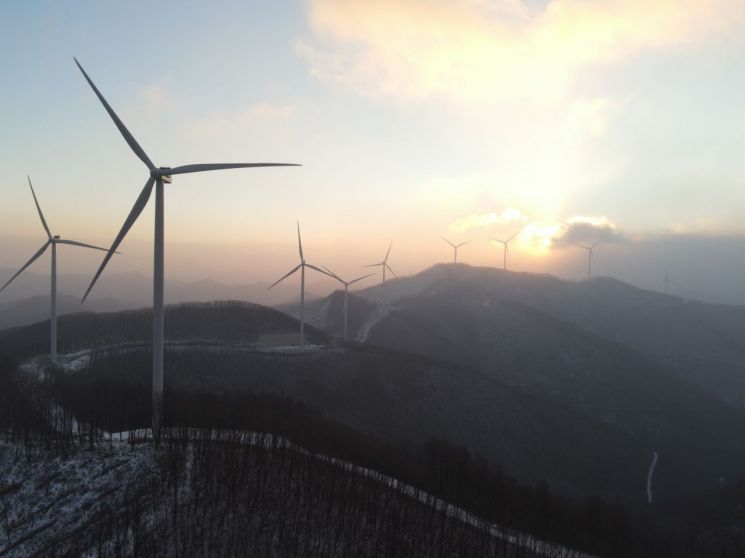
The so-called ‘green dilemma’ that building more wind power plants causes wildlife to lose their habitats has been proven baseless. This conclusion comes from research showing that various endangered wildlife species have returned to habitats around wind power plants.
According to the ‘Post-Construction Detailed Monitoring and Impact Study on Terrestrial Wind Power Ecology’ recently announced by the National Institute of Ecology on the 11th, endangered wildlife species classified as Level 1, such as the Korean goral and otter, were found in forests where onshore wind power complexes were constructed. Level 2 endangered species including the leopard cat, yellow-throated marten, Siberian flying squirrel, and Blakiston's fish owl were also detected. Other key forest-dwelling species such as roe deer, water deer, wild boar, and raccoon dogs were easily observed as well.
This study was conducted to determine the extent to which wind power complexes affect ecosystem degradation. To this end, from September last year for seven months, an intensive investigation of the ecosystems at three wind power complexes in Yeongyang-gun, Gyeongbuk Province, was carried out. Unmanned sensor cameras were primarily used for the survey.
The research team also concluded that roads around the wind power complexes do not impact the wildlife ecosystem. They analyzed the relationship between wildlife appearance data and nearby traffic volume but found no significant correlation. In particular, the times when wildlife used areas near roads did not overlap with vehicle traffic times, leading to the conclusion that they do not affect each other.
The National Institute of Ecology stated, “During the construction of onshore wind power complexes, wildlife may temporarily avoid their habitats,” but added, “Over time after construction, most wildlife that had left their habitats return and use them as their original habitats.”
Regarding vegetation damage, it was assessed that “it gradually recovers over time.” During construction, large wind turbine blades measuring 50 to 64 meters in length are transported through the mountains, requiring tree cutting and soil excavation. However, once construction is complete, vegetation expands again, and in some areas, different species compete and grow together.
Until now, opinions have sharply conflicted between the need to expand onshore wind power in line with carbon neutrality policies and concerns over damage to forest ecosystems. As a result, even after the government finalized onshore wind power complexes, construction was often delayed due to opposition from nearby residents and environmental groups.
The National Institute of Ecology argued that to dispel such controversies, the impact of onshore wind power complexes on ecosystems must be monitored over the long term. The research team explained, “There is a problem in that many factors cannot be evaluated because ecological monitoring studies prior to the construction of onshore wind power complexes were not conducted,” and added, “Various analytical methods capable of comprehensively assessing ecosystem impacts are needed, and evaluations should be conducted using consistent standards from before to after construction.”
© The Asia Business Daily(www.asiae.co.kr). All rights reserved.
!["The Woman Who Threw Herself into the Water Clutching a Stolen Dior Bag"...A Grotesque Success Story That Shakes the Korean Psyche [Slate]](https://cwcontent.asiae.co.kr/asiaresize/183/2026021902243444107_1771435474.jpg)
















