Concerns Over Declining Scientific Competitiveness
Concerns are rising that delays in science-related projects, which have passed preliminary feasibility studies and received budget allocations, could lead to a weakening of the nation's scientific competitiveness.
According to the scientific community on the 11th, the next-generation icebreaker research vessel construction project and the national supercomputer 6th unit project, which passed preliminary feasibility studies in 2022 and 2023 respectively, have still not commenced.
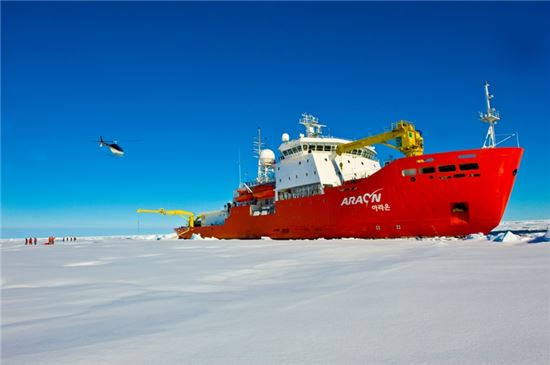 Icebreaking Research Vessel Araon
The next-generation icebreaker was planned to be operated in earnest from 2027 with an investment of 277.4 billion KRW. However, after completing the basic design, the construction bidding conducted in September last year failed. According to the Korea Polar Research Institute, which is promoting the project, shipbuilding companies are reluctant to take on government projects with low profitability. Exchange rate fluctuations are also an issue. The shipyard that recently built the Tamhae 3, operated by the Korea Institute of Geoscience and Mineral Resources, reportedly suffered significant losses due to the sharp rise in the KRW-USD exchange rate.
The next-generation icebreaker research vessel can break through ice up to 1.5 meters thick at a speed of 3 knots (5.6 km/h). The currently operating Araon can break through ice up to 1 meter thick. To reduce the burden on the Araon, which conducts research traveling between the Antarctic and the Arctic, the deployment of the next-generation icebreaker is necessary. The Korea Polar Research Institute is ultimately postponing the operation schedule of the next-generation icebreaker and is reinitiating the bidding process.
The supercomputer 6th unit project, promoted by the Korea Institute of Science and Technology Information (KISTI), held four rounds of bidding last year, all of which failed. Due to the AI boom causing NVIDIA graphics processing unit (GPU) prices to soar, the budget of 292.9 billion KRW was insufficient to procure the supercomputer 6th unit. The supercomputer 6th unit project aims to build a supercomputer with a performance of 600 petaflops (PF), approximately 23 times more powerful than the currently operating supercomputer 5th unit 'Nurion'. The science and industrial sectors are hoping for its early introduction.
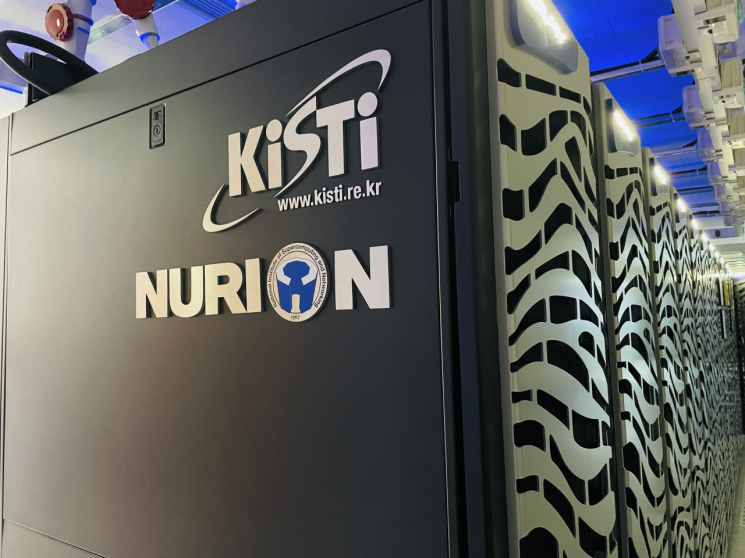
An official from the Ministry of Science and ICT explained regarding the budget for the supercomputer 6th unit, "The Ministry of Economy and Finance is reviewing an increase in the project budget."
However, even if the bidding succeeds, problems remain. NVIDIA's chip orders are backlogged, so it is uncertain when supply will be fulfilled. Chip prices continue to rise. The industry consensus is that the plan to introduce the system by the end of next year is unlikely to be realized. NVIDIA’s new chip 'Blackwell' will be released by the end of this year, and 'Blackwell Ultra' will appear next year. This means the supercomputer we plan to introduce will use older chips. A science community official said, "We also need to request chip supply from NVIDIA at the government level."
© The Asia Business Daily(www.asiae.co.kr). All rights reserved.

















