More than 50% of rooftop area... Installation also in security offices and auxiliary welfare facilities
Proactive response to greenhouse gas reduction... Applied from this month's project plan approval
The introduction of solar power generation facilities is expanding in newly built apartments in the Yongin-si area of Gyeonggi-do. On the 11th, Yongin City announced that it will actively encourage the installation of renewable energy facilities such as solar power generation in multi-family housing projects applying for housing construction project plan approval this month.
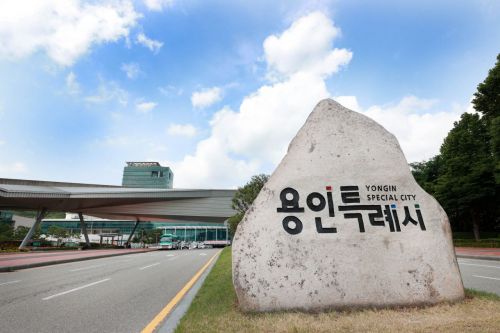
This measure by the city is a proactive response to the government's policy to reduce greenhouse gas emissions from buildings, including the expansion of mandatory certification for zero-energy buildings, and aims to expand carbon neutrality.
To this end, the city plans to require new project plan approval applicants to ▲install solar power generation facilities on more than 50% of the rooftop area and ▲install mini solar power generation facilities in security offices or auxiliary welfare facilities. Additionally, to increase the energy self-sufficiency rate of multi-family housing, the city intends to strengthen the insulation performance of entrance doors and windows.
Meanwhile, according to the government's 'Detailed Roadmap for Mandatory Zero-Energy Building Certification,' starting next year, private multi-family housing with 30 or more households subject to project plan approval will be required to obtain zero-energy building certification. Accordingly, multi-family housing complexes must be designed to meet the zero-energy building grade 5 certification standards.
Previously, the government amended the 'Enforcement Decree of the Green Building Promotion Act,' defining the certification target for zero-energy buildings as buildings with a total floor area of 500㎡ or more, or multi-family housing with 30 or more households since last year. Following the mandatory zero-energy certification for public buildings in 2020, private multi-family housing for sale or rent with 30 or more households will also be included starting next year.
A zero-energy building refers to a green building that maximizes insulation performance to minimize energy demand and produces renewable energy through solar power facilities, thereby minimizing the building's energy consumption. The government classifies buildings into five grades based on energy self-sufficiency rates and provides benefits such as ▲11?15% floor area ratio and height relaxation ▲15?20% acquisition tax reduction according to the grade for buildings certified as zero-energy buildings.
The city plans to revise the 'Yongin City Multi-Family Housing Planning and Review Criteria' in this direction and guide construction businesses to reflect these standards.
A Yongin City official said, "To create a sustainable zero-energy city, we have decided to proactively encourage multi-family housing to be equipped with renewable energy facilities," adding, "We expect active participation from developers to ease residents' housing costs and to benefit from incentives such as floor area ratio relaxation."
© The Asia Business Daily(www.asiae.co.kr). All rights reserved.
![User Who Sold Erroneously Deposited Bitcoins to Repay Debt and Fund Entertainment... What Did the Supreme Court Decide in 2021? [Legal Issue Check]](https://cwcontent.asiae.co.kr/asiaresize/183/2026020910431234020_1770601391.png)
















