Selected as a Global Leading Peer Company
Pursuing Listing via Technology Special Exception... Difficult to Predict Timing of Profit Turnaround
Careful Review Needed When Investing Post-Listing
IBeam Technology, a developer of bio-microscopes, is set to be listed on the KOSDAQ market. Samsung Securities, the lead underwriter, selected two comparable companies?Bruker from the United States and Carl Zeiss Meditec from Germany?to estimate IBeam Technology's appropriate corporate value. Due to the difficulty in finding domestic listed companies with similar business models, overseas companies with comparable product lines were chosen as substitutes. However, some voices suggest that since the valuation is based on comparisons with world-leading companies, a meticulous investment strategy is necessary.
According to the Financial Supervisory Service's electronic disclosure system on the 11th, IBeam Technology will issue 2,234,000 new shares for its initial public offering (IPO). The expected price range is 7,300 to 8,500 KRW, and after conducting a demand forecast over five business days from the 15th to the 19th of next month, the final offering price will be determined. The total offering size is estimated to be between 16.3 billion and 18.9 billion KRW.
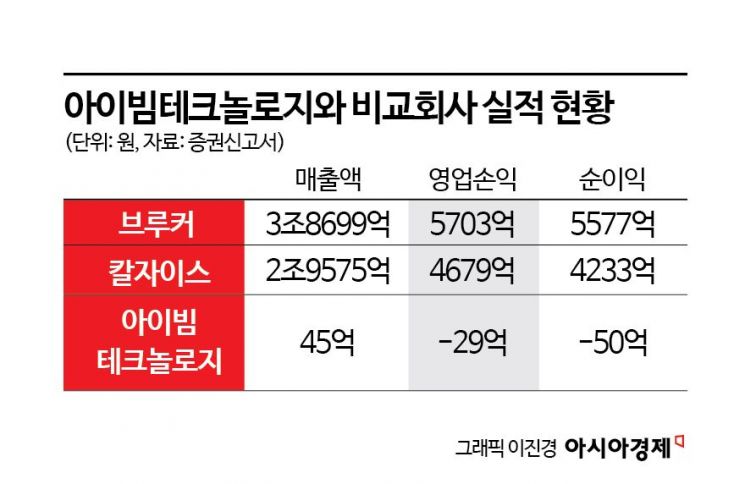
Founded in 2017, IBeam Technology succeeded in commercializing integrated bio-microscope equipment. CEO Kim Pilhan, a professor at the Graduate School of Medicine at the Korea Advanced Institute of Science and Technology (KAIST), developed the core technology for bio-microscopes (IVM). A bio-microscope is an advanced laser optical microscope device that allows direct observation of the fine structures inside living organisms. It offers a resolution 100 times higher than that of magnetic resonance imaging (MRI). It enables direct tracking and analysis of target cells and drug movements within the microenvironment of living organisms. It is used to evaluate the delivery process and efficacy of new drug candidates in vivo. The company has supplied its products to world-renowned research institutions such as Seoul National University College of Medicine, Harvard University, Johns Hopkins University, and the University of Massachusetts. Last year, it recorded sales of 4.5 billion KRW and an operating loss of 2.9 billion KRW.
Samsung Securities estimated IBeam Technology's value based on the corporate values of Bruker and Carl Zeiss Meditec, reflecting financial criteria and business similarities. However, considering differences in company size, sales composition by segment, and the arbitrariness of the comparable company selection criteria, they explained that the selection of comparable companies might not be appropriate.
Bruker, established in 1960, is a developer of life science research equipment and solutions. It provides products necessary for life science research, including mass spectrometers, elemental analyzers, microscopes, nano devices for microscopes, and process analysis technologies worldwide across the United States, Europe, and Asia. More than 8,500 employees work at over 90 locations globally. Last year, it recorded sales of 2.965 billion USD and an operating profit of 482 million USD.
The multinational medical company Carl Zeiss Meditec offers medical visualization solutions such as medical magnifiers, surgical imaging equipment, radiation therapy systems, surgical microscopes, and bio-microscopes. Last year, it achieved sales of 2.089 billion EUR and an operating profit of 363 million EUR.
Both Bruker and Carl Zeiss Meditec are leading companies recognized worldwide for their technology, with sales reaching 3 to 4 trillion KRW. Their average price-to-earnings ratio (PER) is 29.7 times. Since IBeam Technology is currently recording net losses, its present value was calculated based on estimated net profits for 2026 and 2027. IBeam Technology expects to have contact with 25 customers per demo device starting next year. It also considers launching AI (artificial intelligence) medical devices and anticipates turning profitable next year.
Since the listing is being pursued under the special technology growth company exception (technology exception), the appropriate offering price is calculated based on growth potential. After applying an expanded price fluctuation range on the first day of listing, concerns about offering price bubbles have increased. Because there is a high possibility of making profits by selling the IPO shares on the first day of listing, many institutional investors are willing to subscribe at high prices. However, there are quite a few newly listed companies whose stock prices have performed poorly after listing. A financial investment industry official advised, "Investors should carefully review technology exception companies before deciding whether to invest," adding, "There are many assumptions involved in estimating appropriate corporate value, so it is necessary to verify whether actual results materialize."
© The Asia Business Daily(www.asiae.co.kr). All rights reserved.

















