Resolution of KMA General Strike on 18th, Government's Countermeasures with 'Medical Treatment Order and Closure Reporting Order'
Government Reviews KMA for "Inducing Illegal Collective Action, Possible Violation of Fair Trade Act"
Previously Accused of Fair Trade Act Violation in 2014 but Acquitted
Will It Be Different This Time... Government Says "Will Review and Take Necessary Measures"
Although the government unleashed a tough stance on the 10th in response to the medical community's resolution for a collective strike, most measures failed to show effectiveness, drawing criticism that the countermeasures are a rehash of those from the medical crises in 2014 and 2020.
Jeon Byeongwang, Director of Health and Medical Policy at the Ministry of Health and Welfare, said at the Central Disaster and Safety Countermeasures Headquarters (CDSCH) briefing on doctors' collective action, "Following the Seoul National University College of Medicine and Seoul National University Hospital's emergency committee resolution for an indefinite full strike starting June 17, the Korean Medical Association (KMA) yesterday announced a collective refusal of medical services and a general rally scheduled for June 18," adding, "Refusal to provide medical services is an absolutely unacceptable act that threatens the lives of the public and patients." He also stated, "We will begin legal review regarding possible violations of the Fair Trade Act by the KMA, which is inducing illegal collective actions."
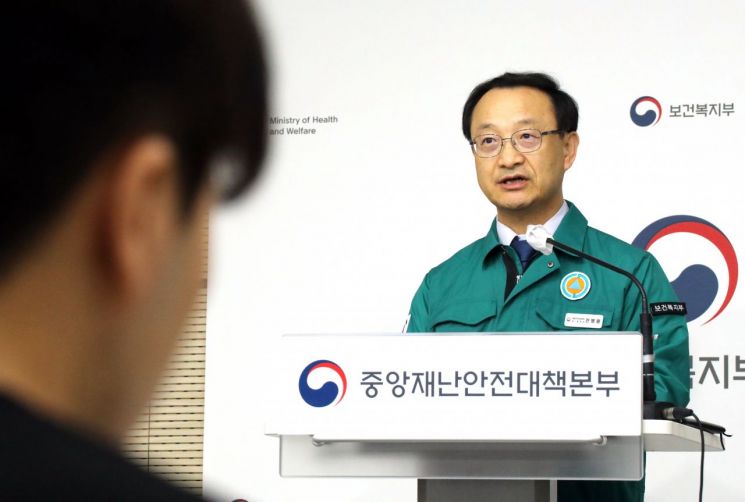
Regarding private practitioners, orders to provide medical services and to report strike intentions will be issued. Director Jeon explained, "Each city and province will issue medical service orders to medical institutions under their jurisdiction based on Article 59, Paragraph 1 of the Medical Service Act, instructing them to provide medical services without strike on the announced date of collective action, June 18," and added, "Medical institutions intending to strike on that day will be required to report by the 13th."
However, the government's current measures, such as medical service orders and reviews of Fair Trade Act violations, are identical to previously employed tough measures, leaving it uncertain whether they will serve as special measures to resolve the current crisis. Notably, the Fair Trade Act charges the government filed against the KMA during the medical crisis a decade ago ended in government defeat, raising doubts about effectiveness.
In 2014, the KMA opposed the government's policy to introduce telemedicine and concretized plans for government confrontation by conducting a one-day collective strike on March 10 and planning a full collective strike from March 24 to 29. At that time, the government regarded such medical community collective actions as illegal and reported former KMA President Roh Hwan-gyu and others to the prosecution for violating the Fair Trade Act for leading the collective action. However, the court ruled in the first trial in 2020 that the collective strike was an expression of voluntary decision-making and acquitted them. The appellate court upheld the same verdict. The court explained the acquittal by stating, "The strike participation rate was only 20.9%, so it cannot be seen that the KMA forced all members to participate, nor was there any threat of disadvantage for non-participation."
When asked by reporters about interpretations suggesting that applying the Fair Trade Act again might yield similar results, Director Jeon responded, "The KMA has decided on a one-day collective action, and the status of subsequent actions is undecided," adding, "(The government) is reviewing whether there is a violation of prohibited acts by business associations. Rather than taking immediate action, we will monitor the situation and take measures when necessary and possible." When asked about differences from past measures, he added, "We will review and take action when necessary."
The government plans to issue orders to maintain medical services to medical institutions under local governments' jurisdiction on the day the KMA has announced a general strike on the 18th, and if the strike rate among private practitioners exceeds 30%, it will issue orders to resume work.
During the push to increase medical school admissions in 2020, the government anticipated that a significant number of local clinics nationwide would close, so it provided guidelines to local governments to issue orders to resume medical services if the local strike rate exceeded 30%. Later, depending on the strike situation, the threshold for issuing work resumption orders was lowered to 15%, strengthening the guidelines.
Director Jeon said, "Since this is currently a one-day collective action on June 18, the threshold is set at 30%, but we will review this standard again considering patient inconvenience and medical service gaps."
He explained, "On the morning of the strike day, we will conduct phone checks with all clinic-level medical institutions to confirm whether they are actually providing medical services, and if the strike rate exceeds 30%, we will visit the sites to verify non-compliance with medical service orders and work resumption orders, impose administrative sanctions, and apply penalty provisions." He added, "In the process of sanctions, we will distinguish and treat differently whether the illegal strike was due to collective action or unavoidable individual circumstances."
© The Asia Business Daily(www.asiae.co.kr). All rights reserved.
![Clutching a Stolen Dior Bag, Saying "I Hate Being Poor but Real"... The Grotesque Con of a "Human Knockoff" [Slate]](https://cwcontent.asiae.co.kr/asiaresize/183/2026021902243444107_1771435474.jpg)











