"Netanyahu Focused Solely on Political Survival"
Rising 'Early Election Theory' Deepens Confusion
Concerns Raised Over Escalation with Hezbollah
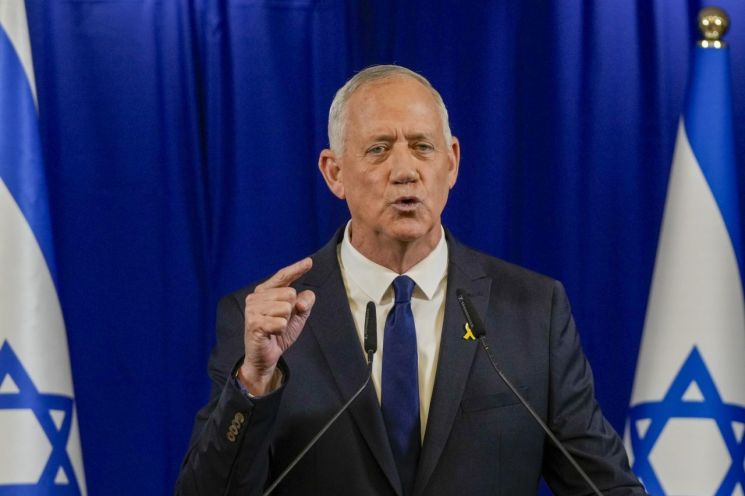 On the 9th (local time), Benny Gantz, leader of Israel's National Unity Party, held a press conference and announced his resignation from the wartime cabinet official position.
 [Image source=AP·Yonhap News]
Political turmoil in Israel has deepened following the announcement that Benny Gantz, leader of the National Unity Party and a symbolic figure in the Israeli wartime coalition cabinet, will resign from his wartime ministerial position. With early elections gaining momentum ahead of the first anniversary of the Hamas conflict this October, the Benjamin Netanyahu administration faces significant political pressure. Amid prolonged war and declining approval ratings, the possibility of an early election raises the chance of a regime change, while concerns about a full-scale escalation with Hezbollah have sparked fears that Israel could become mired in a protracted conflict.
Gantz: "Netanyahu Focused on Political Survival Over National Interest"
According to The Times of Israel, on the 9th (local time), Benny Gantz, leader of the National Unity Party, stated at a press conference, "Netanyahu is blocking our path to a true victory," adding, "With a heavy heart, I am leaving the emergency cabinet." He continued, "Netanyahu is concentrating more on his political survival than on the national interest," emphasizing, "We must not allow the country to remain divided like this. We need to agree on holding early elections this fall, marking the first anniversary of the war, to form a new government."
Last month, when Prime Minister Netanyahu showed indecisiveness regarding the U.S. government's phased ceasefire plan, Gantz issued an ultimatum threatening to withdraw from the wartime cabinet if a post-Gaza Strip plan was not established by the 8th of this month. However, after the Israeli military announced on the 8th that four hostages had been rescued from Gaza, the resignation announcement was delayed by a day. It is also reported that Kadi Eizenkot and Chili Tropper, members of the National Unity Party who participated in the Israeli wartime cabinet as observers, have submitted their resignations to Prime Minister Netanyahu.
In this situation, far-right factions within the Israeli coalition government have fiercely criticized Gantz and are demanding that far-right figures be appointed to the wartime cabinet. Immediately after Gantz's resignation, Itamar Ben-Gvir, Minister of National Security, sent an open letter to Prime Minister Netanyahu, stating, "As a government minister, party leader, and senior coalition partner, I request to join the wartime cabinet," and added, "The small wartime cabinet formed at the outbreak of the war excluded ministers within the government and caused division."
Rising Calls for Early Elections... Political Instability Deepens
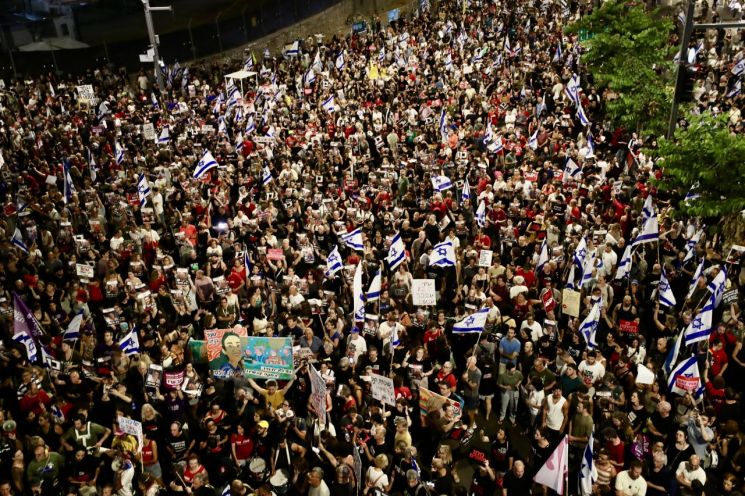 On the 8th (local time) in Tel Aviv, Israel, a large-scale anti-government protest demanding an immediate ceasefire with Hamas, the release of hostages, and the resignation of Prime Minister Benjamin Netanyahu.
 [Image source: Xinhua·Yonhap News]
By effectively igniting the long-discussed call for early elections within and outside Israeli politics, Gantz's resignation is expected to further intensify political instability in Israel. Prime Minister Netanyahu is also trying to actively manage the situation by urging Gantz not to resign. Shortly after Gantz's resignation announcement, Netanyahu posted on his X (formerly Twitter) account, "Now is not the time to give up; it is time to unite," urging him to reverse his decision, saying, "We will continue until we achieve victory and accomplish all war objectives, especially the release of all hostages and the elimination of Hamas."
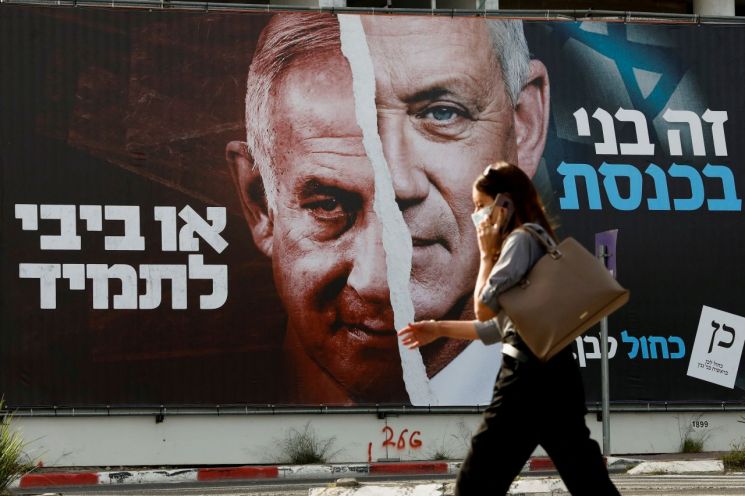
Gantz currently holds the highest approval rating among candidates for the next prime minister and has long been regarded as a political rival to Netanyahu. Given the significant political impact of his resignation, The Times of Israel reported that Netanyahu is attempting various approaches to prevent his departure. Although his resignation does not immediately threaten the collapse of Netanyahu's coalition, the effective disintegration of the wartime cabinet's unity and the rising calls for early elections are expected to severely shake the Netanyahu administration.
Meanwhile, anti-government protests demanding an immediate ceasefire and Netanyahu's resignation have been spreading widely in Israel, fueled by financial difficulties and military service burdens caused by the prolonged war. Particularly, Netanyahu's approval ratings have reportedly plummeted after news surfaced that his son, who was in the U.S. in April, returned but did not participate in the fighting and remained in the U.S.
Escalation with Hezbollah Begins... Burden of Two Fronts
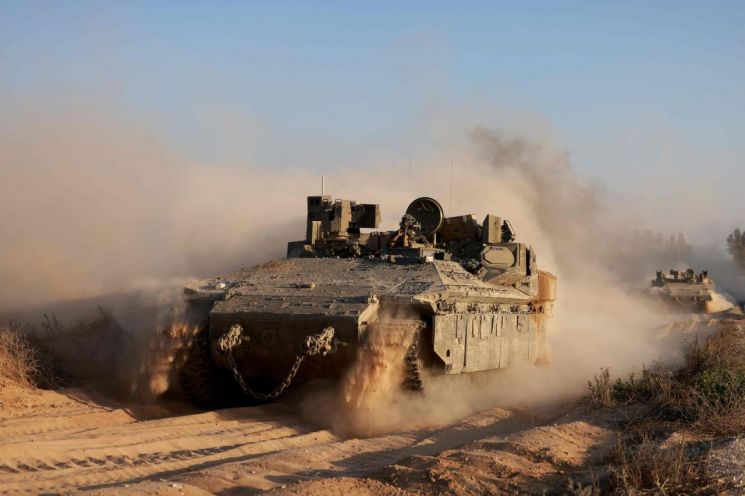
With the Israeli wartime cabinet effectively collapsing and political instability showing signs of prolongation, the likelihood of accepting the U.S.-proposed phased ceasefire plan has diminished. Meanwhile, as the conflict with Hezbollah, a pro-Iranian armed faction in Lebanon, intensifies, concerns are rising that Israel may have to manage two fronts simultaneously, north and south.
Axios, citing U.S. and Israeli officials, reported, "The Joe Biden administration has opposed the Israeli government's recent policy to engage in localized conflicts in Lebanon, warning that this could provoke Iranian involvement." With ongoing clashes against Hamas in southern Israel, the outbreak of localized conflict with Hezbollah in northern Lebanon could cause the war to spiral out of control.
Despite this, Israeli strikes on Lebanon continue. On the 9th, the Israeli military bombed villages in southern Lebanon, killing two Hezbollah militants and injuring three civilians. So far, 512 people have died in Lebanon due to clashes between the two sides, making a full-scale war between them inevitable.
© The Asia Business Daily(www.asiae.co.kr). All rights reserved.