Interpretation of "Gross Negligence" Requirement for Non-Dischargeable Claims under the Debtor Rehabilitation Act
"Center Line Violation" under the Special Act on Traffic Accident Handling
May Also Occur Due to Driver's Ordinary Negligence
The Supreme Court has ruled that even if a debt arises from a fatal accident caused by crossing the center line while driving, the driver can be exempted from liability through a discharge decision under bankruptcy proceedings if there was no gross negligence in crossing the center line.
The Debtor Rehabilitation and Bankruptcy Act (Debtor Rehabilitation Act) stipulates that claims for damages arising from serious negligence causing harm to another person's life or body are non-dischargeable debts exempt from discharge even with the court's approval. However, since the interpretation of the Special Act on Traffic Accident Handling provides that some center line crossing accidents may be due to ordinary negligence, the ruling implies that some claims arising from center line crossing accidents can be discharged through bankruptcy decisions.
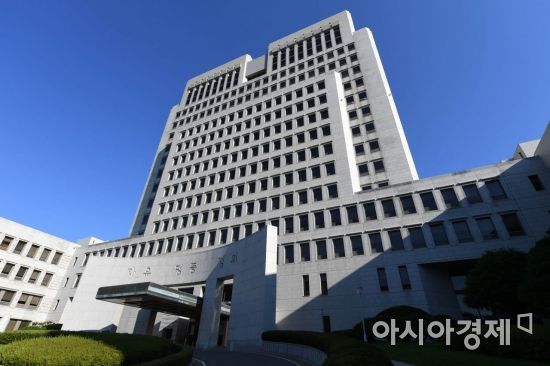
According to the legal community on the 9th, the Supreme Court's Second Division (Presiding Justice Kim Sang-hwan) overturned the lower court's ruling that had ruled in favor of the plaintiff in the appeal trial of a subrogation claim lawsuit filed by the Foundation for Automobile Accident Compensation Promotion against Mr. Lee, demanding "about 45 million won and interest from February 1999 when insurance payments were made to the accident victims and their families," and remanded the case to the Seoul Southern District Court.
The court stated, "The lower court's judgment that the claim in this case falls under a claim for damages arising from a tort that infringed on another person's life or body due to gross negligence and is therefore excluded from discharge is a misapplication of the law concerning non-dischargeable claims stipulated in Article 566, Paragraph 4 of the Debtor Rehabilitation Act, which affected the judgment," as the reason for reversal and remand.
Mr. Lee caused an accident on January 2, 1997, around 10 a.m., while driving in the first lane of the three-lane one-way Cheonggye Overpass Road in Jongno-gu, Seoul, by crossing the center line and colliding with an oncoming vehicle. One of the three victims in the other vehicle died, and two were seriously injured.
In February 1999, Dongbu Fire & Marine Insurance paid 45.14 million won to the victims as compensation under the Automobile Accident Compensation Guarantee Project and filed a subrogation lawsuit to exercise the victims' claims for damages against Mr. Lee. In June 2002, Mr. Lee made a statement accepting the claim recognizing Dongbu Fire's claim. Subsequently, Dongbu Fire filed another lawsuit to interrupt and extend the statute of limitations, and in September 2012, a judgment was rendered in favor of Dongbu Fire, which became final.
However, Mr. Lee filed for bankruptcy and discharge with the court, and the discharge decision was finalized in June 2015. The creditor list submitted by Mr. Lee included Dongbu Fire's claim. The Foundation for Automobile Accident Compensation Promotion acquired the claim against Mr. Lee from Dongbu Fire in February 2020 under the Automobile Accident Compensation Guarantee Act and filed a lawsuit in June 2022 demanding the subrogated amount from Mr. Lee.
Article 45 (Delegation of Authority, etc.) Paragraph 1, Item 4 of the Automobile Accident Compensation Guarantee Act stipulates that the government may entrust the Foundation for Automobile Accident Compensation Promotion with the task of exercising subrogation rights against the accident driver after compensating damages within the limits of compulsory insurance payments.
The issue in the trial was whether the subrogated claim (Dongbu Fire's claim against Mr. Lee) acquired by the Foundation for Automobile Accident Compensation Promotion should be considered discharged by the discharge decision following Mr. Lee's bankruptcy. Mr. Lee argued that the claim does not exist because it was discharged through bankruptcy, while the Foundation argued that the claim arose from a tort caused by Mr. Lee's gross negligence infringing on another person's life and body and therefore was not discharged.
Article 566 (Effect of Discharge) Paragraph 4 of the Debtor Rehabilitation Act states that "claims for damages arising from a tort in which the debtor infringed on another person's life or body due to gross negligence" are claims that are not exempted from liability even with a discharge decision following bankruptcy.
The first-instance court ruled in favor of the Foundation for Automobile Accident Compensation Promotion. The court ordered Mr. Lee to pay the 45.14 million won compensation paid by Dongbu Fire to the victims and the interest accrued after the final judgment in favor of Dongbu Fire to the Foundation.
The court stated, "The defendant's debt arose from an accident in which the defendant, while driving a vehicle in violation of the speed limit, crossed the center line and collided with an oncoming vehicle, resulting in one victim's death and two victims' serious injuries," and concluded, "Considering the circumstances, process, and extent of damage, the defendant's debt is a claim for damages arising from a tort infringing on another person's life and body due to gross negligence, so the effect of discharge does not apply."
Mr. Lee appealed, but the second-instance court's judgment was the same.
The court first cited Supreme Court precedents on "gross negligence" in relation to Mr. Lee's substantive defense that the claim falls under dischargeable claims under the Debtor Rehabilitation Act.
Previously, the Supreme Court defined "gross negligence" as stipulated in Article 566, Paragraph 4 of the Debtor Rehabilitation Act as "a situation where the debtor, in performing an act, could easily foresee that the result would infringe on life or body if only a little care was taken but recklessly continued such act or failed to take such care that could have easily avoided the infringement, thereby significantly violating the duty of care required of an ordinary person."
The court cited as grounds that ▲the accident occurred due to the defendant crossing the center line by oversteering the wheel after noticing another vehicle entering the first lane at a variable lane on Cheonggye Overpass Road at a considerable speed, ▲one victim died and two were seriously injured in the accident, ▲considering the circumstances, location of the accident, and collision points between the defendant's and victim's vehicles, it is reasonable to conclude that the claim acquired by the plaintiff arose from a tort infringing on another person's life and body due to the defendant's gross negligence, and stated, "Despite the finalization of the discharge decision, the defendant's liability is not exempted."
Regarding whether to accept the Foundation's claim, the court concluded that although Dongbu Fire won the subrogation lawsuit against Mr. Lee and the judgment became final, the Foundation filed this lawsuit to interrupt the statute of limitations, so Mr. Lee has the obligation to pay 45.14 million won and interest.
However, the Supreme Court's judgment differed. The Supreme Court held that it is not always easy to assume gross negligence on the driver's part just because the accident involved crossing the center line, and that each case must be examined to determine whether the accident was caused by gross negligence or ordinary negligence.
The court first stated, "Whether the debtor has 'gross negligence' as stipulated in Article 566, Paragraph 4 of the Debtor Rehabilitation Act should be judged comprehensively by considering the specific circumstances at the time of the breach of duty of care, such as the circumstances of the accident causing harm to another person's life or body due to breach of duty, the cause and content of the breach."
It also pointed out, "Since the proviso of Article 3, Paragraph 2 of the Special Act on Traffic Accident Handling anticipates cases where the center line is crossed due to ordinary negligence rather than gross negligence, it is inappropriate to immediately conclude that gross negligence exists under Article 566, Paragraph 4 of the Debtor Rehabilitation Act solely because the debtor caused a center line crossing accident as defined in the proviso."
Article 3 (Special Punishment) Paragraph 1 of the Special Act on Traffic Accident Handling stipulates that "If a driver commits a crime under Article 268 of the Criminal Act due to a traffic accident, they shall be punished by imprisonment for up to five years or a fine of up to 20 million won."
Article 268 (Negligent or Grossly Negligent Injury or Death) of the Criminal Act states that "A person who causes death or injury to another by negligence or gross negligence in the course of their duties shall be punished by imprisonment for up to five years or a fine of up to 20 million won."
The main text of Article 3, Paragraph 2 of the Special Act on Traffic Accident Handling states, "For drivers who commit crimes under Paragraph 1, such as negligent injury or grossly negligent injury, and violate Article 151 of the Road Traffic Act, prosecution cannot be initiated against their explicit wishes."
Article 151 (Penalty) of the Road Traffic Act stipulates that "A driver of a vehicle or streetcar who negligently or with gross negligence damages another person's building or other property in the course of their duties shall be punished by imprisonment for up to two years or a fine of up to five million won."
In other words, Article 3, Paragraph 2 of the Special Act on Traffic Accident Handling prohibits prosecution against the driver's will even if the driver causes injury or damages property due to negligence or gross negligence, aiming to prevent the proliferation of criminal records caused by traffic accidents.
The proviso of Paragraph 2 of Article 3 provides exceptions where prosecution is allowed despite the victim's opposition, including cases where the driver commits negligent or grossly negligent injury and then flees without providing aid, moves the victim to another location and abandons them, refuses a breathalyzer test, or causes an accident by crossing the center line (Item 2 of the proviso).
The Supreme Court interpreted the structure of the Special Act on Traffic Accident Handling to mean that the "center line crossing accident" provision in Item 2 of the proviso of Paragraph 2 of Article 3 anticipates cases where the center line is crossed due to ordinary negligence rather than gross negligence.
In other words, if all center line crossing accidents involved gross negligence, there would be no need to separately include center line crossing accidents as an exception. The existence of cases where grossly negligent injury charges do not apply despite center line crossing accidents explains the separate exception.
The court then examined whether Mr. Lee, the driver in this case, had gross negligence at the time of the accident.
The court stated, "The defendant crossed the center line while trying to avoid a collision after noticing another vehicle entering the first lane on the overpass," and "It appears that the defendant crossed the center line in the process of avoiding another accident."
It also found, "The defendant was not driving significantly over the speed limit at the time of the accident, and there is no evidence of other breaches of duty of care."
Finally, the court stated, "The fact that one victim died and two were seriously injured relates to the 'severity of harm to another person's life or body' and cannot be a direct criterion for determining whether the debtor had gross negligence."
In conclusion, even in cases of "center line crossing," which is one of the "12 major gross negligence" under the Special Act on Traffic Accident Handling, there can be cases of ordinary negligence. Therefore, whether the requirement of "gross negligence" for non-dischargeable claims under Article 566, Paragraph 4 of the Debtor Rehabilitation Act is met must be examined on a case-by-case basis. Since gross negligence was not recognized in this case, the Supreme Court concluded that the debt was extinguished by Mr. Lee's discharge decision following bankruptcy.
© The Asia Business Daily(www.asiae.co.kr). All rights reserved.

















