KIET, Risk Analysis of the Battery Industry Following the U.S. Presidential Election Results
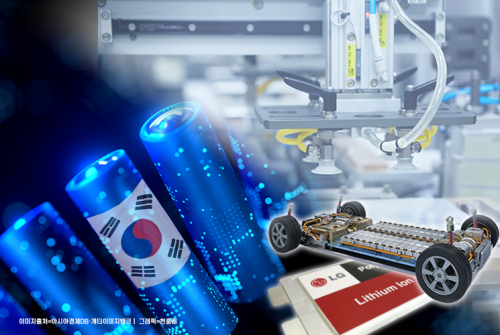
An analysis from a government-funded research institute has indicated that if former U.S. President Donald Trump is re-elected in the upcoming November U.S. presidential election, negative impacts on the domestic battery industry in South Korea will be inevitable. It emphasized the need to closely monitor the U.S. election situation and prepare countermeasures.
On the 9th, the Korea Institute for Industrial Economics and Trade (KIET) released a report titled "Risk Analysis of the Korean Battery Industry According to the U.S. Presidential Election Results: Focusing on IRA Changes and Domestic Industry Impact," which stated that if the Inflation Reduction Act (IRA) is repealed or its support scale reduced after Trump's return to power, negative effects such as investment contraction and performance deterioration will be unavoidable.
KIET analyzed that amid unfavorable market conditions due to the recent entry into the electric vehicle chasm and concerns over oversupply from China, the strong performance in the U.S. market based on the IRA effect is acting as a pillar for the Korean battery industry. According to KIET's analysis, in 2023, Korean companies' market share in the U.S. battery market rose by 6.2 percentage points from the previous year to 42.4%, surpassing Japan (40.7%) to become the top market share holder in the U.S.
The report stated, "The strength of our companies in the U.S. battery market is largely due to the IRA," explaining that the IRA's electric vehicle purchase tax credit battery requirements were set favorably for Korean companies, leading to increased demand and sales of batteries produced by our companies in the U.S., which in turn resulted in the rise in market share.
With the U.S. market serving as a pillar for our battery industry, concerns arise that Trump's stance on repealing the IRA would be a negative factor for us. However, the report projected, "Even if Trump is re-elected, it will be difficult to repeal the law."
For the IRA repeal to actually occur, three conditions must all be met: Trump's successful re-election, the Republican Party's control of both the U.S. Congress's House and Senate, and no defections within the Republican Party on the repeal bill. Realistically, the likelihood of this happening is low. In particular, many IRA beneficiary regions in the U.S. have strong Republican support, making defections inevitable.
The report forecasted that a more feasible scenario is a reduction in IRA support scale through executive authority. KIET noted, "The Biden administration has previously caused changes to the IRA through separate administrative guidelines after the law's enactment, such as battery requirement implementation guidelines and Foreign Entity of Concern (FEOC) guidance," and stated that a second Trump term is likely to use executive orders to reduce the scale of IRA support.
The report identified the most concerning issue if IRA changes such as support scale reduction become visible under a Trump second term as the contraction of investment in the Korean battery industry.
According to KIET, the total production capacity of Korean battery companies in the U.S. is estimated to increase from 117 gigawatt-hours (GWh) in 2023 to 635 GWh in 2027. The report predicted that if Trump wins the November election and IRA support is reduced while the pace of electric vehicle adoption slows, a comprehensive reassessment of Korean companies' investments in the U.S., which were made expecting future profits, will become inevitable.
The report also expressed concerns that the performance of Korean battery companies in the U.S. market would weaken under a Trump second term. It is expected that the anticipated IRA effects such as increased sales and profit growth from the IRA battery requirements and the Advanced Manufacturing Production Credit (AMPC) will be difficult to achieve.
KIET anticipated that under Trump's China containment stance, the U.S. policy to build a decoupled battery supply chain from China will be further strengthened if he returns to power. The report analyzed, "The stricter the IRA's principle of excluding Chinese supply chains is applied, the fewer electric vehicle models benefit from the tax credit," and explained, "The reason the China exclusion supply chain policy is expected to be strengthened through the IRA under a Trump second term is that strictly applying that principle aligns with Trump's plan to reduce the scale of IRA support."
To prepare for risks stemming from Trump, KIET emphasized the need for close monitoring not only of the U.S. presidential and congressional elections but also of individual lawmakers' constituency interests, focusing on IRA beneficiary regions and battleground states within the U.S.
In particular, for the seven U.S. states where domestic companies have made large-scale investments, it suggested analyzing the impact of Korean battery companies' investments on the local economies and using this as leverage in negotiations over potential IRA repeal bills or new implementation guidelines.
Furthermore, amid rapidly changing global trade environments, the report highlighted the necessity of strengthening support to promote domestic investment, especially by expanding the incentive system for battery companies investing domestically to a level comparable to competing countries.
Hwang Kyung-in, a senior researcher at KIET's System Industry Division, stated, "The battery industry inevitably has a high proportion of overseas production because facility investments near electric vehicle plants are unavoidable, making it highly susceptible to changes in the global trade environment," and emphasized, "The trade environment in the battery sector is greatly fluctuating due to the U.S. election risk, so preparation is absolutely necessary."
© The Asia Business Daily(www.asiae.co.kr). All rights reserved.
![From Bar Hostess to Organ Seller to High Society... The Grotesque Con of a "Human Counterfeit" [Slate]](https://cwcontent.asiae.co.kr/asiaresize/183/2026021902243444107_1771435474.jpg)
















