Report on Sinju Science Park
About One Hour from Taipei Capital
Home to 384 Companies Including TSMC
Technology Museum Showcasing Semiconductor Development
Fabless Design Chips Exhibited by Realtek, MediaTek, and Others
Infrastructure Enhanced to Prevent Talent Drain
Increase in Foreign Tourists from Japan and Other Countries
On the 5th, after taking a train for about 40 minutes from Taipei City, the capital of Taiwan, I arrived at Hsinchu Station. From there, a 20-minute taxi ride brought me to the Hsinchu Science Park. This is a hub where Taiwanese semiconductor companies gather to conduct joint research and development, as well as a cradle for nurturing talent. The park houses a total of 384 companies, including 16 leading Taiwanese firms such as TSMC and various research and development facilities. Approximately 20 TSMC factories established in Hsinchu are located just 15 to 20 minutes away from the park, allowing for frequent collaboration. It is no exaggeration to say that this is an optimal location. The park, both inside and out, is regarded as having everything necessary for semiconductor research and development. It was even cited as a model during the process of our government deciding to establish a 'Semiconductor Cluster' in Yongin, Gyeonggi Province.
Walking around the park, one can see the past, present, and future of Taiwanese semiconductors. Established under government leadership on December 15, 1980, the park also houses a 'Technology Museum' that records and preserves the history of Taiwanese semiconductors. Examining the exhibits here revealed that the strength of Taiwanese semiconductors originated from 'fabless' companies.
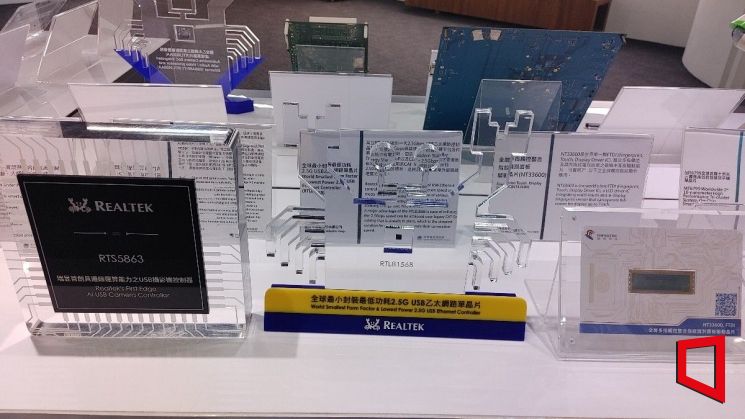 In the Technology Museum within the Sinju Science Complex, many chip products made by Taiwanese fabless companies such as Realtek and MediaTek are prominently displayed at the entrance. Photo by Kim Hyung-min
Fabless Companies Preceded Foundry's No. 1 Position
The Technology Museum's exhibits were different from what I expected. I thought there would be many pieces of equipment and materials related to TSMC, a source of pride for Taiwan, but in reality, there were very few. The only mention in the timeline covering the entire history of Taiwanese semiconductors was the phrase '1987 TSMC Establishment.'
The companies that dominated the museum were mostly fabless firms?companies specializing in semiconductor design. The descriptions inside the museum were filled with content emphasizing that "the path for Taiwanese semiconductors was opened by the achievements of Taiwan's representative fabless companies." Chips created by Realtek, MediaTek, Novatek, and others were displayed in the most prominent places. It seemed to convey that before Taiwan rose to the top of the global foundry market led by TSMC, the foundation was laid by fabless companies. Outside the museum, walking around the park, one could easily spot small emerging fabless companies. Fabless firms were understood to be the 'unsung heroes' building the foundation of Taiwan's semiconductor strength from the bottom up.
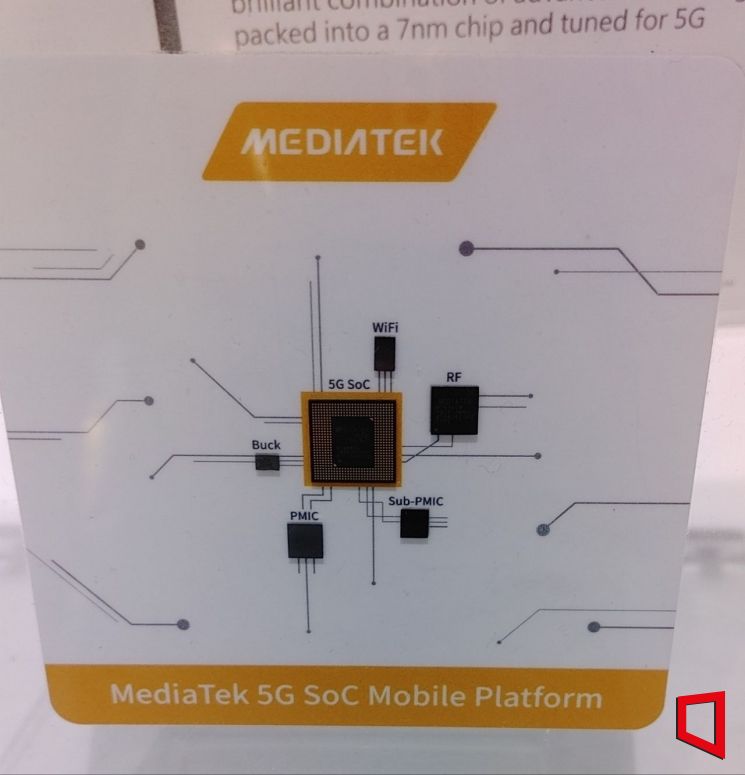 MediaTek's 5G mobile platform exhibited at the Sinju Science Complex Technology Museum. Photo by Hyungmin Kim
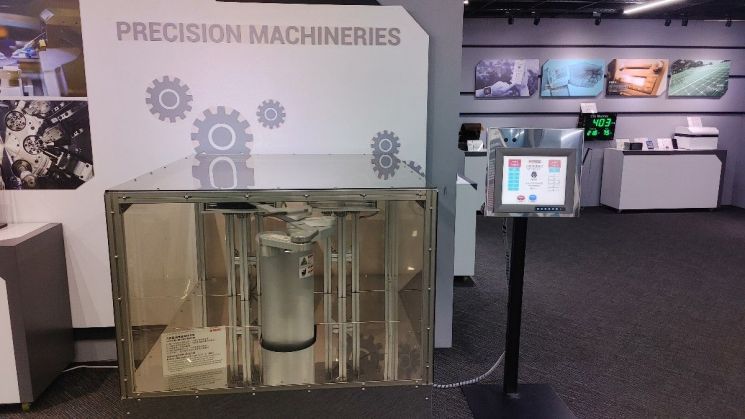 A robotic arm made by Roche, a Japanese factory machinery manufacturer, is exhibited at the Shinju Science Complex Technology Museum. Visitors can try operating it themselves. When the manual/automatic operation button on the right screen is pressed, the robotic arm distributes 10 discs, reminiscent of semiconductor wafers, to the left and right sides. Photo by Kim Hyung-min
Fabless companies have been a driving force behind strengthening foundries. According to experts and officials I met locally, when fabless companies thrive, the overall industry understanding of semiconductor design improves. A good grasp of design enables foundries, which manufacture products on behalf of clients, to accurately understand customer requirements, thereby enhancing their capabilities.
A robotic arm made by the Japanese factory machinery manufacturer 'Roche' caught my attention in the museum. A museum official explained, "This robotic arm is also used in Taiwanese foundry factories." It is an interactive exhibit where visitors arrange ten semiconductor-like discs on the left and right sides in desired quantities. When set to automatic, it distributes the discs evenly on both sides by itself. The official added, "Both in the past and currently, foundry factories use many Japanese-made robotic arms."
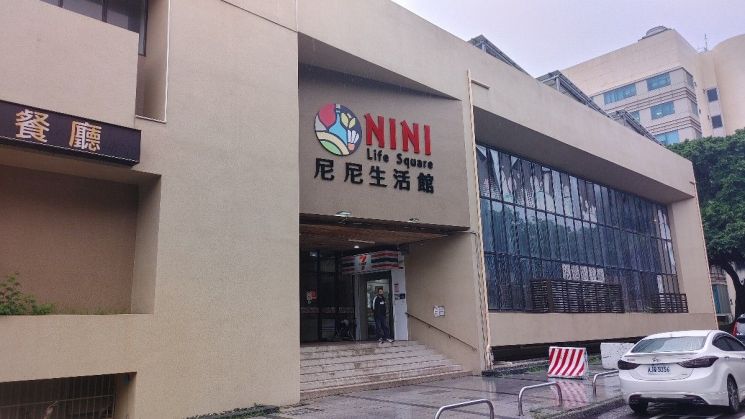 Dormitory located within the Sinju Science Complex. Employees and researchers working in the complex live here. Photo by Kim Hyung-min
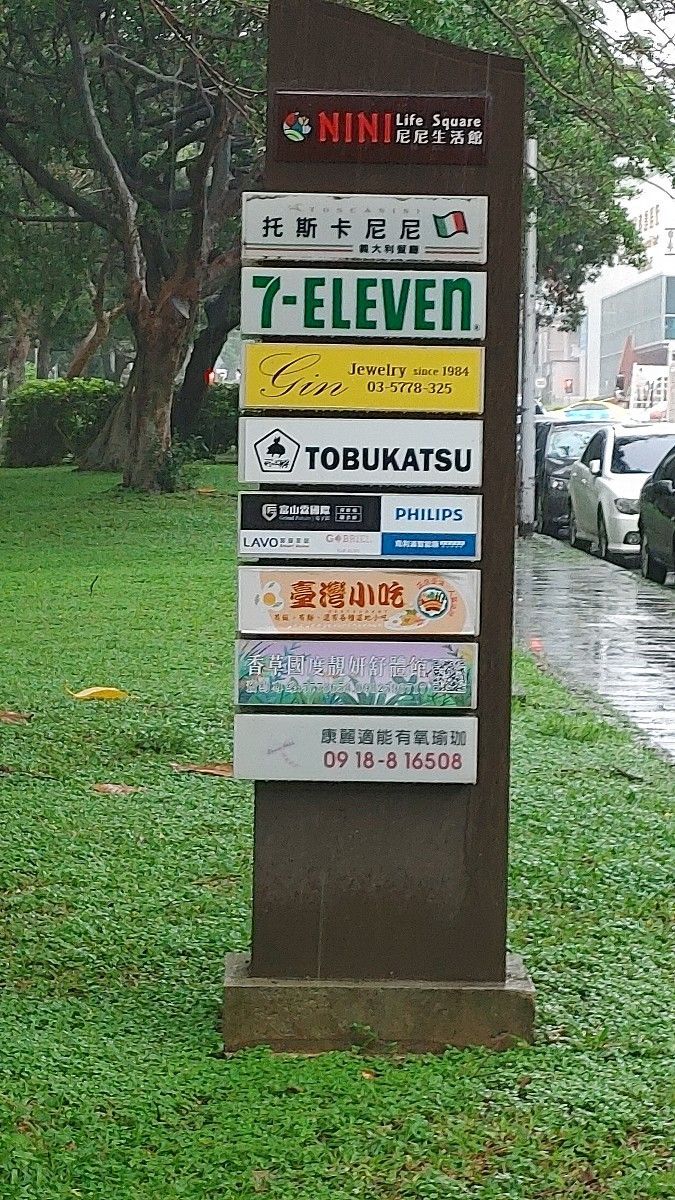 A signboard guiding the convenience facilities in the dormitory at Sinju Science Complex. It appears that as many convenience facilities as possible have been attracted so that employees and researchers do not get tired of monotonous life. Photo by Hyungmin Kim
People as Assets... Attention to Living Infrastructure
Taiwan pays special attention to ensuring that the booming artificial intelligence (AI) and semiconductor industries do not suffer from labor shortages. On the 5th, Wu Cheng-yuan, Chairman (minister-level) of Taiwan's National Science and Technology Council (NSTC), reported to the Legislative Yuan (Parliament) on the 'Current Status and Future Direction of AI Promotion,' stating plans to train 4,000 to 5,000 AI specialists annually to address the shortage of AI talent. Similarly, TSMC's board of directors decided to donate about 4 billion New Taiwan dollars (approximately 169.9 billion KRW) to major universities and high schools to nurture semiconductor talent.
A similar atmosphere could be sensed at Hsinchu Science Park. In addition to building a large education center to cultivate talent, efforts are being made to provide excellent living infrastructure to prevent talent from leaving. It appears they aim to create a small city-like environment. Almost everything necessary for living is available. Dormitories for employees without local ties to Hsinchu were built low-rise but spacious. Inside the dormitories, a large portion is dedicated to leisure spaces where employees can relax. Adjacent to the dormitories is a recreation center, allowing employees to relieve stress anytime.
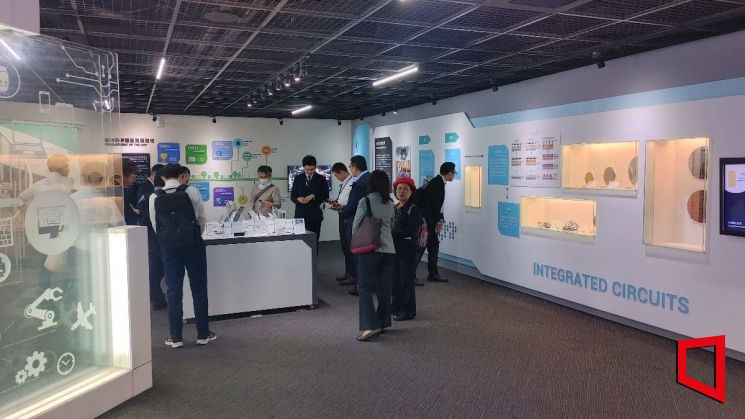 Japanese tourists are visiting the exhibition museum within the Shinju Science Complex. Photo by Kim Hyung-min
Hsinchu Science Park as a Tourist Destination
Foreign tourists also flock to this place. A science park official said, "Although exact statistics need to be checked, recently many foreign tourists have been visiting." As Taiwan has emerged prominently in the global semiconductor market, the park has become a 'must-visit tourist course.' When I visited the Technology Museum, about ten Japanese tourists were viewing the exhibits as a group. They marveled at Taiwan's technological advancements and engaged in discussions based on their knowledge. The guide leading the Japanese tourists said, "Recently, Japanese travel agencies have been including Hsinchu Science Park in Taiwan tours or extending the time spent there."
© The Asia Business Daily(www.asiae.co.kr). All rights reserved.
![Clutching a Stolen Dior Bag, Saying "I Hate Being Poor but Real"... The Grotesque Con of a "Human Knockoff" [Slate]](https://cwcontent.asiae.co.kr/asiaresize/183/2026021902243444107_1771435474.jpg)


















