"Is It Possible to Create a Complex Program Without Bugs?"
There is growing interest in an academic forecast that artificial intelligence (AI) has a 99.9% chance of causing human extinction within a century.
On the 4th (local time), foreign media including 'Business Insider' cited remarks by Roman Yampolskiy, a professor at the University of Louisville's Cybersecurity Research Institute, reporting that "in the future, AI will inevitably be able to harm humans."
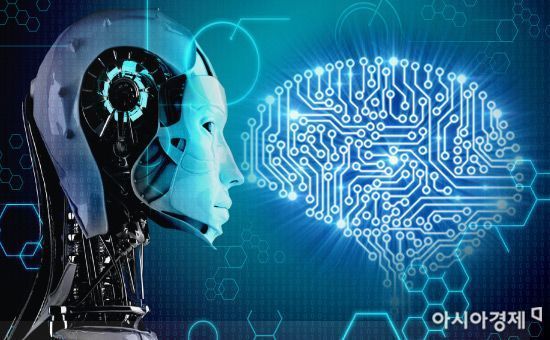 [Image source=Asia Economy DB]
Professor Yampolskiy explained, "The likelihood of AI causing the extinction of humanity depends on whether humans can create highly complex software without bugs over the next 100 years." In other words, it is crucial to establish safety measures to prevent AI from making wrong decisions. He warned, "It is impossible to make AI models safely perform unintended tasks, so the chance of avoiding accidents is low."
He continued, "AI has already made mistakes. It has experienced accidents and jailbreaks, and there is probably no large language model (LLM) that has successfully performed tasks unintended by its developers," he emphasized.
Furthermore, he added, "The problem will become greater once artificial general intelligence (AGI) emerges," and "it is even harder to predict what a system smarter than humans will do."
Based on this outlook, Professor Yampolskiy summarized the future fate of humanity into three possibilities: ▲ AI causing human extinction ▲ everyone suffering extreme pain due to AI ▲ all humans completely losing their purpose.
Ultimately, the way to reduce AI's potential risks is to develop reliable safety measures. Voices are also emerging from the forefront of the AI industry regarding this. According to the media, current and former employees of OpenAI and Google, who are leading the generative AI field, have issued a statement expressing concern over the rapid development of AI.
They appealed, "The risks of AI must be shared smoothly," adding, "Internal corporate regulations cannot provide proper oversight due to profit-seeking goals. General whistleblower protections focus on illegal acts, and some of us fear various forms of retaliation considering the history of whistleblowing cases across the industry."
© The Asia Business Daily(www.asiae.co.kr). All rights reserved.











