Decline in US Manufacturing Indicators Dampens Investor Sentiment
Continued Drop in Treasury Yields
Focus on April Factory Orders and Job Openings
The three major indices of the U.S. New York stock market were down in early trading on the 4th (local time). Concerns about an economic downturn due to a slowdown in manufacturing data the previous day weighed on investor sentiment. The market is awaiting the release of job openings and factory orders data on the day to find additional clues about the U.S. economy and interest rate outlook.
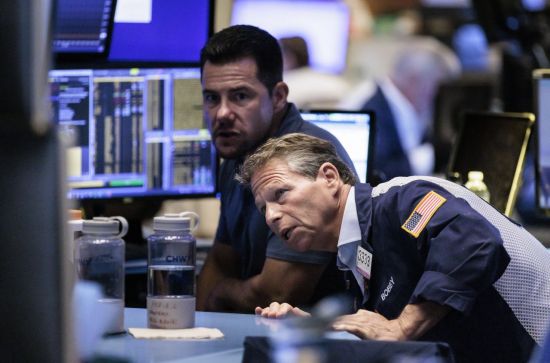
As of 9:37 a.m. at the New York Stock Exchange (NYSE) on the day, the Dow Jones Industrial Average was down 0.2% from the previous close, trading at 38,492.77. The S&P 500, which is centered on large-cap stocks, was down 0.25% at 5,270.39, and the tech-heavy Nasdaq was down 0.21% at 16,792.78.
By individual stocks, GameStop was down 7.46%. GameStop surged 21% the previous day after revealing that Keith Gill, known as "Roaring Kitty," a U.S. retail investor who led the meme stock craze, held a large amount of stocks and options. Amid potential stock price manipulation controversy involving Roaring Kitty, Morgan Stanley and others are reviewing his accounts, raising the possibility of future trading restrictions against him. Intel CEO Pat Gelsinger unveiled the AI processor "Lunar Lake," set to launch in the second half of this year, but the stock rose only 0.26%. U.S. cosmetics brand Bath & Body Works fell 8.43% despite reporting first-quarter earnings that exceeded market expectations, due to disappointment over future earnings outlook.
The poor U.S. manufacturing data released the previous day has spread risk-averse sentiment in the market. The Institute for Supply Management (ISM) reported that the May U.S. Manufacturing Purchasing Managers' Index (PMI) was 48.7, below both the expert forecast of 49.8 and the previous month's figure of 49.2. The manufacturing PMI, a representative leading economic indicator, signals expansion when above 50 and contraction when below 50. Thus, the U.S. manufacturing PMI continued its contraction phase for the second consecutive month. Along with the manufacturing downturn, the price index fell to 57 from 60.9 the previous month, indicating reduced inflationary pressure.
Gabriela Santos, North America Chief Market Strategist at JPMorgan Asset Management, said, "Investors are losing confidence, but the economy still appears generally resilient," adding, "The overall pace of growth is slowing, and some are worried about too much deceleration."
The market is awaiting the release of April factory orders and the U.S. Department of Labor's April Job Openings and Labor Turnover Survey (JOLTS) on the day. The market expects April factory orders to increase by 0.7% month-over-month, slowing from the previous month's 1.6%. It is also expected that the number of U.S. job openings last month increased by 8.37 million, a smaller increase compared to 8.488 million in the previous month. Through these indicators, the market is likely to seek hints about the current economic situation and the future path of interest rates.
The biggest market focus this week is the May nonfarm payroll report from the Department of Labor, to be released on the 7th. Following the slowdown in consumption and manufacturing, it is crucial to see whether cooling signals will emerge in the labor market, which has supported the previously hot inflation. May nonfarm payrolls are expected to increase by 185,000 compared to the previous month. In April, the increase was 175,000, below the forecast of 243,000. If the overheated labor market cools down, the slowdown in consumption and the decline in inflation could accelerate.
Tom Essaye, founder of The Sevens Report Research, said, "The market is trading amid a global risk-averse mood," adding, "If the data disappoints, initial risk-averse capital flows could accelerate due to growth concerns." However, he added, "If a Goldilocks (neither overheating nor cooling) indicator emerges, it would help stabilize the stock market, which saw increased volatility last week."
U.S. Treasury yields are falling. Expectations of interest rate cuts due to manufacturing downturn are pulling bond yields down. The U.S. 10-year Treasury yield, a global bond yield benchmark, was trading at around 4.35%, down 4 basis points (1bp = 0.01 percentage point) from the previous trading day. The 2-year Treasury yield, sensitive to monetary policy, was moving around 4.79%, down 2 basis points from the previous day.
International oil prices are declining. West Texas Intermediate (WTI) crude oil fell $1.20 (1.62%) from the previous day to $73.02 per barrel, and Brent crude, the global oil price benchmark, dropped $1.26 (1.61%) to $77.10 per barrel. This follows OPEC+ (the Organization of the Petroleum Exporting Countries (OPEC) member countries and non-OPEC allies) extending voluntary oil production cuts of 2.2 million barrels per day through the third quarter of this year, with plans for gradual reduction thereafter.
© The Asia Business Daily(www.asiae.co.kr). All rights reserved.

















