AB InBev, Busy as the First Olympic Beer Sponsor
Why Lead with Non-Alcoholic Beer 'Corona Cero'?
Market Size Grows to 26 Trillion Won Amid MZ Generation Preference Changes
Non-alcoholic beer, which has surged in popularity worldwide, has even taken over the 2024 Paris Olympics. AB InBev, the world's largest beer company and the first beer sponsor in Olympic history, is aiming to capitalize on the Olympic effect by promoting its non-alcoholic beer "Corona Cero" instead of its famous brands like Budweiser and Stella.
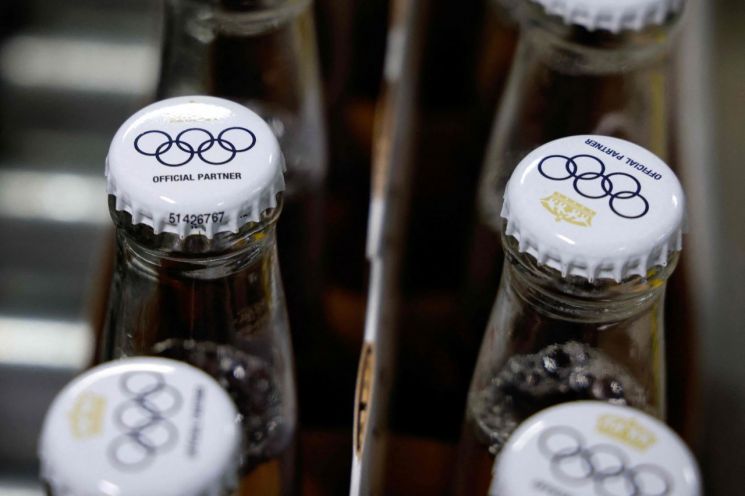 The bottle cap of AB InBev's non-alcoholic beer 'Corona Cero,' released last April, features the Olympic rings.
 [Image source=AFP Yonhap News]
Bloomberg recently reported, "Health-conscious drinkers are leading the non-alcoholic beer boom," adding, "The partnership between AB InBev and the Olympics shows how much brewers are pushing non-alcoholic beer." After the International Olympic Committee (IOC) announced in January that it had signed an official partnership agreement with AB InBev through 2028, AB InBev has been busy preparing for the Olympics, including producing beer bottles engraved with the Olympic symbol, the five rings, at its Belgian factory.
The focus of the sponsorship between the IOC and AB InBev is on non-alcoholic beer with an alcohol content below 0.5%. Usually, beer sales increase on sports days, but alcohol can sometimes lead to violent incidents at sports venues, so advertising alcoholic beverages at global sports events like the Olympics has been heavily restricted. Non-alcoholic beer has solved this problem.
Michel Doukeris, CEO of AB InBev, explained, "Beer is a drink of moderation and choice," adding, "Therefore, Corona Cero, our fastest-growing non-alcoholic beer, is perfect for this Olympic event." Thomas Bach, IOC President, also emphasized how sports and non-alcoholic beer can coexist when explaining the official partnership with AB InBev, Bloomberg reported.
The non-alcoholic beer market is growing rapidly. According to GlobalData, the market size for non-alcoholic beer was $13.2 billion (approximately 18.2 trillion KRW) last year, a 65% increase over three years, and it is expected to grow by 41% over five years to reach $18.6 billion by 2028. This popularity is interpreted as a result of changing societal perceptions of alcohol.
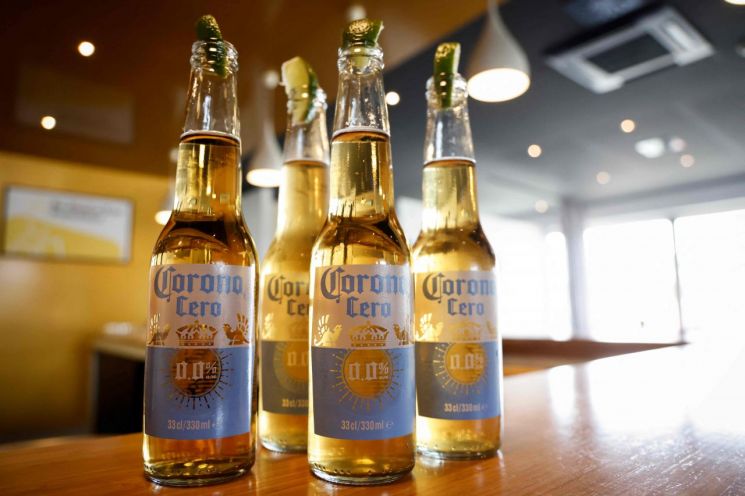
Especially among the younger MZ generation, the choice of non-alcoholic beer has increased. According to Gallup, the percentage of adults aged 18-34 who drink alcohol in the U.S. dropped from 72% in the early 2000s to 62% recently. The British Beer and Pub Association also reported that over 7,000 pubs have closed in the UK in the past decade. Bloomberg noted, "While regulations such as alcohol taxes and rent played a role, changes in drinking habits were the major factor."
In South Korea, the revised Enforcement Decree of the Liquor License Act passed the Cabinet meeting last month, and non-alcoholic and low-alcohol beers are expected to be supplied to restaurants and entertainment bars as early as this month. Previously, comprehensive liquor wholesalers could only handle alcoholic beverages with an alcohol content of 1% or higher, but now beverages with less than 1% or even 0% alcohol content can be distributed.
As the non-alcoholic beer market rapidly expands, global beer brands from Heineken to Guinness, Budweiser, and Corona are developing non-alcoholic beers to meet demand. Currently, the market leader in non-alcoholic beer is Heineken (Heineken 0.0), with Japan’s Suntory (Suntory All-Free) and AB InBev (Brahma 0.0%) also establishing their presence.
AB InBev, the first beer sponsor in Olympic history, has also been the only beer brand officially sponsoring the FIFA World Cup since 1986. The company clearly understands the marketing power of sports events. AB InBev aims to leverage the Paris Olympics to surpass the non-alcoholic beer market leader. CEO Doukeris said, "Consumption has changed," adding, "We will soon announce our Olympic marketing plans. This will accelerate the growth of non-alcoholic beer."
© The Asia Business Daily(www.asiae.co.kr). All rights reserved.
![Clutching a Stolen Dior Bag, Saying "I Hate Being Poor but Real"... The Grotesque Con of a "Human Knockoff" [Slate]](https://cwcontent.asiae.co.kr/asiaresize/183/2026021902243444107_1771435474.jpg)

















