Brazil Floods and Poor Harvests Combined with Yen Depreciation
Imported Raw Material Prices Surge
Ramen and Yakitori Prices Rise
Orange Juice Sales Halted
As the exchange rate, which had fallen to the low 150 yen range per dollar, is once again approaching 160 yen, the depreciation of the yen continues, causing a surge in prices of food products such as ramen and orange juice that use imported raw materials in Japan, leading to sales suspensions. With floods and poor harvests in Brazil, a major import country, combined with the weak yen, the prices of imported raw materials have risen to an unbearable level, prompting small business owners to express their distress, saying they cannot continue their businesses under these conditions.
On the 1st, TV Asahi reported that the prices of imported pork and chicken, the main ingredients of ramen, a representative dish for ordinary people, have risen sharply due to the weak yen. This has caused ramen shop owners to face serious management difficulties.
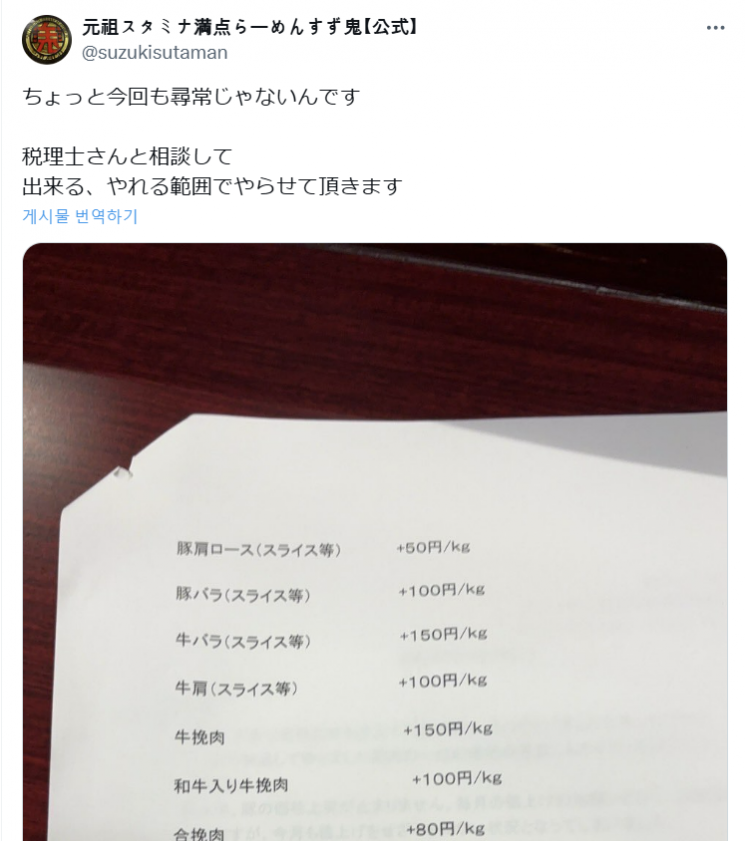 Stamina Ramen Suzuki posted a message stating that the prices of raw materials used in ramen have increased, leading them to consult with a tax accountant. (Photo by Stamina Ramen Suzuki SNS)
At the famous Tokyo ramen shop 'Stamina Ramen Suzuki,' the price of a bowl of ramen was recently raised by 20 yen (174 won). Since about 150g of pork is used in one bowl of ramen, and the price of imported pork has jumped from 820 yen (7,155 won) per kilogram to 1,020 yen (8,900 won), the shop could no longer absorb the increased cost. The shop owner said, "The prices of pork fat and neck meat used in ramen have also risen, increasing monthly ingredient expenses by 500,000 yen (4.34 million won) compared to before. As a seller of affordable food, it is not easy to raise prices. We want to delay the increase as much as possible and endure," he said.
The impact of the weak yen has also reached Japanese-style grilled chicken specialty restaurants. Since late April, heavy rains in Brazil caused a sharp rise in the price of Brazilian chicken, which accounts for 70% of imports. Coupled with the weak yen, shop owners’ anxiety is growing. TV Asahi pointed out, "Due to the sharp rise in Brazilian chicken prices, shop owners have started using domestic chicken, which has also caused domestic chicken prices to rise." As a result, a grilled chicken specialty restaurant in Tokyo decided to limit the quantity of its popular low-priced menu item 'Chicken Ball,' sold at 10 yen (87 won) each.
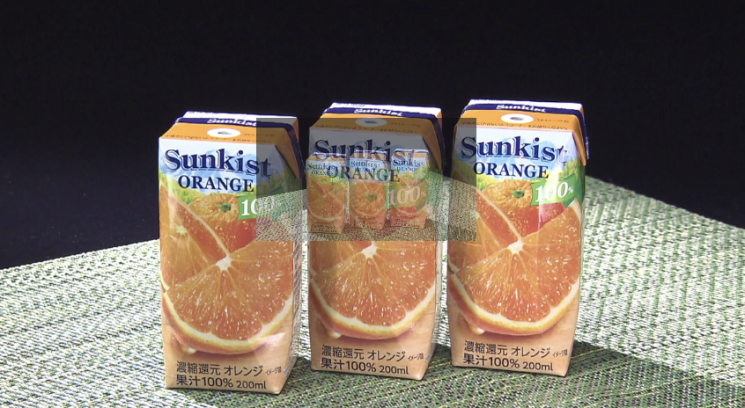 Morinaga Milk Industry's 'Sunkist 100% Orange' juice, which will be discontinued from June. (Photo by Nittere)
Japan imports 90% of its oranges from Brazil, and with the poor Brazilian orange harvest and the weak yen combined, orange juice prices have risen or become unavailable, leading to a nationwide shortage of orange juice.
According to the Japan Juice Association, the price per liter (ℓ) of imported orange juice concentrate surged from 259 yen (2,260 won) in 2020 to 491 yen (4,287 won) in 2023. In response, Asahi Soft Drinks suspended sales of 1.5ℓ orange juice from December last year, and Morinaga Milk Industry announced it would stop selling ‘Sunkist 100% Orange’ from this month once orange concentrate runs out. Fast food chain Mos Burger raised the price of orange juice sold separately. The food industry is also preparing a countermeasure strategy to produce juice from domestically grown mandarin oranges instead of imported oranges if the poor Brazilian harvest and weak yen continue to increase orange import costs.
© The Asia Business Daily(www.asiae.co.kr). All rights reserved.
![Clutching a Stolen Dior Bag, Saying "I Hate Being Poor but Real"... The Grotesque Con of a "Human Knockoff" [Slate]](https://cwcontent.asiae.co.kr/asiaresize/183/2026021902243444107_1771435474.jpg)

















