Adam Neumann, the founder of WeWork, who had been pursuing a plan to reacquire WeWork after it filed for bankruptcy last year, has ultimately decided to abandon the effort.
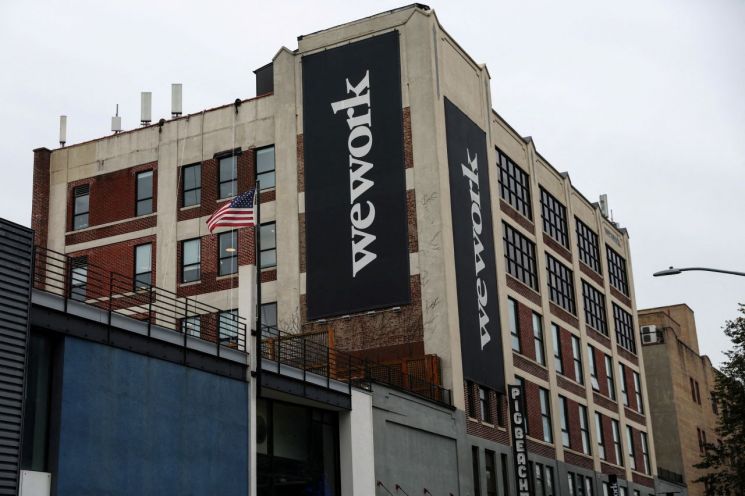
According to The New York Times (NYT) DealBook, Neumann stated in a statement sent to the DealBook newsletter on the 28th (local time), "We have been working constructively over the past few months to develop a strategy to revive WeWork," adding, "(However) instead, the company (WeWork) seems to be trying to emerge from bankruptcy with an unrealistic and unlikely-to-succeed plan."
Neumann, who founded WeWork, the world's largest shared workspace provider, resigned in disgrace amid growing controversy over the business model and corporate governance during the failed initial public offering (IPO) process in 2019. Since then, he has been trying to regain control of the company following WeWork's Chapter 11 bankruptcy filing in November last year. Earlier this year, he even submitted a takeover proposal to WeWork through the real estate company Flow.
In this context, Neumann's statement criticizing WeWork's bankruptcy plan, which excludes him, as unrealistic can be seen as a kind of declaration that he is giving up on reacquisition. The NYT reported that "WeWork has found another lifeline," noting that "last month, the court approved a $4 billion debt liquidation plan, and with $450 million in new funding from Japan's SoftBank, which has supported WeWork from the beginning, the company was able to emerge from Chapter 11 bankruptcy." Business Insider also reported, "Neumann said he would step down," adding, "Looking at the statement, Neumann does not seem hopeful about WeWork's new path."
WeWork once operated over 800 locations in more than 120 cities worldwide and was valued at $47 billion. However, due to the COVID-19 pandemic and the resulting surge in remote work, office vacancies increased sharply. Coupled with steep interest rate hikes and inflation, the cost burden grew, leading to the bankruptcy filing last year.
The NYT noted that WeWork had spent considerable time renegotiating leases, stating, "The increased commercial real estate vacancies helped with renegotiations but raised doubts about the growth potential of the shared office business model." Last week, WeWork announced it had completed a portfolio review that could reduce lease commitments in North America, including the U.S. and Canada, by up to $11 billion.
© The Asia Business Daily(www.asiae.co.kr). All rights reserved.
![Clutching a Stolen Dior Bag, Saying "I Hate Being Poor but Real"... The Grotesque Con of a "Human Knockoff" [Slate]](https://cwcontent.asiae.co.kr/asiaresize/183/2026021902243444107_1771435474.jpg)
















