Investing 1 Billion KRW by October to Plant 9,535 Trees
Ulsan City will carry out the '2024 Climate Response Urban Forest Creation Project' until October this year.
Ulsan City explained that this project aims to create urban forests around sources of fine dust, such as industrial complexes, to prevent harmful substances like fine dust from spreading into urban residential areas.
Since 2022, the city has been implementing a five-year plan with support from the Korea Forest Service to reduce fine dust within industrial complexes. In 2022, the city invested 1.1 billion KRW to plant 18,244 trees, including Japanese Snowbell, in a 1.0-hectare area around Jungsan 1st and 2nd General Industrial Complexes (Jungsan-dong, Buk-gu).
In 2023, 500 million KRW was invested to plant 17,339 trees of 35 species, including Hinoki Cypress, in a 0.5-hectare area around Maegok 2nd and 3rd General Industrial Complexes.
This year, 1 billion KRW from national and city funds will be used to create an urban forest in a 1.0-hectare buffer green space within the Modular General Industrial Complex. The main tree species to be planted, recommended by the Korea Forest Service for their excellent fine dust reduction effects, include Japanese Snowbell, Japanese Black Pine, Zelkova, and Tulip Tree, totaling 9,535 trees of 14 species.
An official from Ulsan City stated, "We expect that the climate response urban forest project, which has been promoted since 2022, will make the industrial complexes greener and reduce pollutants such as fine dust," and added, "We will do our best to create industrial complexes with a good working environment."
According to research by the National Institute of Forest Science, urban forests have, on average, 25.6% lower concentrations of fine dust (PM10) and 40.9% lower concentrations of ultrafine dust (PM2.5) compared to general urban areas. A 1-hectare forest can reduce airborne pollutants, including fine dust, by 168 kg annually. In particular, areas with urban forests can lower the average summer temperature by about 3 to 7 degrees Celsius and increase humidity by 9 to 23%, thereby mitigating the urban heat island effect.
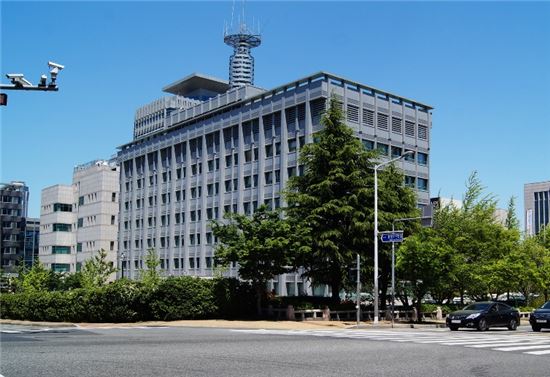 Ulsan City Hall
© The Asia Business Daily(www.asiae.co.kr). All rights reserved.
















