Currency Circulation System Related Agencies Council
2024 First Half Regular Meeting Held at Bank of Korea
Recently, as the use of cash by the public has significantly decreased, the number of 'cashless stores' has increased; however, it appears that there is no need to be overly concerned about a substantial decline in cash acceptance. Nonetheless, before the expansion of cashless stores or the full implementation of 'cashless buses,' there are calls for supplementary measures to minimize inconvenience for cash holders.
On the 24th, the Bank of Korea announced on the 28th that the Currency Circulation System Related Agencies Council held its regular meeting for the first half of 2024 at the Bank of Korea headquarters to discuss recent domestic currency supply trends, the evaluation of domestic cash acceptance, and implications. The council consists of a total of 23 institutions, including the Bank of Korea and the Korea Minting and Security Printing Corporation, and holds regular meetings once each in the first and second halves of the year.
Kim Geun-young, Director of the Banknote Issuance Bureau at the Bank of Korea and chair of the council, emphasized, "While cash usage in daily life continues to decline, it is not desirable for a social atmosphere to spread that takes reduced cash accessibility and acceptance for granted."
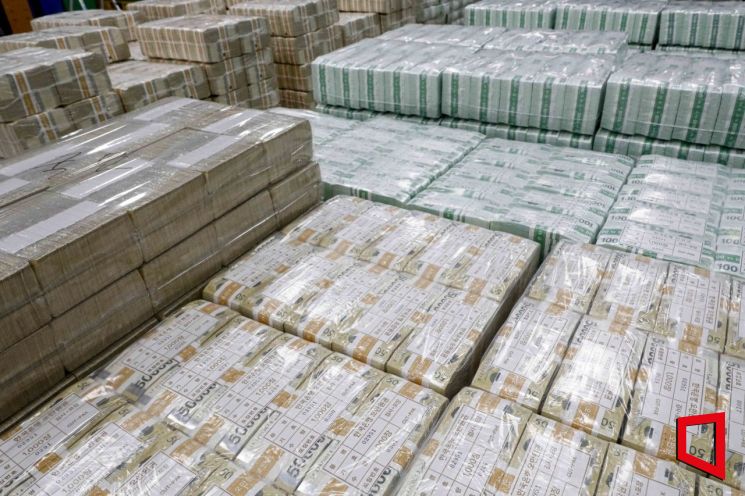
Meeting participants assessed that the recent increase in currency issuance balances is steadily rising, especially in high-denomination bills, due to expanded currency demand for reserves or value storage purposes amid falling interest rates and an increase in foreign tourists.
During the meeting, the current status of domestic cash acceptance and countermeasures to enhance cash acceptance were also discussed. Cash acceptance refers to the extent to which cash is accepted as a means of payment in everyday transactions without fear of refusal. If cash acceptance declines, consumption activities of vulnerable groups with high cash dependence, such as the elderly, may be restricted.
As a result of the council’s inspection of the operation status of cashless stores in Korea, it was evaluated that there is currently no significant cause for concern regarding a decline in domestic cash acceptance. Most cashless stores operate in a limited manner, and cash payment requests are generally accepted.
The council evaluated that efforts should be made to strengthen publicity and education on the importance of guaranteeing the choice to use cash to prevent the formation of a social atmosphere where refusal of cash payments is taken for granted. One suggestion was to add a phrase indicating that cash payments are possible when necessary, even in cashless stores.
Additionally, although unmanned kiosk stores continue to increase due to the need to reduce labor costs, there was also an opinion that some kiosks with cash payment functions should be installed.
There was also an argument that if the right to choose cash usage is legislated in the future, it is necessary to consider a balance between guaranteeing the public’s right to use cash and the cost burden of cash handling for small business owners. In fact, overseas legislative cases allow restrictions on cash acceptance during late-night hours, in unmanned stores, or when change is unavailable.
Recently, 'cashless buses' have been expanding mainly in some local governments, but before full implementation, there is a view that supplementary measures should be prepared to minimize inconvenience for cash holders, such as allowing passengers to purchase transportation cards on the bus after boarding.
The council stated, "We will continue to strive to ensure the stable functioning of the currency circulation system based on information sharing among participating institutions," and added, "We plan to activate subcommittee working meetings in the future to specifically review the improvement needs raised during the meetings."
© The Asia Business Daily(www.asiae.co.kr). All rights reserved.

















