Trained to Respond to Visual and Auditory Signals with Crying Sounds
Intellectual Ability Not Yet Observed in Other Animals
A study has revealed that crows, known to be intelligent animals, can actually count up to four.
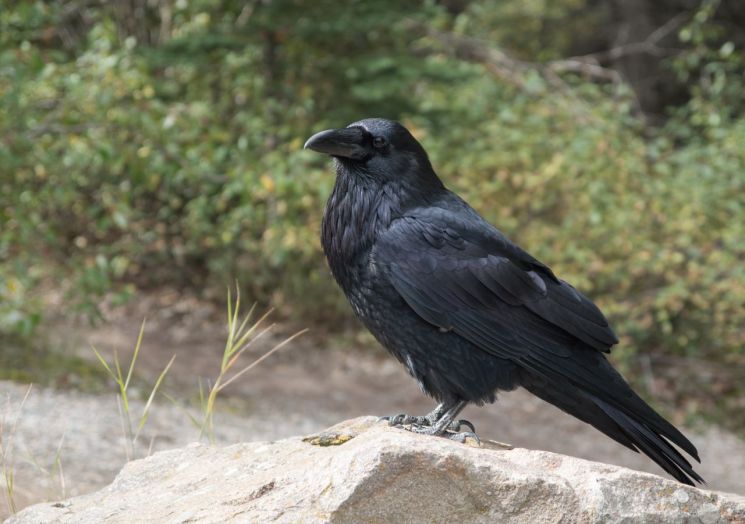
On the 27th, Yonhap News cited a CNN report to convey the findings of a research team from the Animal Physiology Laboratory at the University of T?bingen in Germany. According to the study, when crows were shown numbers, they were not only able to count them but also match the number of signals given by the research team. The researchers explained, "The way crows recognize and respond to numbers is similar to humans," adding, "Crows can learn to associate numbers with their values just like babies, and accordingly, they can learn to count out loud."
For this study, the research team trained three European crows, a species similar to American crows, over 160 times. Through training, the crows were taught the association between visual and auditory signals representing numbers from 1 to 4, and were trained to produce corresponding numbers of calls. As a result, when given the signal for 3, the crows responded by calling three times. Notably, the crows appeared to plan the number of calls before starting to vocalize. This level of intellectual ability has not yet been observed in other animals.
Diana Liao, the lead researcher at the University of T?bingen, explained that when her son uses the word "number" to count visible objects, if there are three toys, their count might sound like "one, two, three" or "one, one, one," and she thought crows would count like infants. She also mentioned that a 2005 study revealing that great tits produce different warning calls depending on the size of predators inspired this research. That study found that great tits made more "di" sounds when small-winged or small-bodied predators appeared, and fewer "di" sounds when larger predators appeared. Liao saw in that study the possibility that great tits could modulate their sounds.
Kevin McGowan, a researcher at the Cornell Lab of Ornithology, explained, "This shows that crows are not thoughtless creatures reacting to their environment, but can think about the future and communicate in a structured and pre-planned manner." The results of this study were published on the 23rd in the scientific journal Science.
© The Asia Business Daily(www.asiae.co.kr). All rights reserved.

















