Labor Shortage Impact Following Post-COVID Economic Recovery
Increase in Companies Requesting University Job Fairs
"Next Spring's College Graduate Employment Rate May Rise Further"
Local media including the Yomiuri Shimbun reported on the 24th that the employment rate of Japanese university graduates who graduated this spring reached a record high of 98.1%.
According to a sample survey conducted by Japan's Ministry of Health, Labour and Welfare and Ministry of Education, Culture, Sports, Science and Technology on 4,770 graduates from 62 public and private universities nationwide, 98.1% of those seeking employment succeeded in finding jobs. This is 0.8 percentage points higher than last year's figure (97.3%) and marks the highest employment rate since the survey began in 1997.
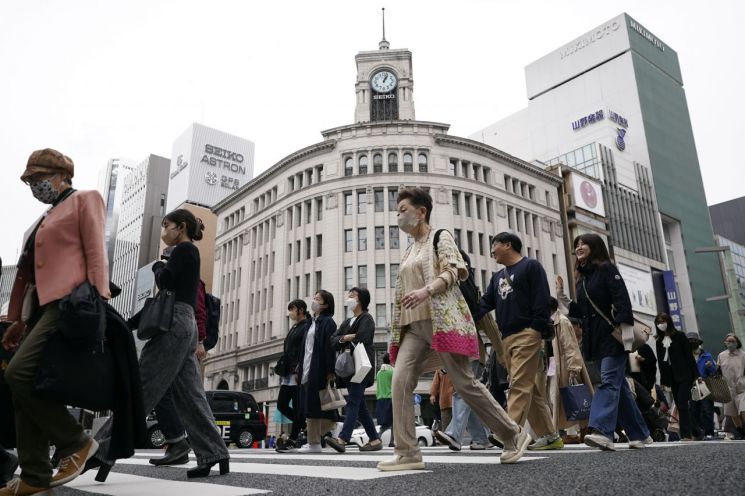
The employment rate of university graduates, which the Japanese government estimates and announces annually, rose to 98.0% in 2020. It then declined for two years due to the economic impact of COVID-19 but began rising again last year.
Looking at employment rates by field of study, the science and engineering field saw an increase of 0.7 percentage points to 98.8%, while the humanities field rose 0.8 percentage points to 97.9%. By gender, women had a slightly higher employment rate at 98.3% compared to men at 97.9%.
The Yomiuri Shimbun pointed out that this year's rise in employment rates appears to be due to companies feeling a greater shortage of workers amid economic recovery following COVID-19. As companies have become more active in recruiting, the number of companies requesting universities to hold company job briefing sessions has also increased.
Ayumi Matsumoto, a researcher at the employment information company Caritas, said, "Companies that had been restraining hiring due to COVID-19 are now noticeably increasing recruitment," adding, "Due to labor shortages, the employment rate for university graduates next spring is likely to be even higher."
Meanwhile, the Japan Business Federation (Keidanren) announced on the 20th that the average wage increase rate for major Japanese companies in this year’s “shunto” (spring wage negotiations) was initially calculated at 5.58%. This is the first time in 33 years since 1991 (5.6%) that the wage increase rate has reached the 5% range.
The Japanese government has consistently demanded wage increases that keep pace with inflation to escape deflation (falling prices amid economic stagnation). In response, major companies, benefiting from an export boom due to the depreciation of the yen, have implemented record wage increases.
© The Asia Business Daily(www.asiae.co.kr). All rights reserved.
![Clutching a Stolen Dior Bag, Saying "I Hate Being Poor but Real"... The Grotesque Con of a "Human Knockoff" [Slate]](https://cwcontent.asiae.co.kr/asiaresize/183/2026021902243444107_1771435474.jpg)
















