The Supreme Court en banc has ruled that cases where an arrest warrant is issued and executed for a separate case, or where a guilty verdict in another criminal case has been finalized and the defendant is in custody, can also be considered grounds for mandatory appointment of a public defender.
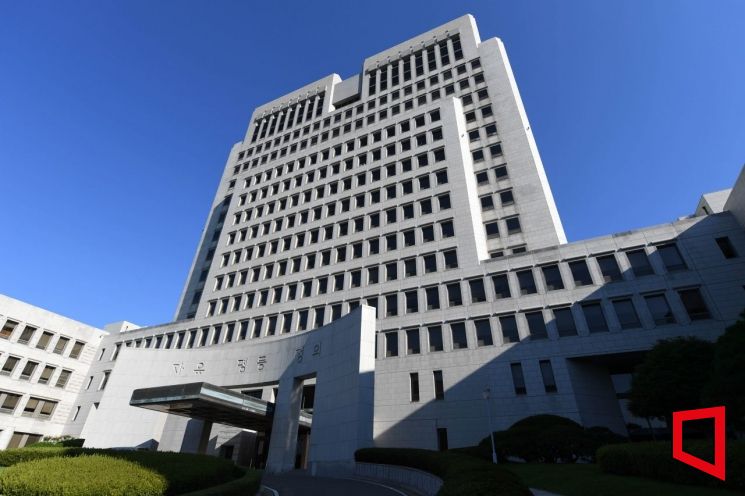
On the 23rd, the Supreme Court en banc overturned the original ruling that sentenced Mr. A, who was charged with assault, to three months in prison, and remanded the case to the Incheon District Court.
The court stated, "The phrase 'when the defendant is detained,' as stipulated in Article 33, Paragraph 1, Subparagraph 1 of the Criminal Procedure Act as a mandatory ground for appointing a public defender, should not be interpreted as limited only to cases where the defendant is detained and on trial for the relevant criminal case. It should be understood to also include cases where the defendant is detained due to the execution of an arrest warrant issued for a separate case or is in custody due to the enforcement of a finalized guilty verdict in another criminal case."
It added, "Contrary to this, the previous Supreme Court rulings based on the legal principle that the phrase 'when the defendant is detained' in this provision means the defendant is detained and on trial for the relevant criminal case, and that cases where the defendant is detained for a separate case or is serving a sentence after a finalized guilty verdict in another criminal case do not fall under this, are hereby changed to the extent that they conflict with this ruling."
Earlier, Mr. A was sentenced to one year in prison for trespassing in September 2020 and was detained. While incarcerated, he was indicted in December 2020 for another assault case and stood trial. Mr. A requested the court to appoint a public defender for the assault trial citing "poverty and other reasons," but the request was denied, and he was sentenced to three months in prison in both the first and second trials without a lawyer.
Mr. A appealed to the Supreme Court, arguing that the court's failure to appoint a public defender was unlawful.
The Supreme Court changed the existing precedent regarding the meaning of "when the defendant is detained," a mandatory ground for appointing a public defender under the Criminal Procedure Act. Article 33, Paragraph 1, Subparagraph 1 of the Criminal Procedure Act stipulates that if a detained defendant does not have a lawyer, the court must appoint a public defender ex officio. However, the previous Supreme Court precedent from 2009 held that this rule applies only when the defendant is detained for the relevant case.
However, the majority opinion of the Supreme Court en banc (10 justices) held that "the phrase 'when the defendant is detained' in this provision should not be limited to cases where the defendant is detained and on trial for the relevant criminal case, but should also include cases where the defendant is detained due to the execution of an arrest warrant issued for a separate case or is in custody due to the enforcement of a finalized guilty verdict in another criminal case."
The majority opinion further stated, "The mental and physical restrictions and social isolation caused by detention significantly limit the defendant's right to defense against the state's exercise of criminal punishment, and the need for appointing a public defender to supplement the impaired defense capability is the same regardless of the reason or circumstances of detention. This provision does not limit 'detention' to detention related to the relevant criminal case."
It concluded, "Since the defendant was detained or serving a sentence for a separate case, the trial without a lawyer violates the Criminal Procedure Act and cannot be amended. The original court's actions violated the criminal procedure law and affected the judgment."
On the other hand, Justices Dongwon Lee, Taeak Noh, and Sookhee Shin dissented, stating, "The phrase 'when the defendant is detained' means the defendant is detained and on trial for the relevant criminal case. Cases where the defendant is detained for a separate case or is serving a sentence after a finalized guilty verdict in another criminal case do not fall under this. The previous legal principle remains valid and should be maintained."
A Supreme Court official stated, "By interpreting the meaning of 'detention,' a mandatory ground for appointing a public defender, more broadly than before, this en banc ruling has significant meaning in that it better guarantees constitutional fundamental rights such as the defendant's right to legal assistance and the right to a fair trial when the defendant is in a vulnerable state due to detention by state authority."
© The Asia Business Daily(www.asiae.co.kr). All rights reserved.

















