Yangcheon-gu, Mapo-gu, Dongdaemun-gu, etc. Recycling Coffee Grounds and Wood Waste to Reduce Environmental Pollution and Utilize Bioenergy and Wood Chips
Efforts to save the planet continue by recycling coffee grounds, which generate hundreds of thousands of tons daily, and wood waste.
Districts in Seoul such as Yangcheon-gu, Dongdaemun-gu, Gwangjin-gu, Seongdong-gu, and Mapo-gu, which have a strong interest in recycling coffee grounds and wood waste, have embarked on initiatives to reduce carbon emissions and secure raw materials for eco-friendly wood chip production to help save the Earth.
Coffee grounds are the byproduct left after making coffee; only 0.2% of coffee beans are used for coffee, while the remaining 99.8% are disposed of in volume-based waste bags and either landfilled or incinerated as household waste. The problem is that discarded coffee grounds accelerate environmental pollution. Incinerating coffee grounds emits greenhouse gases amounting to 338 kg per ton (t), and landfilling them causes soil contamination.
Moreover, with the ban on direct landfill of household waste in the metropolitan area starting in 2026, local governments urgently need measures to reduce household waste.
Yangcheon-gu Signs Coffee Grounds Recycling Business Agreement with Cheonil Energy
Yangcheon-gu (Mayor Lee Gi-jae) signed a "Coffee Grounds Recycling Business Agreement" with Cheonil Energy (CEO Park Sang-won), establishing the first-ever one-stop system among Seoul districts that uses a mobile platform for coffee grounds disposal reporting, free on-site collection, and recycling.
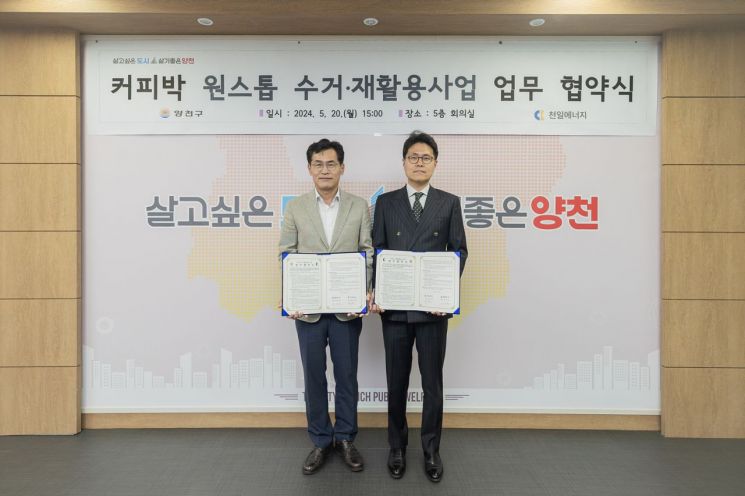
This agreement represents a business model of mutual growth between the parties involved. The district can reduce waste disposal fees and carbon emissions without budget input by utilizing the partner company's free collection and recycling services, thereby promoting a circular economy.
Additionally, the partner company benefits by securing eco-friendly bioenergy raw materials from local coffee shops.
Based on the fact that coffee grounds have a high calorific value suitable for biofuel and contain no harmful substances such as heavy metals, making them organic resources that can be recycled as compost, the district partnered with Cheonil Energy, the largest wood chip producer in Korea, to establish a "coffee grounds one-stop processing system" based on free on-site collection.
The "coffee grounds one-stop processing system" operates by having local coffee businesses that wish to dispose of coffee grounds report their waste via the easy-to-use mobile platform app "Jiguhada" daily. Cheonil Energy then visits the business the next day to collect all coffee grounds free of charge and processes them to produce eco-friendly wood chips as a substitute for fossil fuels. This system resolves previous issues with manpower mobilization for collection and transportation and storage space, enabling full recycling that contributes to reducing energy fuel costs and improving air quality.
Furthermore, the district plans to use data on the quantity of coffee grounds collected daily, collection requests, and processing status received from the partner company to collect and analyze waste reduction data in Yangcheon-gu. Through this, the district will analyze the waste reduction effect from separate coffee grounds disposal and consider expanding the project to other related industries.
The district plans to start accepting free on-site collection applications from 508 coffee shops in the area in June. Once the beneficiary businesses are finalized, coffee grounds-specific collection bags will be distributed, and the project will be fully launched in July.
Lee Gi-jae, Mayor of Yangcheon-gu, said, "This coffee grounds recycling project is meaningful as it leads policies for air quality improvement, energy saving, and activation of the circular economy through public-private cooperation. Small actions can create a better future, so we hope many local coffee businesses will show interest and apply. We will continue to implement various eco-friendly policies for sustainable development to create a clean Yangcheon."
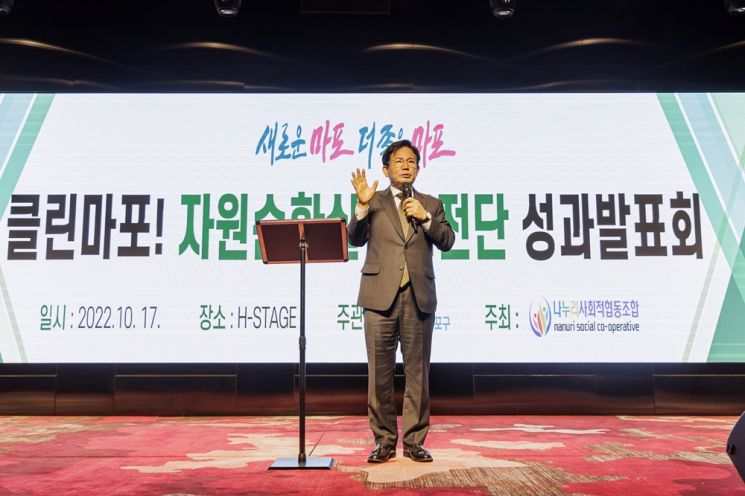
Mapo-gu Actively Recruiting Coffee Shops to Participate in Coffee Grounds Recycling for Resource Circulation
Mapo-gu (Mayor Park Gang-su) is expanding its coffee grounds recycling project to reduce household waste and promote resource circulation and announced that it is continuously recruiting coffee shops to participate in the project for resource circulation.
It is estimated that about 52 tons (t) of coffee grounds are generated daily from coffee shops in Seoul, but the recycling rate is only 9.2%, indicating that the amount recycled is insufficient compared to the amount generated.
Accordingly, from June to December last year, Mapo-gu conducted a pilot coffee grounds collection project targeting 100 cafes in the area through a professional collection company, collecting and recycling a total of 68 tons of coffee grounds.
This year, from January 15, about 12 tons of coffee grounds were collected over approximately 40 days from 165 coffee shops in the area. In particular, responding to requests from some coffee shops with high disposal volumes during last year's pilot project to increase collection frequency, a twice-weekly collection system was introduced this year. Park Gang-su, Mayor of Mapo-gu, said, "We are accelerating the coffee grounds recycling project to reduce household waste generated locally and lower disposal costs. Mapo-gu will continue to develop various policies to reduce waste and make Mapo a cleaner place."
Dongdaemun-gu, Jung-gu, Seongdong-gu, and Gwangjin-gu Sign Wood Waste Resource Recycling Agreement with Cheonil Energy
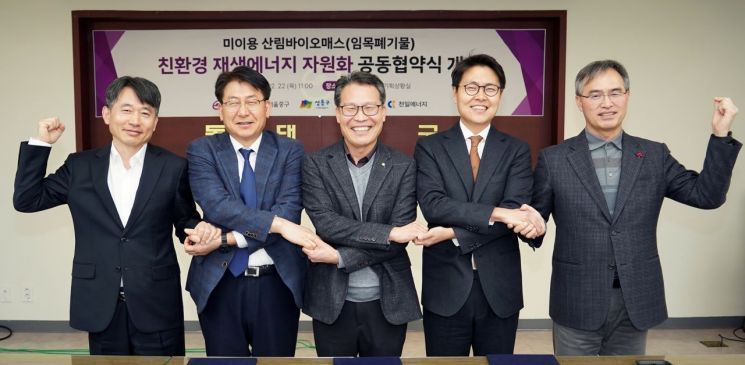
On February 22, Dongdaemun-gu (Mayor Lee Pil-hyung) held a joint agreement signing ceremony at the Dongdaemun-gu Office with Lee Sang-hoon, Deputy Mayor of Jung-gu; Yoo Bo-hwa, Deputy Mayor of Seongdong-gu; Baek Il-heon, Deputy Mayor of Gwangjin-gu; and Cheonil Energy (CEO Park Sang-won), an eco-friendly energy innovation company, to recycle wood waste.
Through this agreement, these districts can now recycle "unused forest biomass," a type of wood waste generated locally, into eco-friendly renewable energy in the form of "wood chips" free of charge.
"Unused forest biomass" refers to forest byproducts generated from forest management activities that do not meet lumber standards or are difficult to collect and thus are not easily utilized. These mainly come from thinning or pruning during forest maintenance or roadside tree management. The total wood waste generated by the four districts is approximately 2,281 tons, and by recycling forest resources (urban forests) that were previously discarded as wood waste into eco-friendly energy, the districts are expected to save about 200 million KRW in waste disposal costs.
Additionally, switching from simple incineration or landfilling to recycling is expected to reduce carbon emissions.
In the case of Dongdaemun-gu, this means saving about 70 million KRW in disposal costs for 700 tons of wood waste, reducing greenhouse gas emissions by approximately 458 tons, and stably supplying biomass resources to wood chip manufacturers for power generation.
A Seoul city official praised the efforts of the districts to save the Earth's environment by recycling coffee grounds and waste wood.
© The Asia Business Daily(www.asiae.co.kr). All rights reserved.



















